Get your free personalized podcast brief
We scan new podcasts and send you the top 5 insights daily.
The proclamations of mass unemployment from AI leaders discount humanity's profound capacity for adaptation and creativity. These technologists are experts in engineering but fail to appreciate that people will leverage new tools in unforeseen ways, creating new forms of value and work.

Related Insights
Doomerism around AI is attributed to a deep-seated arrogance among technologists. They believe their creations will radically alter humanity ('this time is different'), ignoring the historical precedent of technology augmenting human potential and productivity, not replacing it entirely.

The fear of AI-driven job replacement is misplaced. Historically, technological shifts don't eliminate work entirely; they change it. The individuals who will thrive are not those who resist change, but those who learn to leverage new tools like AI to become more effective.

Drawing on Frédéric Bastiat's "seen and unseen" principle, AI doomerism is a classic economic fallacy. It focuses on tangible job displacement ("the seen") while completely missing the new industries, roles, and creative potential that technology inevitably unlocks ("the unseen"), a pattern repeated throughout history.

The fear of AI causing job loss is misplaced. The real threat isn't the technology itself, but rather other professionals who learn to use AI to become more efficient and effective. Individuals are accountable for adapting to this shift, as technology historically advances regardless of public opinion.

The most dire predictions of mass unemployment from AI come directly from its creators, like OpenAI's Sam Altman and xAI's Elon Musk. This contradicts the narrative that fear is driven by outsiders, suggesting those closest to the tech see its disruptive power most clearly.
The argument that AI will cause mass unemployment relies on the 'lump of labor fallacy'—the mistaken belief there is a finite amount of work. Historically, technology has always created new jobs and roles, even as it displaces old ones, a pattern likely to repeat with AI.

The fear that AI will replace all jobs ignores history. Technology has consistently eliminated drudgery (e.g., manual farming, factory work) while creating new, unpredictable industries that cater to newly created human wants. AI will accelerate this process, allowing people to focus on more creative and interpersonal pursuits.

Tech leaders' apocalyptic predictions about AI's impact on jobs might not be solely for hype. This perspective suggests their views are shaped by a lack of historical knowledge about technological adoption and a flawed assumption that average people will engage with technology as deeply as they do, leading to overestimations of disruption speed and scale.
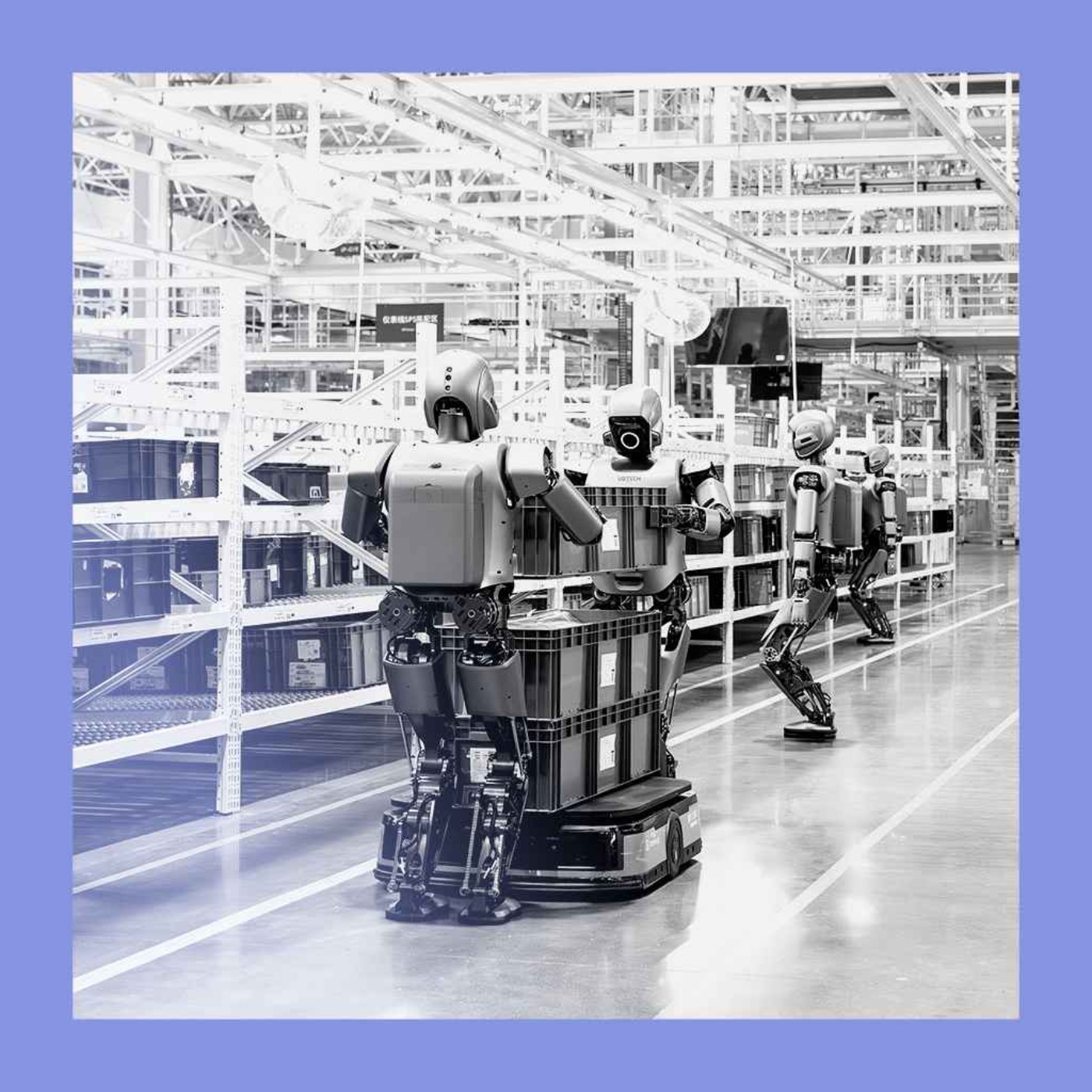
The builders of AI may have a skewed perspective on its real-world impact. They often extrapolate from their tech-centric experiences and fail to grasp how technology diffuses in the broader economy. Their predictions about societal consequences, such as mass job displacement, should therefore be viewed with healthy skepticism.
Contrary to widespread predictions of mass unemployment, top AI experts, including Sam Altman, admit their surprise that AI has been net job-creating to date. This expert surprise suggests that current models for predicting AI's economic disruption are inadequate and that the transition may be more about job transformation than outright job loss.