Get your free personalized podcast brief
We scan new podcasts and send you the top 5 insights daily.
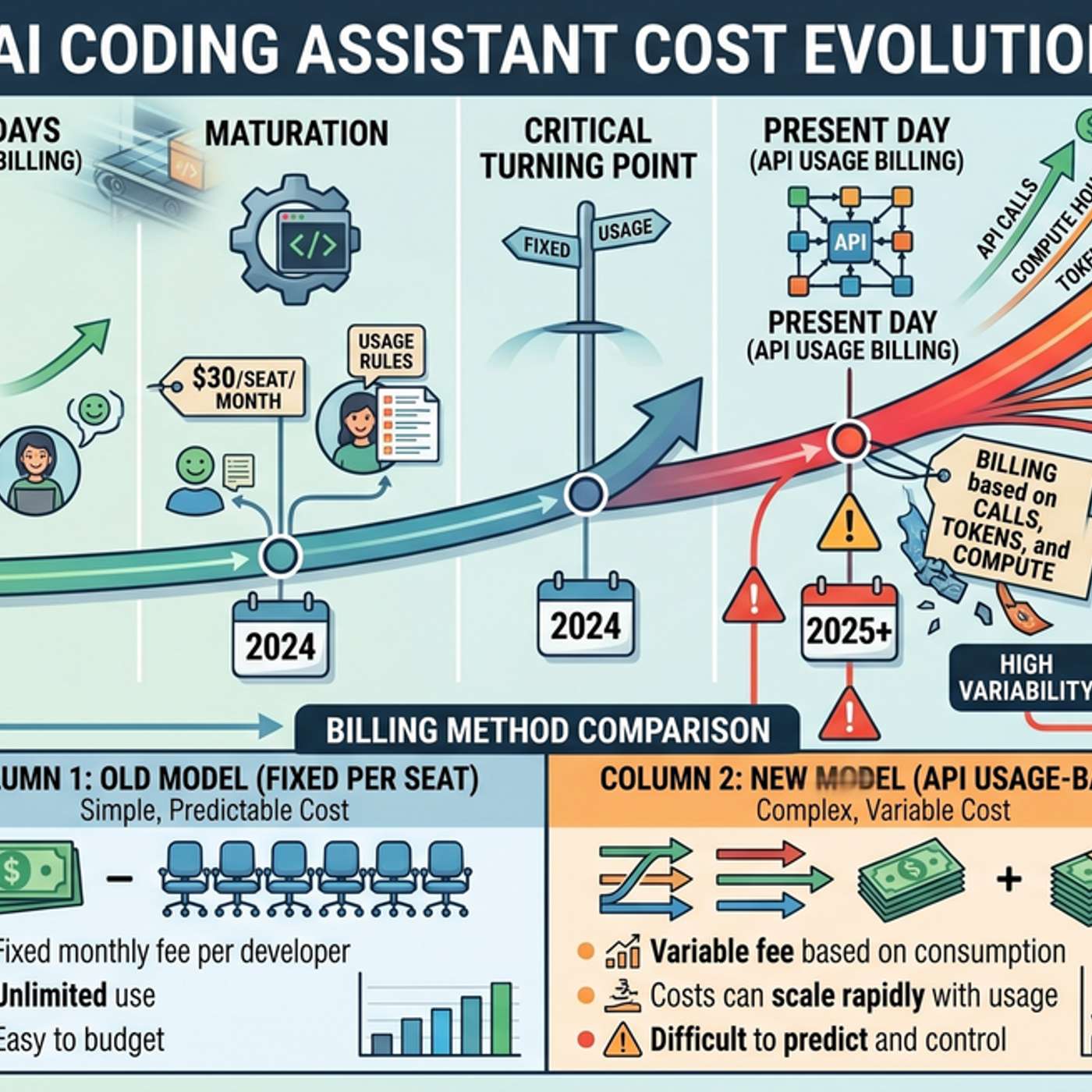
While security and data privacy are huge risks with AI agents, the most immediate and tangible pain point for businesses is cost. An unexpectedly large bill from a runaway agent is often the catalyst for seeking a governance solution, which then leads to addressing deeper security issues.

Related Insights
The optimal strategy for managing AI costs is neither total restriction nor a free-for-all. It's providing engineers with dedicated "learning budgets" and experimentation pools, coupled with clear visibility into costs. This fosters innovation responsibly without incurring surprise invoices and turns cost into a first-class constraint.
While media focuses on "rogue AI," the more immediate danger is that organizations will be too fearful to deploy agents due to a lack of governance. This distrust prevents them from realizing significant productivity gains, making the opportunity cost the biggest risk of all.
Microsoft's new autonomous AI agents, like Scout, operate continuously in the background, creating a major risk of uncontrolled token consumption and budget overruns for enterprise customers. While control tools exist, the fundamental model presents a new financial challenge for IT departments.

AI agents make building prototypes like dashboards and bots incredibly cheap and fast for any employee. This creates a new organizational challenge: managing the explosion of these internal tools, ensuring good governance, and tracking data provenance across derived artifacts. The focus shifts from development cost to IT oversight and control.

While seemingly logical, hard budget caps on AI usage are ineffective because they can shut down an agent mid-task, breaking workflows and corrupting data. The superior approach is "governed consumption" through infrastructure, which allows for rate limits and monitoring without compromising the agent's core function.

The primary driver for major AI labs building out "AI control" teams isn't long-term existential risk, but the immediate commercial threat of AI agents causing accidental harm. Companies are worried about agents deleting production databases or leaking sensitive IP, making AI control a necessary security measure for deploying these powerful but unpredictable products.
Instead of a binary human-in-the-loop decision, enterprises should use an "autonomy budget" for agents. Actions are classified by risk (e.g., irreversibility, financial impact) to determine the level of freedom, creating a spectrum from full autonomy to required human approval, avoiding agents becoming expensive suggestion boxes.

Agent governance fails if it's confined to engineering teams. Providing an accessible interface for finance, legal, and compliance is crucial. These roles need to understand and control agent behavior, particularly around cost and risk, without needing deep technical knowledge.
Enterprises struggle to adopt AI agents due to unpredictable, consumption-based pricing. The inability to budget for fluctuating token or credit usage makes scalable deployment nearly impossible for finance departments to approve, creating a significant hurdle to widespread adoption.
An audience poll reveals that a supermajority of organizations are holding back on deploying AI agents not because of unclear use cases or ROI, but primarily due to significant security and governance risks.