Get your free personalized podcast brief
We scan new podcasts and send you the top 5 insights daily.
The key to AI dominance is shifting from creating powerful models to embedding them within existing enterprise workflows. OpenAI's AWS integration shows that making AI usable through familiar billing, compliance, and security channels is more critical for adoption than raw capability.

Related Insights
The AI race has a new dimension beyond model performance. Leading labs like Google, Anthropic, and OpenAI are aggressively building consulting and forward-deployed engineering teams. The new battleground is successful enterprise integration and custom workflow deployment, not just benchmark scores.

Despite powerful models, OpenAI is hiring thousands for roles like 'technical ambassadorship' because enterprises struggle to implement AI. This 'capabilities overhang' shows the biggest challenge isn't model intelligence, but applying it at scale in real-world workflows, which requires significant human support.
The significant gap between AI's theoretical potential and its actual business implementation represents a massive market opportunity. Companies that help others integrate AI and become 'AI native' will win, not necessarily those with the most advanced models.

Sam Altman argues there is a massive "capability overhang" where models are far more powerful than current tools allow users to leverage. He believes the biggest gains will come from improving user interfaces and workflows, not just from increasing raw AI intelligence.
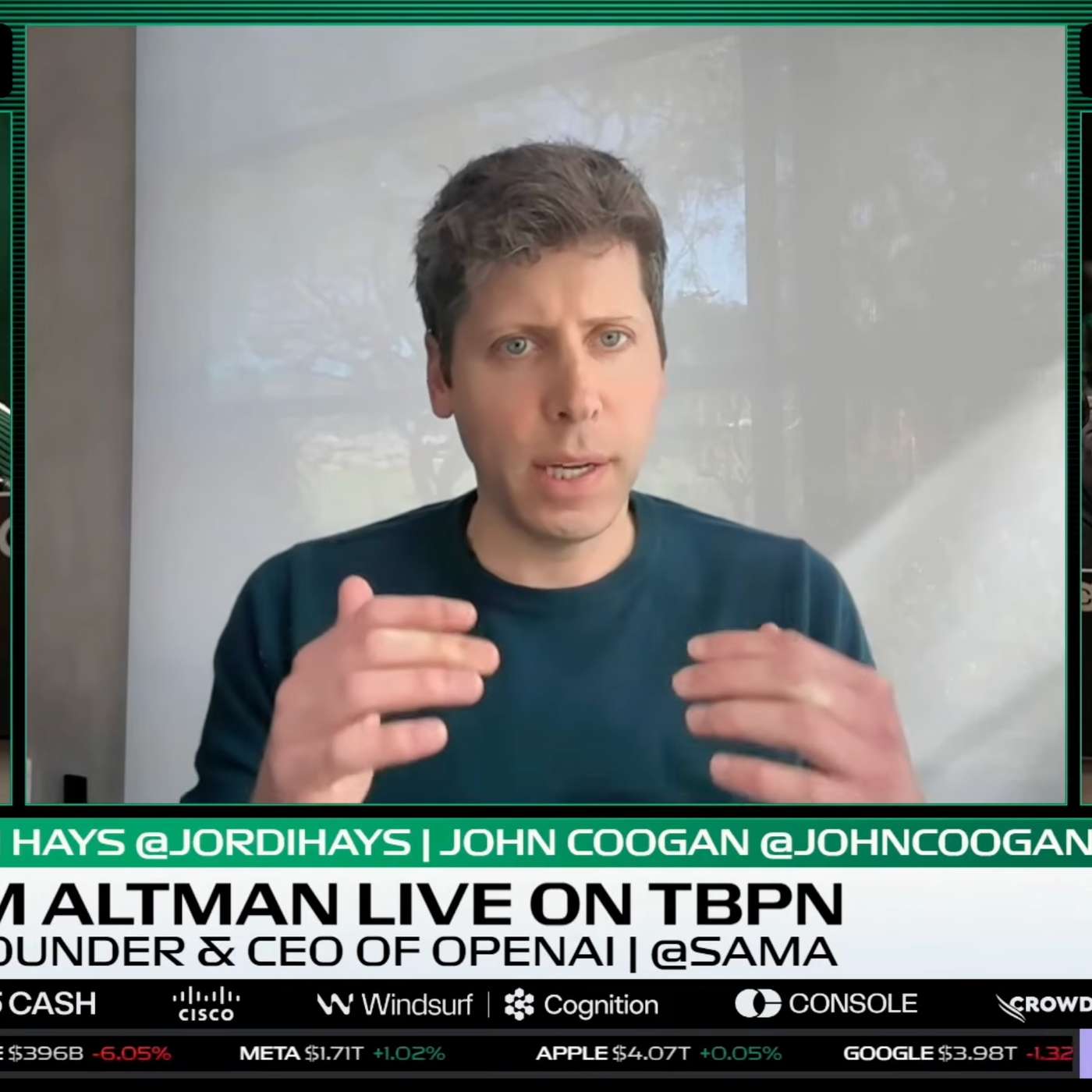
With model improvements showing diminishing returns and competitors like Google achieving parity, OpenAI is shifting focus to enterprise applications. The strategic battleground is moving from foundational model superiority to practical, valuable productization for businesses.

While AI models improved 40-60% and consumer use is high, only 5% of enterprise GenAI deployments are working. The bottleneck isn't the model's capability but the surrounding challenges of data infrastructure, workflow integration, and establishing trust and validation, a process that could take a decade.

As foundational AI models become commoditized, the key differentiator is shifting from marginal improvements in model capability to superior user experience and productization. Companies that focus on polish, ease of use, and thoughtful integration will win, making product managers the new heroes of the AI race.

The excitement around AI capabilities often masks the real hurdle to enterprise adoption: infrastructure. Success is not determined by the model's sophistication, but by first solving foundational problems of security, cost control, and data integration. This requires a shift from an application-centric to an infrastructure-first mindset.

AWS CEO Andy Jassy describes current AI adoption as a "barbell": AI labs on one end and enterprises using AI for productivity on the other. He believes the largest future market is the "middle"—enterprises deploying AI in their core production apps. AWS's strategy is to leverage its data gravity to win this massive, untapped segment.

As AI models become commoditized, a slight performance edge isn't a sustainable advantage. The companies that win will be those that build the best systems for implementation, trust, and workflow integration around those models. This robust, trust-based ecosystem becomes the primary competitive moat, not the underlying technology.
