Get your free personalized podcast brief
We scan new podcasts and send you the top 5 insights daily.
The AI community's incorrect predictions of a near-term 'job apocalypse' have undermined its credibility. With unemployment remaining low, observers now feel justified in dismissing more abstract, long-term existential risk warnings from the same group as similarly overblown.

Related Insights
AI skepticism is an effective media business model, but narratives around job losses and market bubbles are losing steam due to a lack of evidence. The resurgence of the existential risk 'doomer' narrative conveniently fills this void, offering a fresh, high-engagement angle for an audience already primed for anti-AI content.

The AI industry inadvertently created a public relations problem. Early, scary rhetoric about job loss and existential risk from leaders at firms like Anthropic has poisoned the well, making the public and politicians more fearful and less supportive of AI advancement.

Silicon Valley insiders building AI may overestimate its impact due to self-interest (looming IPOs) and a narrow perspective. Their expertise in AI doesn't translate to economics or labor markets, and their track record of understanding the world outside their bubble is poor, making their job apocalypse predictions unreliable.
The same group of AI alarmists have a track record of failed predictions, from GPT-2 being 'too dangerous to release' to massive job losses that never materialized. As each dire prediction is refuted by reality, the doomer narrative simply moves to the next hypothetical threat without acknowledging past errors.

High-profile predictions of AI-driven mass unemployment often don't stand up to basic data analysis. For example, a claim that 90% of the Philippines' economy relies on customer service was found to be only 6-7%. Similarly, even dire forecasts for "entry-level white-collar" job loss translate to manageable overall unemployment increases, not Great Depression-level crises.

Unlike previous technologies like the internet or smartphones, which enjoyed years of positive perception before scrutiny, the AI industry immediately faced a PR crisis of its own making. Leaders' early and persistent "AI will kill everyone" narratives, often to attract capital, have framed the public conversation around fear from day one.

Despite persistent predictions of mass unemployment from "black-pilled AI leaders," strong economic indicators like the May jobs report show continued labor market resilience. This suggests the feared AI job apocalypse is, at a minimum, delayed and not the immediate threat it's portrayed to be.

Tech leaders' apocalyptic predictions about AI's impact on jobs might not be solely for hype. This perspective suggests their views are shaped by a lack of historical knowledge about technological adoption and a flawed assumption that average people will engage with technology as deeply as they do, leading to overestimations of disruption speed and scale.
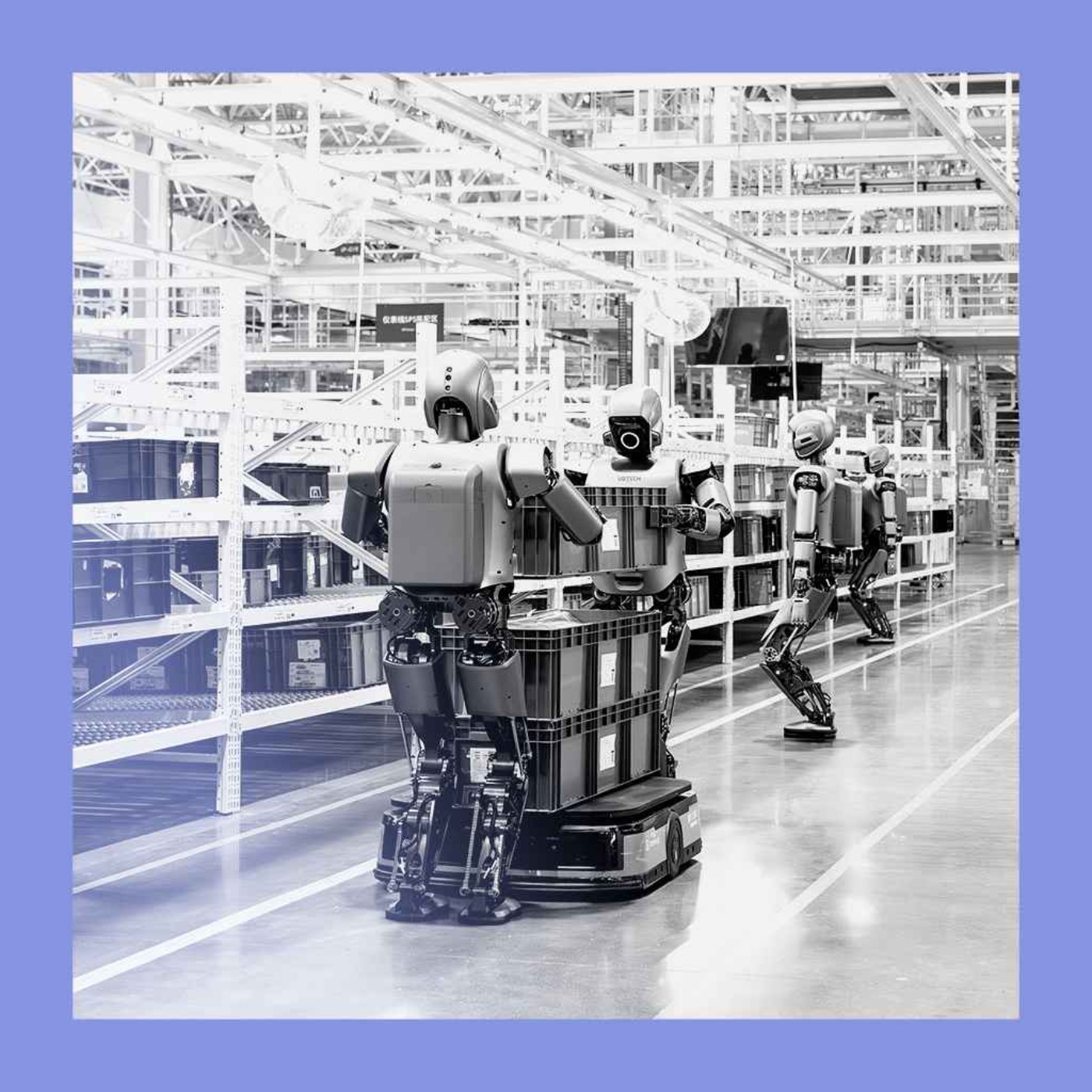
The builders of AI may have a skewed perspective on its real-world impact. They often extrapolate from their tech-centric experiences and fail to grasp how technology diffuses in the broader economy. Their predictions about societal consequences, such as mass job displacement, should therefore be viewed with healthy skepticism.
Huang argues that dire predictions about AI, such as mass job loss or existential risk, are "made up" and irresponsible. He points to a history of failed forecasts (e.g., the end of radiologists, job apocalypse) as evidence that the fear-mongering is not grounded in science and distracts from the real task of building safe, useful technology.