Get your free personalized podcast brief
We scan new podcasts and send you the top 5 insights daily.
A major shift is coming where company-specific Small Language Models (SLMs) will run relentlessly and recursively on powerful local hardware. This creates a new paradigm of free, constantly improving, and privately-owned corporate intelligence.

Related Insights
The next major evolution in AI will be models that are personalized for specific users or companies and update their knowledge daily from interactions. This contrasts with current monolithic models like ChatGPT, which are static and must store irrelevant information for every user.

Instead of relying solely on massive, expensive, general-purpose LLMs, the trend is toward creating smaller, focused models trained on specific business data. These "niche" models are more cost-effective to run, less likely to hallucinate, and far more effective at performing specific, defined tasks for the enterprise.

The trend for language models is diverging: massive models in the cloud and smaller models (SLMs) at the edge. These SLMs, while lacking the broad knowledge of their larger counterparts, are highly effective when fine-tuned for specific domains and specialized data, making them ideal for device-level intelligence.
The current focus on building massive, centralized AI training clusters represents the 'mainframe' era of AI. The next three years will see a shift toward a distributed model, similar to computing's move from mainframes to PCs. This involves pushing smaller, efficient inference models out to a wide array of devices.

The "agentic revolution" will be powered by small, specialized models. Businesses and public sector agencies don't need a cloud-based AI that can do 1,000 tasks; they need an on-premise model fine-tuned for 10-20 specific use cases, driven by cost, privacy, and control requirements.

The future of AI isn't just in the cloud. Personal devices, like Apple's future Macs, will run sophisticated LLMs locally. This enables hyper-personalized, private AI that can index and interact with your local files, photos, and emails without sending sensitive data to third-party servers, fundamentally changing the user experience.
As enterprises scale AI, the high inference costs of frontier models become prohibitive. The strategic trend is to use large models for novel tasks, then shift 90% of recurring, common workloads to specialized, cost-effective Small Language Models (SLMs). This architectural shift dramatically improves both speed and cost.

The next major hardware cycle will be driven by user demand for local AI models that run on personal machines, ensuring privacy and control away from corporate or government surveillance. This shift from a purely cloud-centric paradigm will spark massive demand for more powerful personal computers and laptops.
The primary driver for running AI models on local hardware isn't cost savings or privacy, but maintaining control over your proprietary data and models. This avoids vendor lock-in and prevents a third-party company from owning your organization's 'brain'.
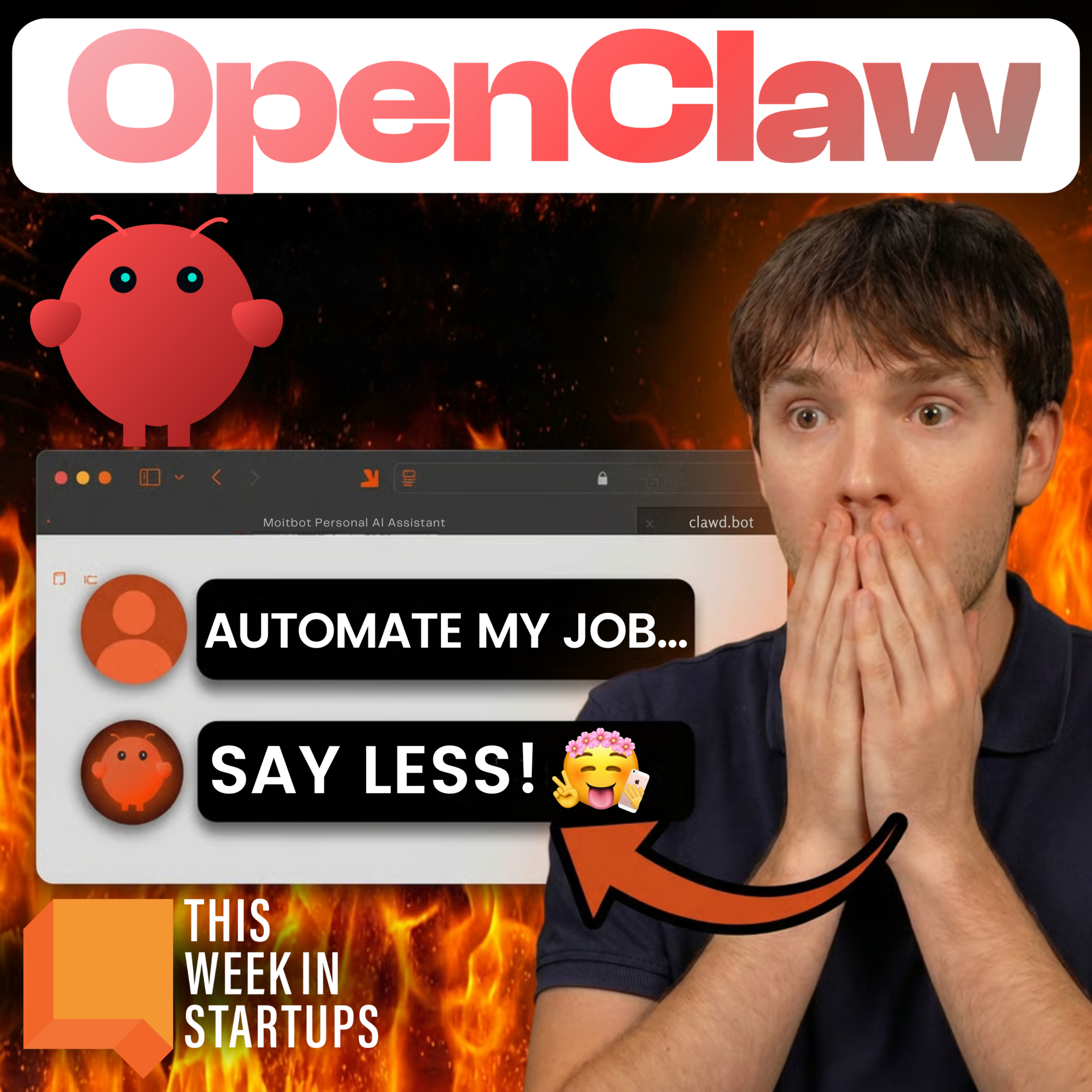
The "Claudebot" system represents a new paradigm where users run a persistent, open-source AI agent on their own local hardware. The agent's key feature is its ability to self-improve by writing new skills on command, effectively becoming a 24/7 digital employee that continually expands its capabilities.
