Get your free personalized podcast brief
We scan new podcasts and send you the top 5 insights daily.
The NBA's return to China after a six-year ban is less a sign of improving US-China relations and more a demonstration of China's market power. The move signals that for American businesses to access China's massive consumer base, they must operate within the country's strict political boundaries and avoid topics deemed sensitive by the government.

Related Insights
After facing political attacks, Apple realized its retail sales were not its main leverage with Beijing. Its real power was its massive, multi-billion dollar investment in training hundreds of local suppliers. This positioned Apple as the single largest contributor to China's high-end electronics capabilities, a key government priority.

Unlike the 1980s, when Japanese corporations were common antagonists in films like Die Hard, modern Hollywood avoids portraying China negatively. This is attributed to a desire to maintain access to China's lucrative box office, resulting in a pop culture landscape that doesn't reflect geopolitical tensions.

Unlike the US's focus on quarterly results and election cycles, China's leadership operates on a civilizational timescale. From their perspective, the US is a recent phenomenon, and losing the US market is an acceptable short-term cost in a much longer game of survival and dominance. This fundamental difference in strategic thinking is often missed.

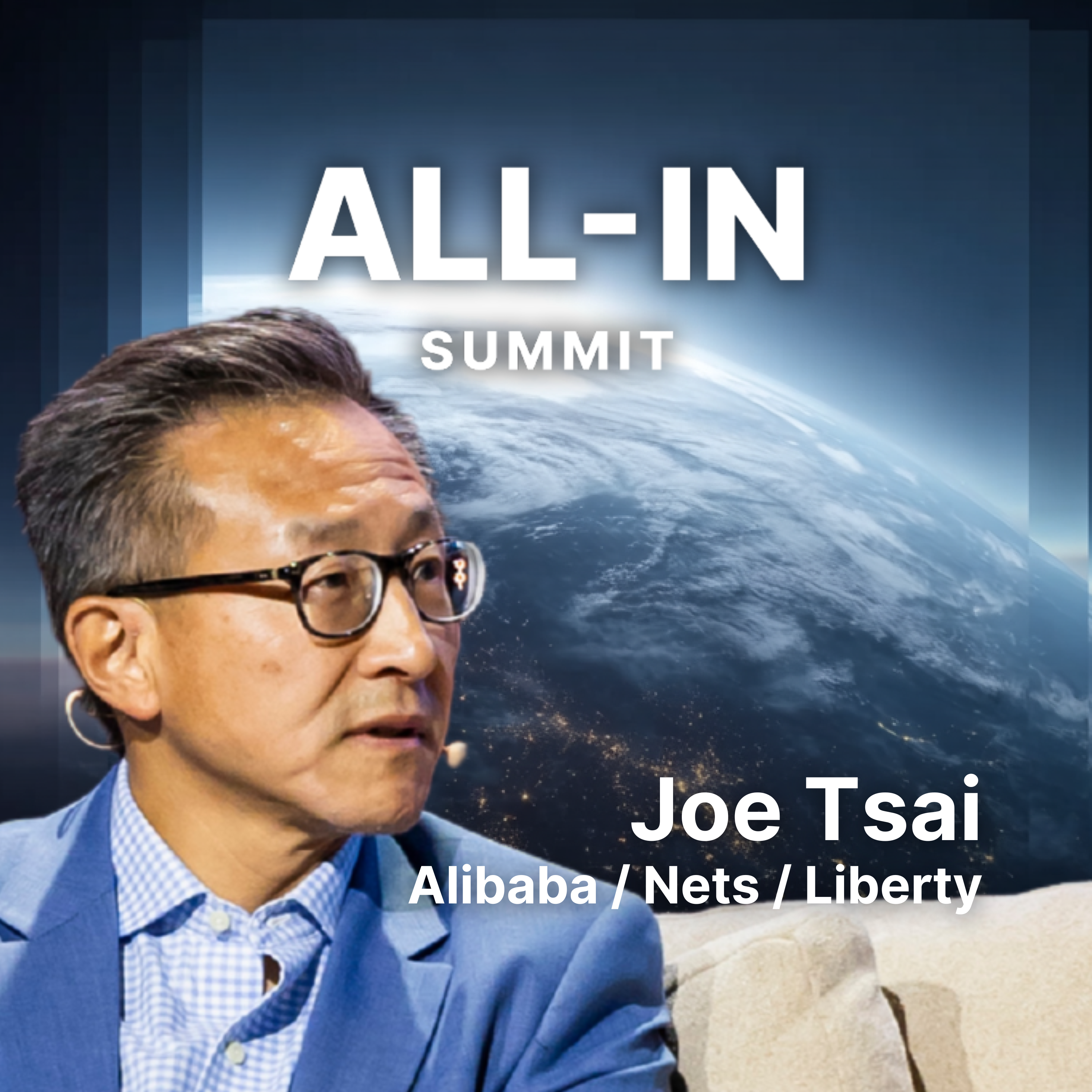
Contrary to the common narrative of a stifling 'crackdown,' Joe Tsai argues China's increased tech regulation established a 'new normal' that is better for business. By clarifying the 'red lines' around monopoly and privacy, the government created a more predictable environment, which is preferable to the previous era of unchecked, chaotic competition.
In a world of aging, export-dependent economies like China and Korea, the U.S. is the only large, first-world nation that is a net consumer. This makes access to its market an incredibly powerful negotiating tactic, allowing the U.S. to leverage its consumer base as a tool of foreign policy.

Restricting sales to China is a catastrophic mistake that creates a protected, trillion-dollar market for domestic rivals like Huawei. This funds their R&D and global expansion with monopoly profits. To win the long-term AI race, American tech must be allowed to compete everywhere.

While China bans many US tech giants, it welcomed Tesla. A compelling theory suggests this was a strategic move to observe and learn Tesla's methods for mass-producing EVs at scale, thereby accelerating the development of domestic champions like BYD, mirroring its past strategy with Apple's iPhone.

Facing hyper-competitive local rivals, Starbucks is selling a majority stake in its China business. This is not a retreat, but a strategic shift to a joint venture model. It's a playbook for Western brands to gain local agility, faster product rollouts, and deeper digital integration where Western brand dominance is fading.
Attempts to undermine Chinese chip maker Huawei by allowing NVIDIA to sell chips to China are flawed. The Chinese government operates outside typical market dynamics and will ensure unlimited demand for Huawei's products, making NVIDIA a temporary gap-filler that inadvertently turbocharges China's AI industry.

Profitable Chinese giants like ByteDance trade at a fraction of their Western counterparts' multiples. This "China discount" stems not from business fundamentals but from the unpredictable risk of the Communist Party "smiting" successful companies and overarching geopolitical tensions, making them un-investable for many.
![Dan Wang - The US vs China In The 21st Century - [Invest Like the Best, EP.444] thumbnail](https://megaphone.imgix.net/podcasts/e1599a88-a9f6-11f0-b532-e3695bb27d60/image/0f5c07552cef2689e5834d56786ad6f1.jpg?ixlib=rails-4.3.1&max-w=3000&max-h=3000&fit=crop&auto=format,compress)