Get your free personalized podcast brief
We scan new podcasts and send you the top 5 insights daily.
Drawing parallels with musicians who often value fame over fortune, Matthew Prince argues that solving the financial payment model for content isn't enough. The next great challenge is creating systems of recognition, as creators will stop contributing (like on Wikipedia) if their work is only consumed anonymously by AI.

Related Insights
For 30 years, creators published freely to gain attention, which they converted into reputation, jobs, or customers. AI search intercepts this attention by synthesizing information, removing the rational self-interest for creators to share knowledge openly and pushing them to create paywalls.

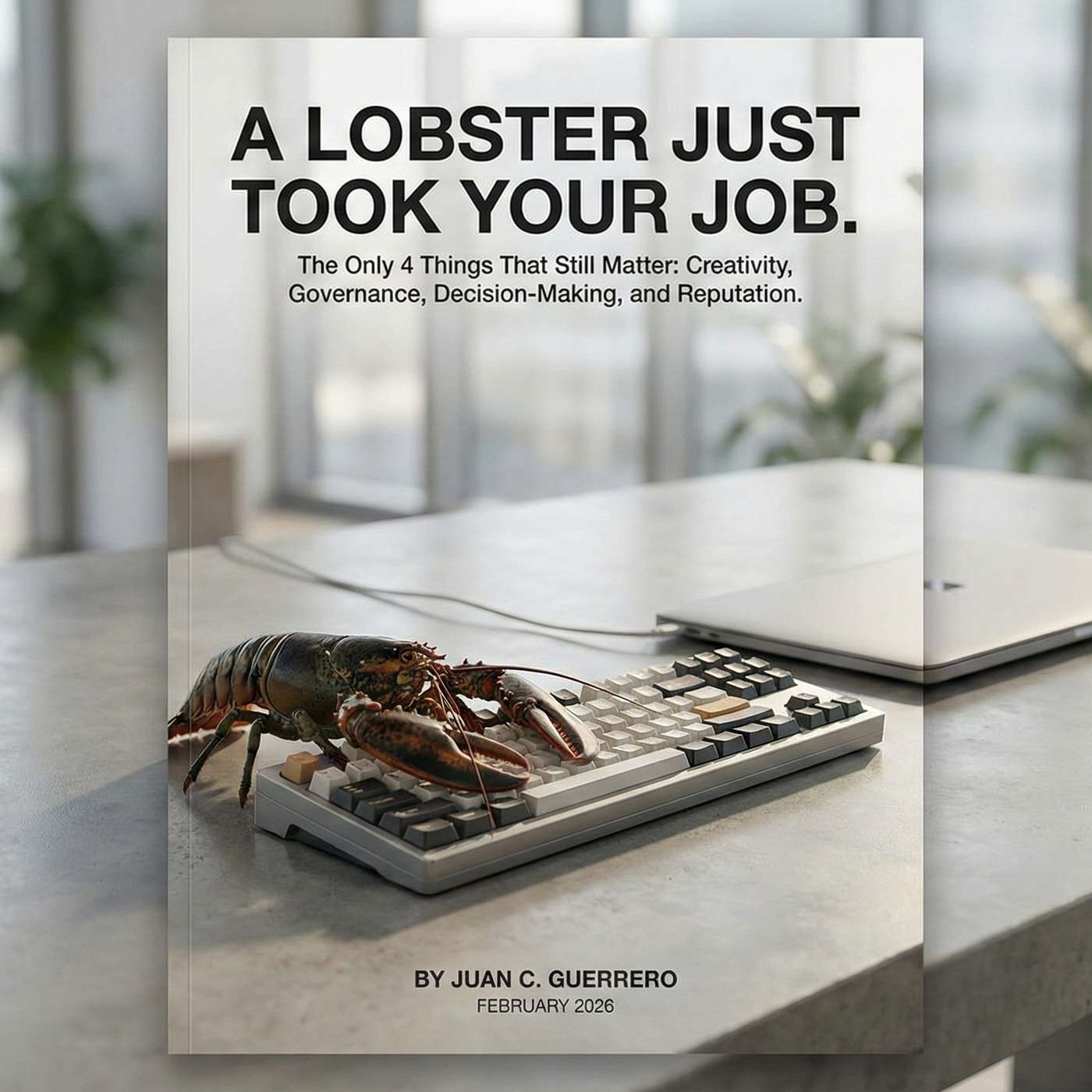
In a world saturated with AI-generated content and autonomous agents, the ability to prove one's humanness is the new foundational economic asset. A verifiable reputation, built on a track record of creativity, governance, and sound judgment, becomes more valuable than a traditional resume, serving as the essential trust anchor for all digital and economic interactions.
As AI floods the internet with perfectly optimized but synthetic content, the most valuable asset becomes that which cannot be easily replicated: proprietary data, original research, and unique human experiences. AI agents will be designed to seek out and reward this scarcity.

Solving the AI compensation dilemma isn't just a legal problem. Proposed solutions involve a multi-pronged approach: tech-driven micropayments to original artists whose work is used in training, policies requiring creators to be transparent about AI usage, and evolving copyright laws that reflect the reality of AI-assisted creation.

A flood of low-quality AI content won't devalue human creators. Instead, it makes established, authentic voices more valuable. In a noisy environment, consumers will gravitate towards the human connection and trust that AI cannot replicate.

In a world saturated with AI-generated content, work that is verifiably human-made will command a premium. Similar to how consumers seek out organic food, audiences will actively seek and value the authenticity, personality, and craftsmanship of human-driven content.

While AI lowers the barrier to content creation for everyone, it simultaneously increases the value of uniquely human contributions. As AI-generated content becomes commoditized, attributes like lived experience, distinct perspective, and true originality will become the key differentiators for creators.

The modern creator economy prioritizes immediate monetization via ads or subscriptions. The older model of patronage—direct financial support from an individual without expectation of direct ROI—can liberate creators from chasing metrics, enabling them to focus on producing high-quality, meaningful work.

As AI makes the creation of art "products" nearly free, the economic model for creators may shift away from selling individual units. Instead, a system of patronage, where communities directly fund artists they support, could become dominant again.

As AI produces a flood of average content, or "slop," the ability to identify and create truly exceptional work becomes a rare and more valuable skill. The "peak of the peak" stands out more amidst the noise, increasing the demand for human tastemakers with refined creative judgment.
