Get your free personalized podcast brief
We scan new podcasts and send you the top 5 insights daily.
Prosus's CEO expresses frustration with European regulators who, while claiming to want local tech champions, actively block European companies from consolidating. He was forced to divest from Delivery Hero, knowing it would likely be sold to an American or Chinese firm, directly undermining the goal of creating a powerful European tech player.

Related Insights
European regulations like the DSA impose heavy fines and compliance costs primarily on large American tech companies. This is viewed not just as regulation, but as a protectionist revenue-generating mechanism, effectively a "censorship tariff" on US firms.

A restrictive stance on mergers and acquisitions stifles the entire startup ecosystem by removing viable exit paths. Allowing M&A to flourish provides the liquidity events that encourage venture capitalists to deploy risk capital into the next generation of innovative companies.

The Dutch government took control of Chinese-owned Nexperia, a major European chipmaker, citing national security risks. This move is far more aggressive than U.S. strategies like taking minority stakes, indicating a European willingness to nationalize key tech assets to counter foreign influence in the semiconductor supply chain.

The European Union's strategy for leading in AI focuses on establishing comprehensive regulations from Brussels. This approach contrasts sharply with the U.S. model, which prioritizes private sector innovation and views excessive regulation as a competitive disadvantage that stifles growth.

Despite its talent, Europe struggles to scale domestic tech companies, leaving it strategically vulnerable. It's forced to depend on US cloud providers it views with suspicion or Chinese alternatives it also distrusts, with no viable third option.

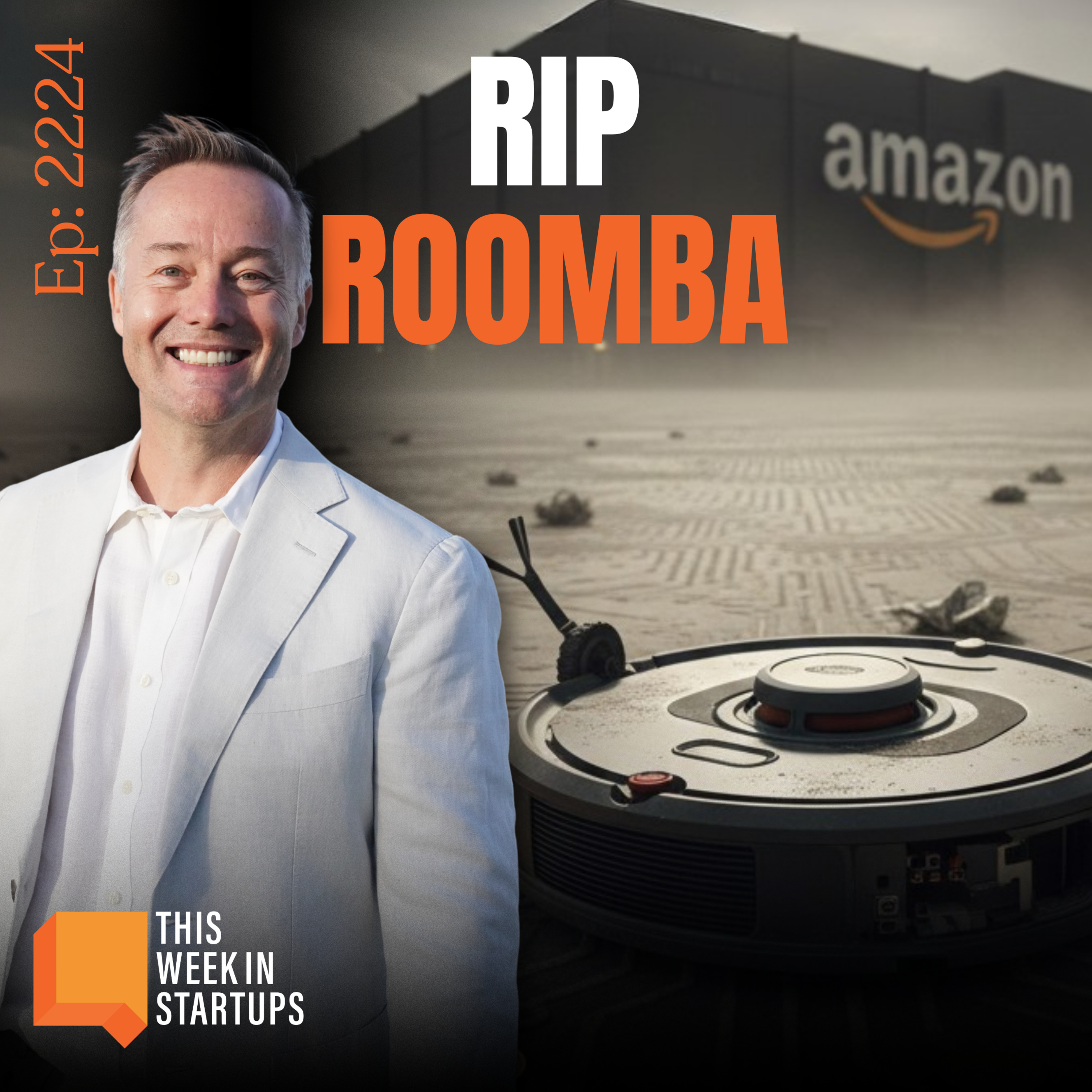
After regulators blocked Amazon’s $1.7B acquisition of iRobot, the robotics company went bankrupt. Its assets and IP were then acquired by its Chinese contract manufacturer, illustrating how antitrust actions intended to protect competition can inadvertently destroy American companies and cede technology to foreign entities.
The European Commission, responsible for enforcing the EU AI Act, is now proposing delays and simplifications to the landmark legislation. This move, described as "buyer's remorse," is driven by high-level anxiety that the act's burdens are hurting Europe's economic competitiveness relative to the US and China.

The EU's AI Act has been so restrictive that it has largely killed native AI development in Europe. The regulation is so punitive that even major American companies like Apple and Meta are choosing not to launch their leading-edge AI capabilities there, demonstrating the chilling effect of preemptive, overbearing regulation.

Europe's economic underperformance is caused by a governance structure that is not just indifferent but actively hostile to its entrepreneurial class. This 'regulatory malice' and 'contempt' makes it prohibitively difficult to build, innovate, and capture upside, driving away talent and capital.

Europe has vibrant startup scenes, but its core challenge is the "scale-up" phase. Promising companies often relocate to the U.S. to access deeper venture capital markets and a larger, more unified customer base for international expansion.
