Get your free personalized podcast brief
We scan new podcasts and send you the top 5 insights daily.
Prompts are written in English and encapsulate the AI's core logic and personality. It is a mistake to treat them as code firewalled within the engineering team. Product managers, as domain experts, should have direct access to edit and experiment with prompts through user-friendly admin interfaces.
Related Insights
Hiding the use of AI to create product artifacts is a mistake born from insecurity. Google AI PM Marily Nika advises PMs to be transparent, even sharing their custom PRD generators. This normalizes AI usage and reframes the PM as an efficiency leader, as those who don't adopt these tools will be left behind.

Effective prompt engineering for AI agents isn't an unstructured art. A robust prompt clearly defines the agent's persona ('Role'), gives specific, bracketed commands for external inputs ('Instructions'), and sets boundaries on behavior ('Guardrails'). This structure signals advanced AI literacy to interviewers and collaborators.

The ability to effectively communicate with AI models through prompting is becoming a core competency for all roles. Excelling at prompt engineering is a key differentiator, enabling individuals to enhance their creativity, collaboration, and overall effectiveness, regardless of their technical background.

Effective prompt engineering isn't a purely technical skill. It mirrors how we delegate tasks and ask questions to human coworkers. To improve AI collaboration, organizations must first improve interpersonal communication and listening skills among employees.

In AI development, trace analysis is a point of tension. Product Managers should become fluent enough to ask intelligent questions and participate in debugging. However, they should avoid owning the process or tooling, respecting it as engineering's domain to maintain a healthy division of labor.

Open-ended prompts overwhelm new users who don't know what's possible. A better approach is to productize AI into specific features. Use familiar UI like sliders and dropdowns to gather user intent, which then constructs a complex prompt behind the scenes, making powerful AI accessible without requiring prompt engineering skills.

Simply using one-sentence AI queries is insufficient. The marketers who will excel are those who master 'prompt engineering'—the ability to provide AI tools with detailed context, examples, and specific instructions to generate high-quality, nuanced output.

AI tools like ChatGPT can analyze traces for basic correctness but miss subtle product experience failures. A product manager's contextual knowledge is essential to identify issues like improper formatting for a specific channel (e.g., markdown in SMS) or failures in user experience that an LLM would deem acceptable.
To effectively apply AI, product managers and designers must develop technical literacy, similar to how an architect understands plumbing. This knowledge of underlying principles, like how LLMs work or what an agent is, is crucial for conceiving innovative and practical solutions beyond superficial applications.
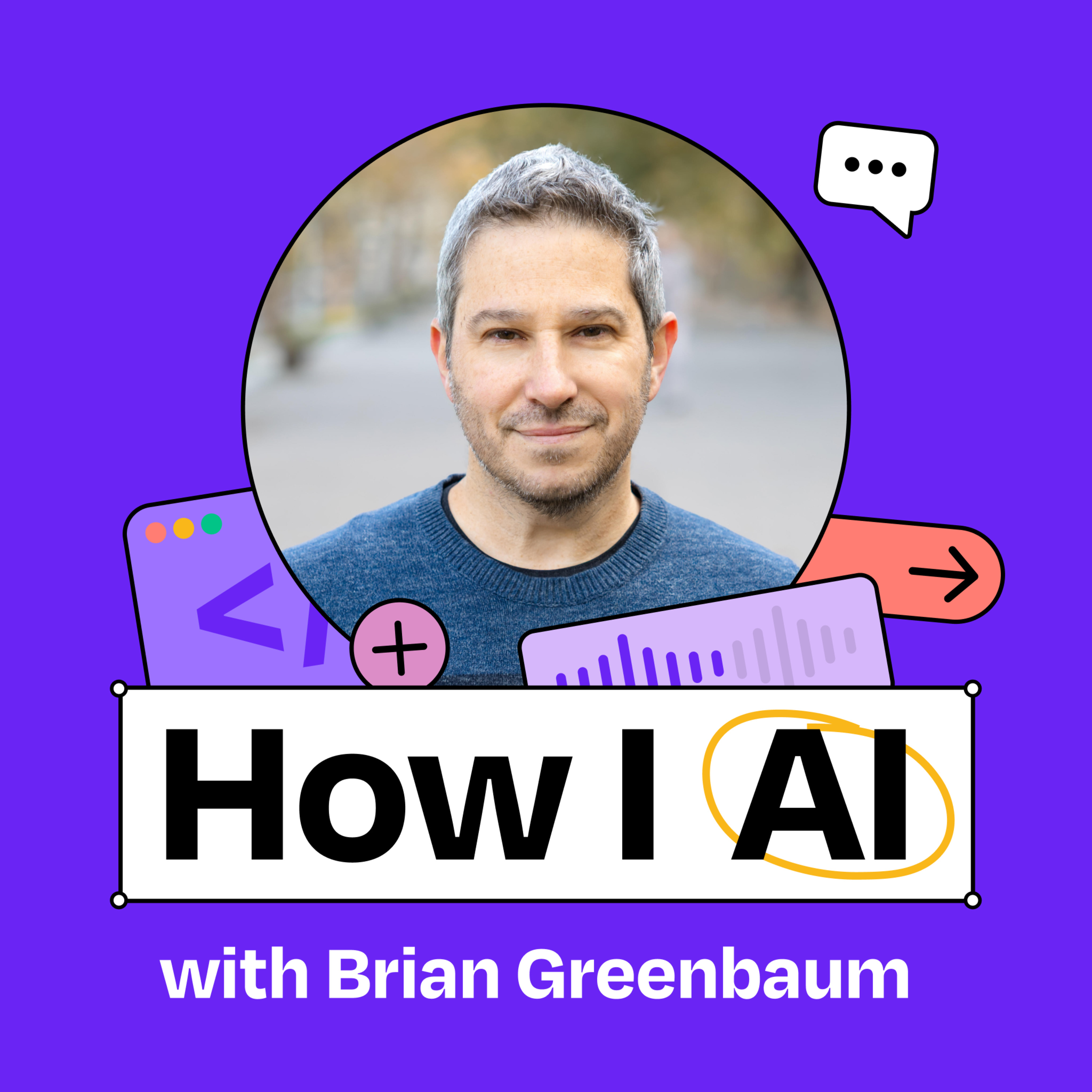
Figma's CEO likens current text prompts to MS-DOS: functional but primitive. He sees a massive opportunity in designing intuitive, use-case-specific interfaces that move beyond language to help users 'steer the spaceship' of complex AI models more effectively.