Get your free personalized podcast brief
We scan new podcasts and send you the top 5 insights daily.
Beyond oil, the conflict disrupts supply chains for materials like sulfur and helium, which are essential for producing copper, cobalt, and components used in semiconductor manufacturing. This creates a significant, non-obvious risk to the global tech industry.

Related Insights
The war in Iran is choking the Strait of Hormuz, which handles 20% of global oil. This disruption impacts nearly three times more oil volume than Russia's exports at the start of the Ukraine war, posing a significantly larger threat to the global economy and inflation.

The Hormuz crisis reveals fragile, non-obvious supply chains. About 30% of the world's helium, essential for making semiconductors and launching SpaceX rockets, comes from Qatar. This illustrates how critical modern technologies depend on materials from politically unstable regions, extending far beyond well-known resources like oil.
Over 90% of the world's sulfur is a byproduct of oil refining. This sulfur is crucial for producing sulfuric acid, a key chemical in semiconductor manufacturing. Therefore, disruptions to oil shipping or refining create a hidden material supply chain risk for the tech industry, beyond just energy costs for power.
Energy disruptions in the Strait of Hormuz create a cascade effect far beyond fuel prices. The resulting shortages impact petrochemical and fertilizer production, threatening key inputs for everything from manufacturing and electronics to agriculture and basic services like cooking gas for restaurants.
The ongoing conflict has taken 10% of global oil production offline, a supply disruption of a magnitude unseen by economists in at least 20 years. This is a pure supply-side shock, distinct from demand-side shocks like COVID, creating unique and severe inflationary pressures for the global economy.

In economic warfare, controlling an intermediate good like a microcontroller is more powerful than controlling a finished product like a car. Because intermediate goods are inputs to many different supply chains, disrupting their flow causes far broader and more cascading damage to an adversary's economy, creating greater geopolitical leverage.
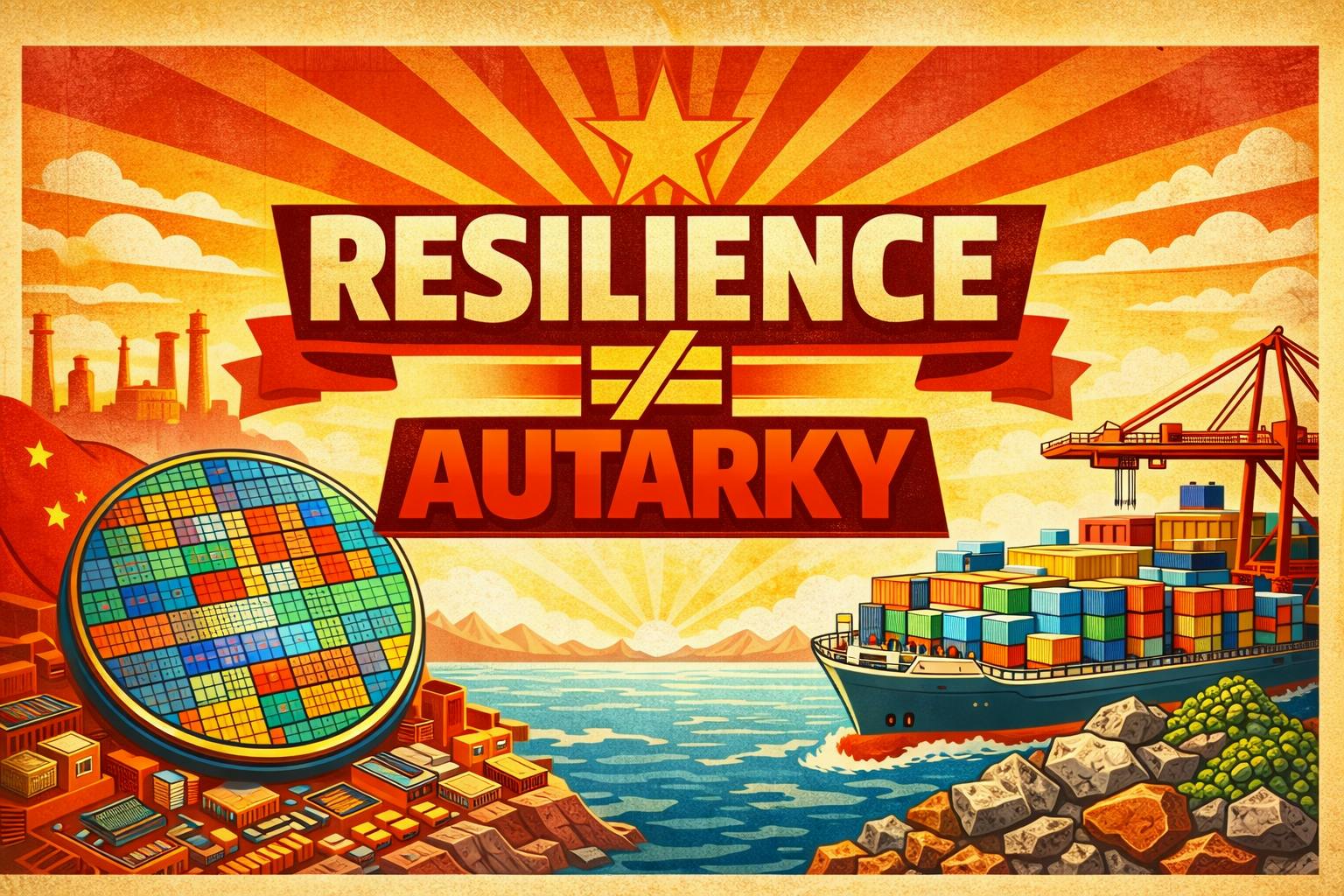
The central geopolitical and economic conflict of the modern era revolves around the control of semiconductor chips and fabrication plants (fabs). These have surpassed oil as the most critical strategic resource, dictating technological and military superiority.

Beyond financial metrics, the most significant 'tail risk' to the AI boom is the high concentration of advanced semiconductor manufacturing overseas, particularly in Taiwan. A geopolitical conflict could sever the supply of essential hardware, posing a much more fundamental threat to the industry's growth than market volatility or corporate overspending.

The disruption in the Persian Gulf affects not just the headline commodities of oil and gas, but also crucial dry bulk goods. Outbound fertilizers and aluminum, along with inbound raw materials for production, are significantly impacted, causing spikes in global markets for these specific goods.

The halt in oil refining cripples the supply of essential byproducts. This includes sulfur (needed for mining and batteries), liquefied natural gas (powering TSMC's chip fabs), and nitrogen fertilizer feedstock. This creates cascading civilizational-level risks far beyond the gas pump.