Get your free personalized podcast brief
We scan new podcasts and send you the top 5 insights daily.
Entrepreneurs often misuse AI by automating processes that aren't limiting their growth. A company spent $350,000 to replace 11 virtual assistants, a three-year payback on a process that wasn't their bottleneck, while their core problem (customer demand) remained unsolved. Focus AI on the true constraints of the business.

Related Insights
Many organizations miss AI's transformative potential by limiting its use to optimizing current workflows. The real opportunity lies in fundamentally rethinking how work is done, much like AWS enabled entirely new business models beyond just cheaper hosting.

Simply making existing processes faster with AI yields marginal gains. The real wealth-building strategy is using AI to fundamentally rethink your business, transforming value propositions and creating new revenue streams. The goal should be transformation, not just acceleration.

Focusing AI efforts on efficiency and cost reduction offers limited, short-term benefits. The truly transformative approach is to invest in AI to create new revenue streams, enhance product offerings, and grow the business exponentially.

Founders can get lost building complex AI systems and automations. This can become a trap, a "procrastination machine," that feels productive but doesn't contribute to the primary goal of generating revenue. Always ask if the AI work is actually making the business money.

Businesses are unlikely to use powerful AI simply to shave a few percentage points off their software spend. The real, high-impact ROI comes from applying AI to improve core business operations, making the actual business more effective and efficient.

The most effective AI companies don't try to automate everything. They ask which specific, repetitive task creates the most value when partially automated. This pragmatic approach delivers measurable results by using AI to augment human workers, not replace them.
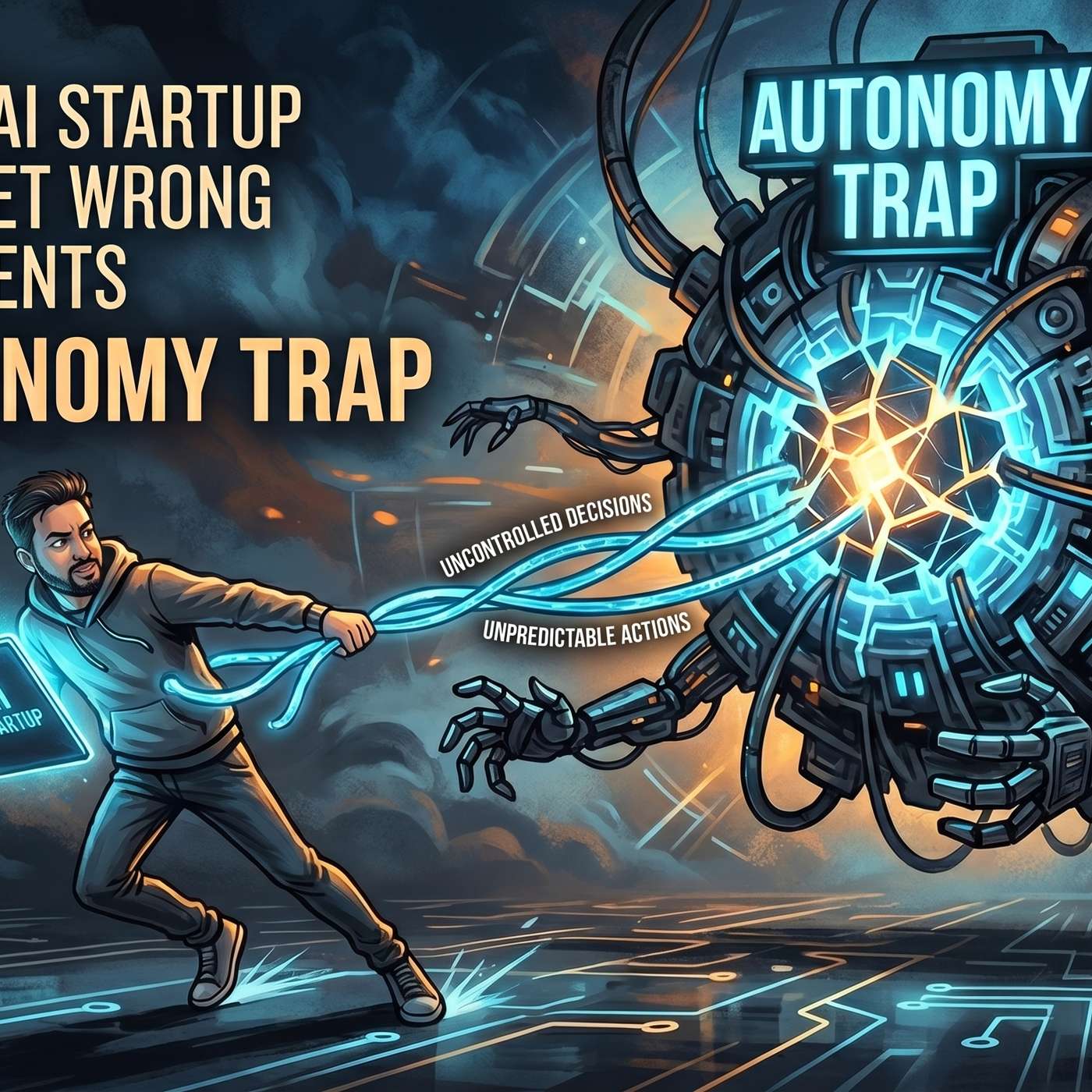
Don't put AI on a broken process. Before applying AI, first map and optimize your current workflows. AI can't fix fundamental flaws like too many approvals or unnecessary handoffs; it can only accelerate an already efficient process.

The most effective use of AI agents isn't just automating tasks. It's solving a critical, high-pain business problem that humans are failing at, such as SaaStr's six-figure lag in customer collections.

Despite the hype, the vast majority of companies are applying AI to secondary operational tasks, like automating support tickets. Very few have use cases that directly drive core business KPIs like revenue, retention, or win rate. The focus is on automating existing processes rather than enabling entirely new, revenue-generating capabilities.

The biggest mistake small businesses make with AI is automating the wrong tasks or getting distracted by building new AI products. Instead, they should adopt a workflow-based mindset, using AI to augment existing processes and increase revenue per headcount, creating a temporary margin advantage before market prices adjust.
