Get your free personalized podcast brief
We scan new podcasts and send you the top 5 insights daily.
David Vélez sees AI's potential beyond optimizing operations. He believes it will provide sophisticated, personalized financial advice to the masses, democratizing wealth management and solving for the 99% who lack access to true financial guidance, unlike their wealthy counterparts.

Related Insights
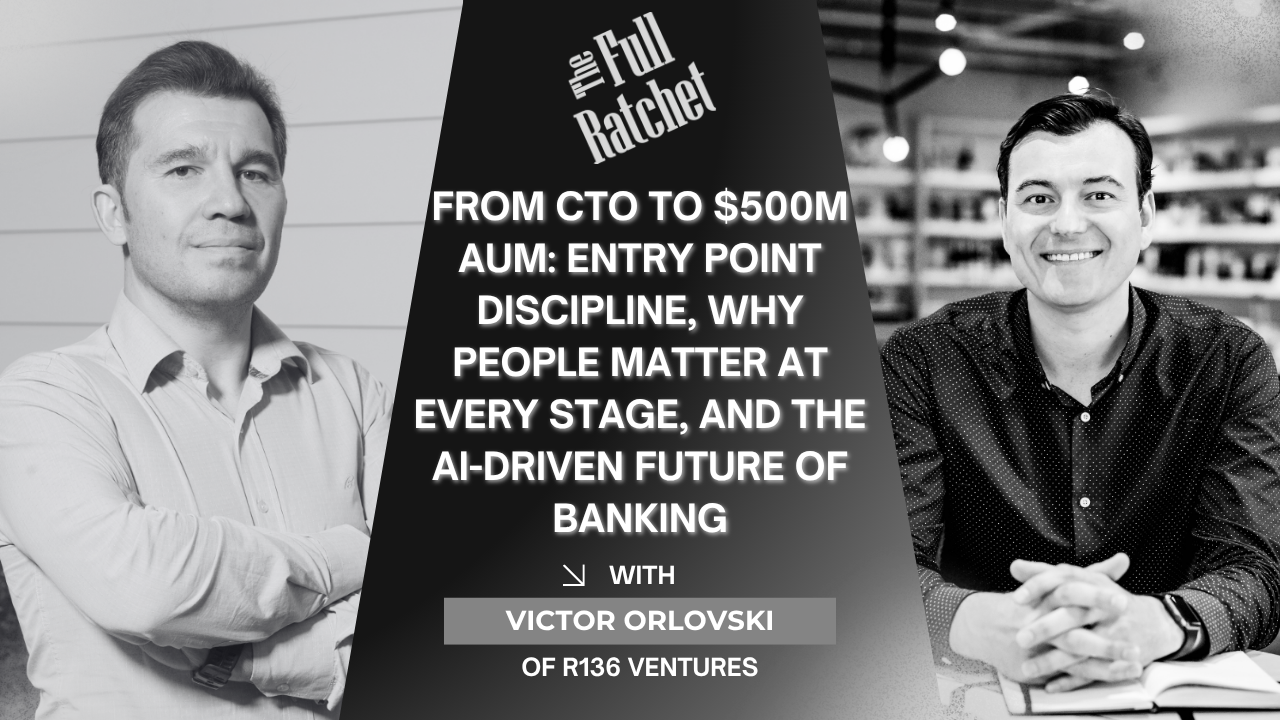
Investor Victor Orlovski predicts that banking, alongside media, will be one of the first industries to become fully automated. He argues that algorithms can handle every function, from operations to strategy, more effectively than humans, eliminating the need for any employees, including a CEO.
The democratization of technology via AI shifts the entrepreneurial goalpost. Instead of focusing on creating a handful of billion-dollar "unicorns," the more impactful ambition is to empower millions of people to each build a million-dollar "donkey corn" business, truly broadening economic opportunity.

The most powerful use of AI for business owners isn't task automation, but leveraging it as an infinitely patient strategic advisor. The most advanced technique is asking AI what questions you should be asking about your business, turning it from a simple tool into a discovery engine for growth.

Using the historical parallel of ATMs, CEO Sim Shabalala argues that AI won't eliminate human roles but will automate routine tasks. This frees humans for higher-order work involving empathy, complex problem-solving, and valuable client interaction.
Financial support (UBI) is insufficient for a thriving populace. The real safety net in an AI-driven world is a 'Universal Basic AI'—a personal, sovereign AI agent that acts in the user's best interest. This provides capability and access to resources, ensuring individuals are empowered, not just subsidized.

A fractional CTO sees AI's impact in two ways: enhancing current capabilities (making things faster or better) or adding entirely new ones previously out of reach. For example, AI enables 24/7 support for an SMB laundromat, a function that was previously financially unfeasible.

For the first time, a disruptive technology's most advanced capabilities are available to the public from day one via consumer apps. An individual with a smartphone has access to the same state-of-the-art AI as a top VC or Fortune 500 CEO, making it the most democratic technology in history.
Go beyond using AI for simple efficiency gains. Engage with advanced reasoning models as if they were expert business consultants. Ask them deep, strategic questions to fundamentally innovate and reimagine your business, not just incrementally optimize current operations.

Powerful AI assistants are shifting hiring calculus. Rather than building large, specialized departments, some leaders are considering hiring small teams of experienced, curious generalists. These individuals can leverage AI to solve problems across functions like sales, HR, and operations, creating a leaner, more agile organization.
The future of AI is not just humans talking to AI, but a world where personal agents communicate directly with business agents (e.g., your agent negotiating a loan with a bank's agent). This will necessitate new communication protocols and guardrails, creating a societal transformation comparable to the early internet.