Get your free personalized podcast brief
We scan new podcasts and send you the top 5 insights daily.
Weather apps often overstate the chance of rain, a 'wet bias,' by simplifying complex data into one icon. This influences users to cancel plans, causing restaurants and local businesses to lose revenue. It's a prime example of how seemingly minor UI decisions can have significant, real-world economic consequences.

Related Insights
Research from Duncan Watts shows the bigger societal issue isn't fabricated facts (misinformation), but rather taking true data points and drawing misleading conclusions (misinterpretation). This happens 41 times more often and is a more insidious problem for decision-makers.

The Instagram study where 33% of young women felt worse highlights a key flaw in utilitarian product thinking. Even if the other 67% felt better or neutral, the severe negative impact on a large minority cannot be ignored. This challenges product leaders to address specific harms rather than hiding behind aggregate positive data.

A complex spreadsheet model is often brittle; a single questionable assumption can cause stakeholders to reject the entire analysis. To counter this, models should make key assumptions transparent and easily adjustable, like with a slider, to allow for sensitivity analysis rather than outright dismissal.

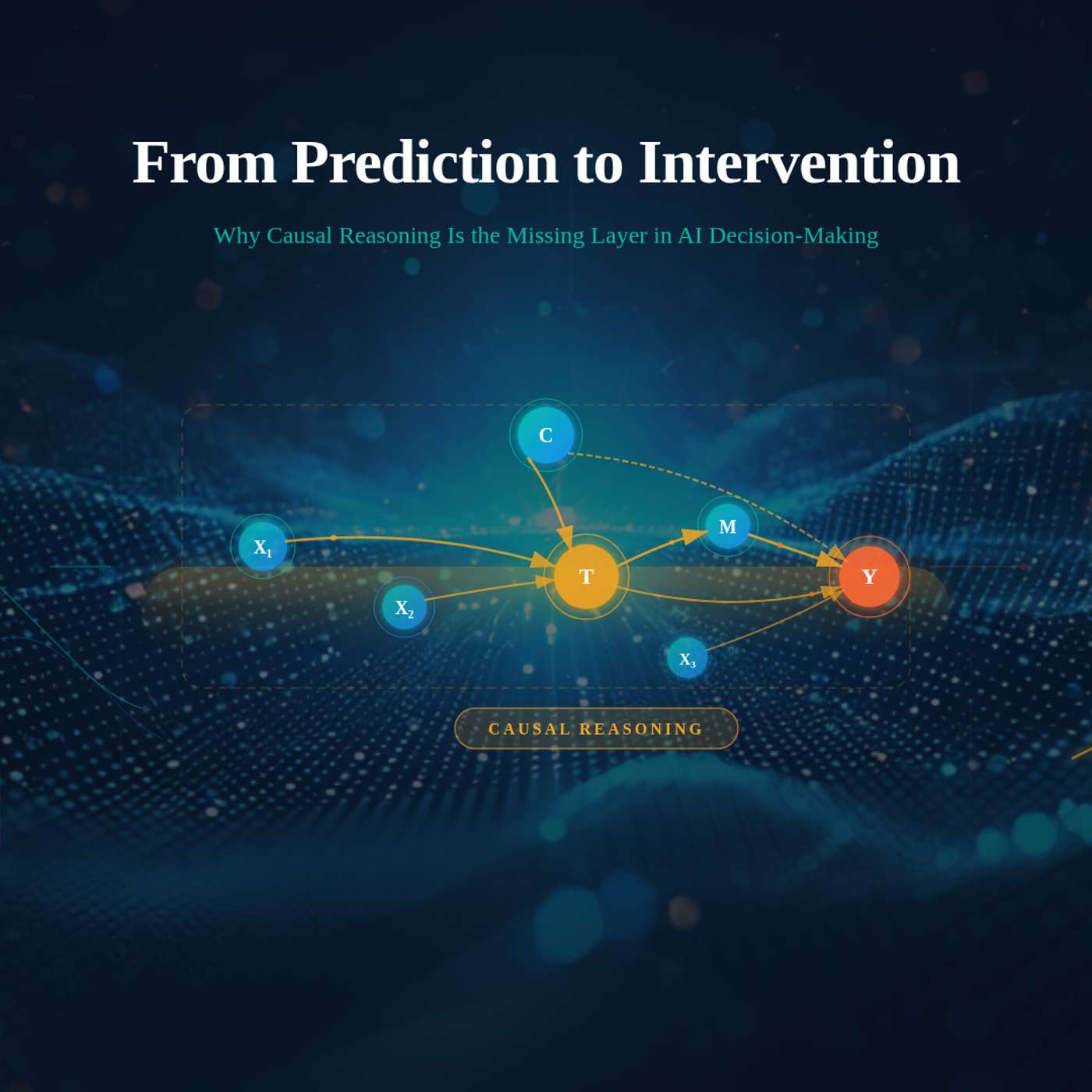
Predictive models often mistake correlation for causation, leading to poor decisions. For example, a model might link marketing spend to revenue, but causal analysis can reveal that customer seasonality is the true cause of both. This deeper understanding prevents wasteful investments based on misleading correlations.
Standard metrics like the Air Quality Index (AQI) are abstract and fail to motivate change. Economist Michael Greenstone created the Air Quality Life Index (AQLI), which translates pollution into a tangible, personal metric—years of life expectancy lost—making the data hard to ignore and spurring action.

A common mistake is building a visually impressive data product (like Google Earth) that is interesting but doesn't solve a core, recurring business problem. The most valuable products (like Google Maps) are less about novelty and more about solving a frequent, practical need.

Jimmy Wales highlights Airbnb's early crisis where a single host's home was trashed. While statistically rare, the severity and visibility of this one negative event threatened their entire business. This shows that relying solely on aggregate data can blind leaders to existential threats rooted in individual customer pain.
Actions in complex systems like markets have cascading effects. A dating site's decision to lengthen profiles boosted engagement (a first-order effect) but unexpectedly hurt user conversion months later (a second-order effect). This highlights the need to think beyond immediate, linear outcomes.

While bad data has always led to bad decisions, AI compounds the problem exponentially. The speed and scale of AI-driven actions mean the consequences of inaccurate data are far more severe and immediate, as it makes bad decisions faster.

Companies like Uber Eats use personalized data to set prices, a practice dubbed "AI spy pricing." This fosters consumer paranoia and erodes trust, which, if scaled across the economy, could discourage spending and negatively impact GDP.
