Get your free personalized podcast brief
We scan new podcasts and send you the top 5 insights daily.
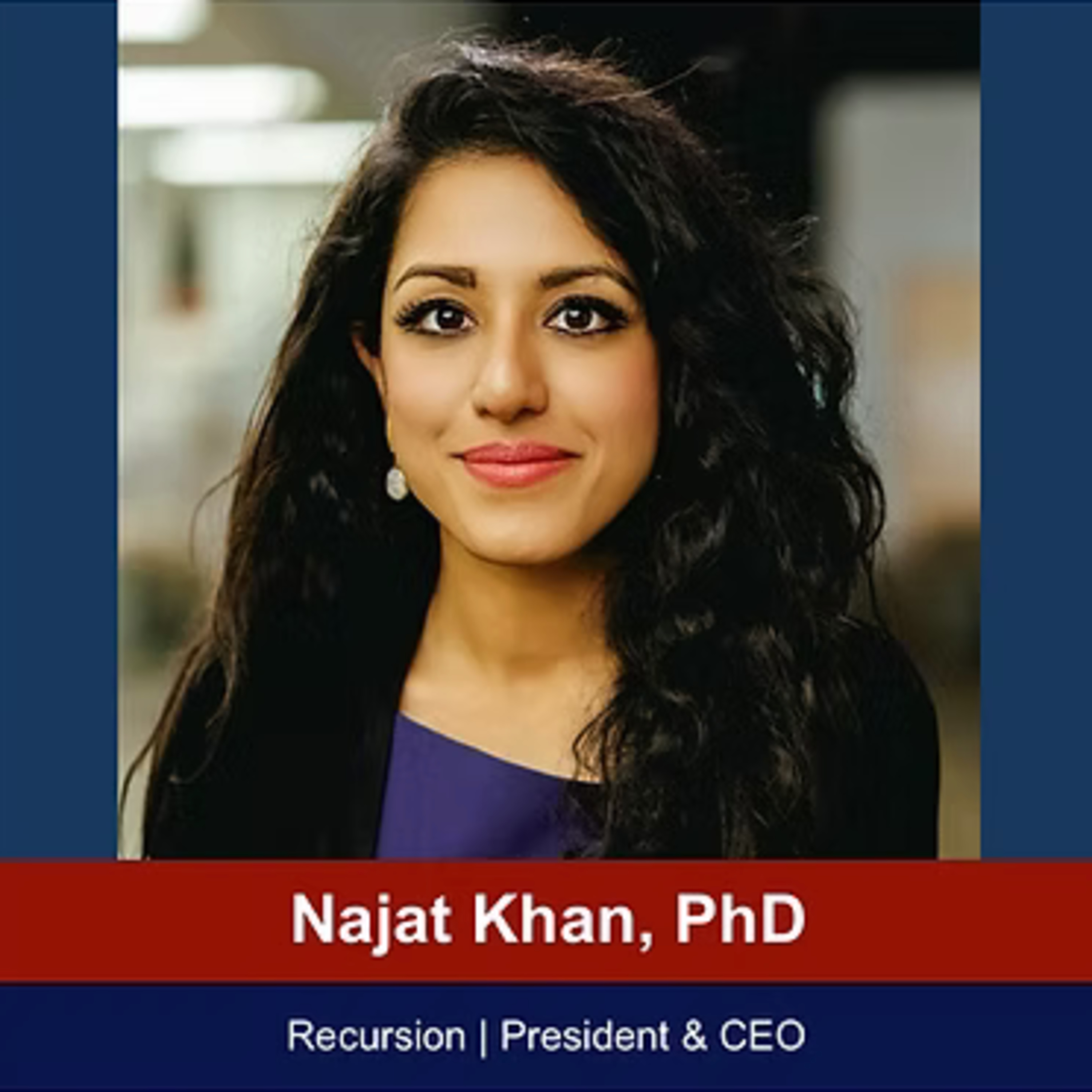
Upon taking the helm, Najat Khan is strategically shifting Recursion from a company focused on its AI/data platform to a "product engine" centered on developing medicines. This pivot underscores the belief that long-term value in biotech is created by delivering tangible therapies for patients, not just technology.
Related Insights
While Novogaia is building a next-gen discovery platform, CEO Tess Bevers emphasizes that the company's primary focus must be advancing its first drug candidates. For early-stage biotechs, the tangible value lies in getting molecules further down the pipeline, not just in perfecting the underlying technology.

Recursion's CEO outlines a two-pronged pipeline strategy. The first prong uses phenomics to uncover novel biological insights for new targets, like their FAP program. The second uses their AI-driven small molecule design platform to improve the therapeutic index for known but historically 'hard-to-drug' targets, like CDK7. This balanced portfolio approach de-risks development by leveraging different strengths of their end-to-end platform.

A CEO's primary role differs fundamentally based on company type. In an asset-centric biotech, the CEO must act as a hands-on program manager, micromanaging execution. In a platform company, the CEO must be deeply embedded in the science to predict and leverage the technology's long-term trajectory.

Recursion's CEO Najat Khan argues that the key to success in tech-bio is not just hiring scientists and engineers, but cultivating a 'bilingual' culture. This requires scientists who understand AI's limitations and AI experts who appreciate the humility needed for science. This integrated talent and culture is a core competitive advantage that is difficult for larger, more siloed organizations to replicate.
In the early stages, a biotech CEO's role is primarily scientific leadership and storytelling to attract investors. As the company and market mature, the role shifts. Effective CEOs must then become adaptable strategists, staying true to their core vision while responding to the dynamic industry environment.

Early-stage biotechs prioritize scientists to build the core platform. However, once a lead clinical program is identified, the critical hire becomes a Chief Medical Officer who can design the clinical strategy. This hire is timed to the program's maturation, not the company's age, reflecting a pivotal strategic shift.

The name change wasn't merely cosmetic; it represented a fundamental strategic pivot. The company moved from being a delivery technology provider (NuVec) to a therapeutics company developing its own proprietary drugs, creating a more potent offering for investors and patients.

The pivot from a pure technology role (like CTO) to product leadership is driven by a passion shift. It's moving from being obsessed with technical optimization (e.g., reducing server costs) to being obsessed with customer problems. The reward becomes seeing a customer's delight in a solved problem, which fuels a desire to focus entirely on that part of the business.

Atai's leadership change from a business-focused founder to a CSO-turned-CEO was a strategic move reflecting its evolution. The company shifted from an asset-gathering model to a traditional biotech focused on advancing its internal pipeline. The co-CEO role was a planned intermediate step to ensure a smooth, controlled transition.
Instead of promoting AI as a magical drug discovery engine, Recursion's CEO Najat Khan focuses on concrete efficiency metrics. She highlights designing drug candidates with 90% fewer compounds (330 vs. an industry average of 5,000) and in less than half the time (17 vs. 42 months). This frames AI's value in terms of measurable process improvements rather than unprovable hype.