Get your free personalized podcast brief
We scan new podcasts and send you the top 5 insights daily.
Echoing economist Robert Solow's 1987 observation about computers, thousands of CEOs now admit AI has no measurable productivity impact. This suggests history is repeating, where major technological shifts have a long, multi-year lag before their economic benefits are truly realized and measured.

Related Insights
Companies feel immense pressure to integrate AI to stay competitive, leading to massive spending. However, this rush means they lack the infrastructure to measure ROI, creating a paradox of anxious investment without clear proof of value.

Contrary to the feeling of rapid technological change, economic data shows productivity growth has been extremely low for 50 years. AI is not just another incremental improvement; it's a potential shock to a long-stagnant system, which is crucial context for its impact.

Despite widespread adoption, Patrick Collison notes that AI has not yet produced measurable gains in macroeconomic productivity. He points to recent studies and the lack of corresponding GDP growth outside the U.S. as evidence that the diffusion of these technologies through the economy is slow and complex.
A growing gap exists between AI's performance in demos and its actual impact on productivity. As podcaster Dwarkesh Patel noted, AI models improve at the rapid rate short-term optimists predict, but only become useful at the slower rate long-term skeptics predict, explaining widespread disillusionment.
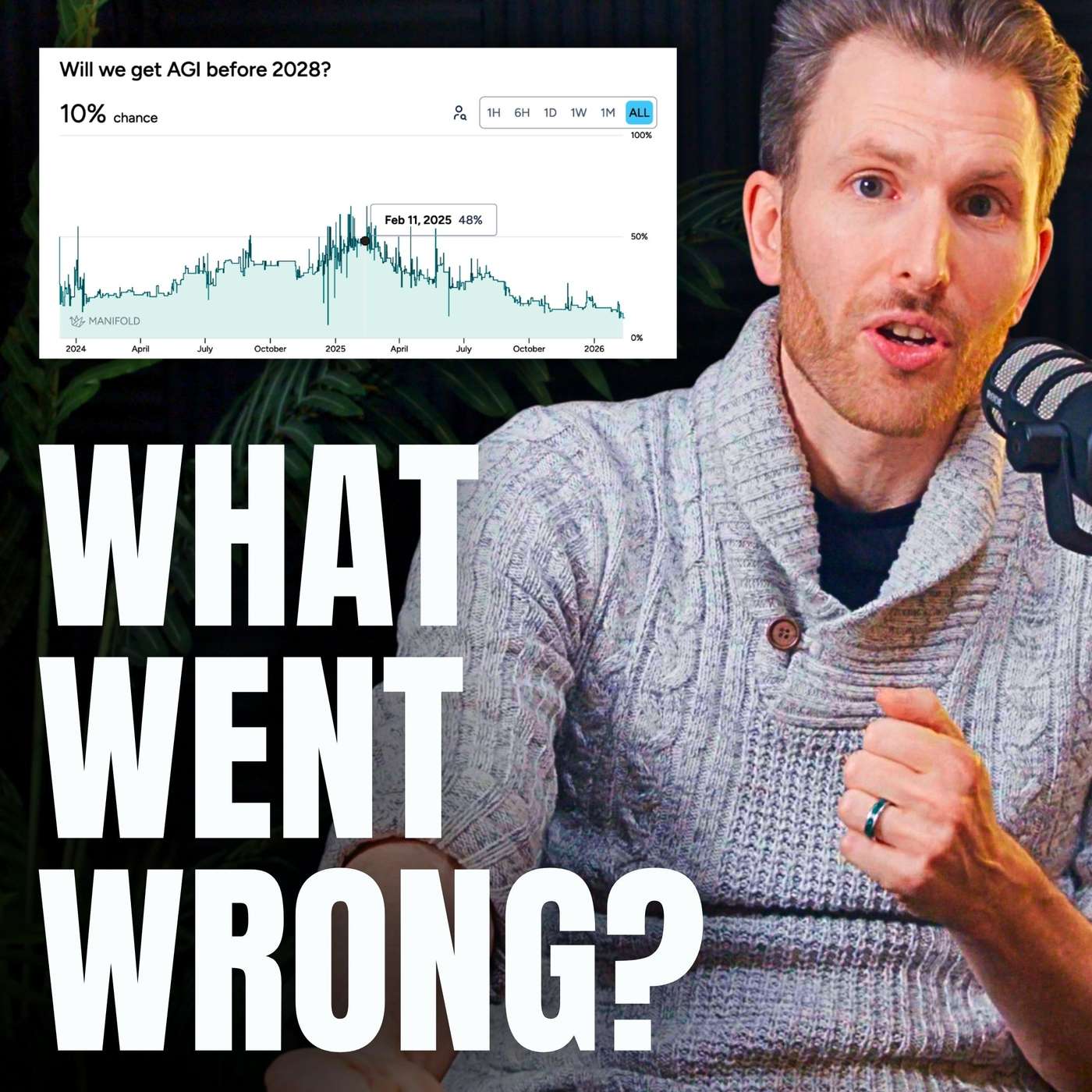
The anticipated AI productivity boom may already be happening but is invisible in statistics. Current metrics excel at measuring substitution (replacing a worker) but fail to capture quality improvements when AI acts as a complement, making professionals like doctors or bankers better at their jobs. This unmeasured quality boost is a major blind spot.

General-purpose technologies like AI initially suppress measured productivity as firms make unmeasured investments in new workflows and skills. Economist Erik Brynjolfsson argues recent data suggests we are past the trough of this "J-curve" and entering the "harvest phase" where productivity gains accelerate.

While AI investment has exploded, US productivity has barely risen. Valuations are priced as if a societal transformation is complete, yet 95% of GenAI pilots fail to positively impact company P&Ls. This gap between market expectation and real-world economic benefit creates systemic risk.

Just as electricity's impact was muted until factory floors were redesigned, AI's productivity gains will be modest if we only use it to replace old tools (e.g., as a better Google). Significant economic impact will only occur when companies fundamentally restructure their operations and workflows to leverage AI's unique capabilities.

A significant disconnect exists between AI's market valuation, which prices in massive future GDP growth, and its current real-world economic impact. An NBER study shows 80% of US firms report no productivity gains from AI, highlighting that market hype is far ahead of actual economic integration and value creation.

History shows a significant delay between tech investment and productivity gains—10 years for PCs, 5-6 for the internet. The current AI CapEx boom faces a similar risk. An 'AI wobble' may occur when impatient investors begin questioning the long-delayed returns.
