Get your free personalized podcast brief
We scan new podcasts and send you the top 5 insights daily.
Clayton Mellina says AI agents now help interpret transcriptomic data that measures roughly 20,000 gene-regulation events across doses and cell types. They can chase specific changes, connect them to prior literature, and let small teams run many disease-program hypotheses in parallel. He calls these agent swarms.

Related Insights
Instead of painstakingly charting a single research path, scientists now use AI to explore many potential directions simultaneously. By launching multiple chat instances, they can "scout" the problem space, quickly identifying promising avenues and discarding dead ends.

Instead of using AI for pure discovery, Variant Bio applies it to a specific bottleneck: data overwhelm. With over 25,000 gene associations per search, they deploy AI agents to sift through proprietary data, identify findings absent from existing literature, and flag novel drug targets for human researchers.
Human-led labs often miss complex genetic diagnoses due to practical time and budget limits, forcing them to apply filters that exclude rare variants. AI agents can work nonstop, looping through genomic data repeatedly, overcoming this 'meatspace problem' to find diagnoses that were previously overlooked.

The transformational power of AI in life sciences isn't just designing novel molecules, which fails to solve the costly clinical development bottleneck. Instead, agentic AI provides immense leverage to individual scientists, automating tasks like protocol writing and experiment analysis that previously took weeks.

Their 'AI Scientist' is architected as a multi-agent system. It features an orchestrator for hypotheses, a literature review agent, and specialized vision-language models for analyzing experimental data directly from lab instruments, rather than relying on one monolithic model.
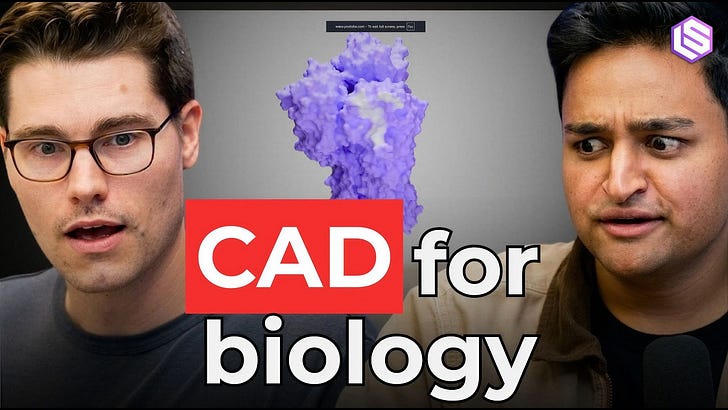
At Fathom Therapeutics, the AI platform autonomously iterates to generate drug candidates, bypassing tedious manual steps. This frees up scientists from the time-consuming "mechanic" work of building molecular connections, allowing them to dedicate their expertise to analyzing the high-quality, system-generated options and data.
A key value of AI agents is rediscovering "lost" institutional knowledge. By analyzing historical experimental data, agents can prevent redundant work. For example, an agent found a previous study on mouse models that saved a company eight months and significant cost, surfacing data from an acquired company where the original scientists were gone.

Traditional drug discovery is a slow, sequential "waterfall" process with expensive gates. AI models that generate promising candidates quickly are transforming this into an agile, iterative loop, much like the revolution in software development. This dramatically reduces the cost of early experimentation.
Silico is an agentic platform designed to accelerate empirical research like interpretability. It uses swarms of agents to break down complex problems, run experiments, synthesize information, and validate hypotheses, allowing human researchers to operate at a higher level of abstraction and focus on "big questions."
A major biotech revolution is underway as AI now enables effective 'in silico' (simulated) experiments. This shift from physical "wet labs" to cheap, infinitely scalable simulations drastically cuts time and cost for drug discovery, making audacious goals like curing cancer scientifically plausible.
