Get your free personalized podcast brief
We scan new podcasts and send you the top 5 insights daily.
Advanced AI agents like Astra excel at navigating complex graphical interfaces, reversing the trend toward command-line interactions. This makes SaaS products with rich UIs more valuable, as AI can operate them on behalf of users, saving significant time on tedious tasks.

Related Insights
Instead of making SaaS obsolete, AI agents are becoming its primary users. An agent like Codex can be instructed to operate complex software (e.g., CAD programs) that a human user hasn't learned. This allows non-experts to leverage powerful tools without the steep learning curve, creating a new paradigm for software interaction.
The next generation of software may lack traditional user interfaces. Instead, they will be 'API-first' or 'agent-first,' integrating directly into existing workflows like Slack or email. Software will increasingly 'visit the user' rather than requiring the user to visit a dashboard.

AI is fundamentally changing SaaS interaction. Instead of users clicking buttons to take action, AI will perform the tasks. The UI will then transform into a surface where users primarily review AI-driven outcomes, get insights, and make corrections, often interacting via conversational language.

While CLIs were an important stepping stone for agentic AI, the industry is rapidly moving back to rich Graphical User Interfaces (GUIs). These new UIs are designed for simultaneous collaboration between a human user and an AI agent, offering a more powerful and intuitive experience.

The next billion AI agent users will not interact via developer-centric interfaces like Telegram. The winning platforms will be opinionated, provide guardrails, and hide technical complexities like tool calls, offering a user experience closer to a polished SaaS product.

The largest opportunity for AI agents isn't just interacting with APIs but automating the trillions of dollars of knowledge work locked in legacy Windows applications. This requires giving agents "computer use"—the ability to interact with GUIs, just like a human, unlocking a massive, previously inaccessible market.
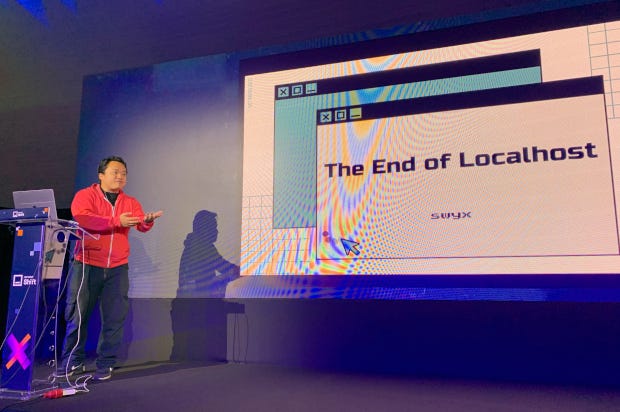
Power users are discovering that direct, conversational interaction with AI agents is more efficient than clicking through graphical user interfaces (GUIs). This signals a shift toward an 'app-less' world where tasks are accomplished via chat, potentially making traditional UI/UX design roles redundant for many applications.
AI is becoming the new UI, allowing users to generate bespoke interfaces for specific workflows on the fly. This fundamentally threatens the core value proposition of many SaaS companies, which is essentially selling a complex UX built on a database. The entire ecosystem will need to adapt.

As users increasingly rely on AI agents, traditional graphical user interfaces will become obsolete. SaaS products must evolve to offer conversational interfaces that other agents can interact with directly. The primary user will shift from a human clicking buttons to another AI sending messages.
The rise of AI agents means the primary "user" of a SaaS platform will soon be another program. SaaS companies must embrace this by building best-in-class APIs and command-line interfaces (CLIs) for agents. This requires a strategic shift from focusing on the human UI to optimizing the agent interface.
