Get your free personalized podcast brief
We scan new podcasts and send you the top 5 insights daily.
Don't just adopt a CRM tool because networking is important. First, define the specific business goal your relationships will serve today (e.g., fundraising, hiring, landing customers). This "why" transforms relationship management from a vague resolution into a focused, strategic system.

Related Insights
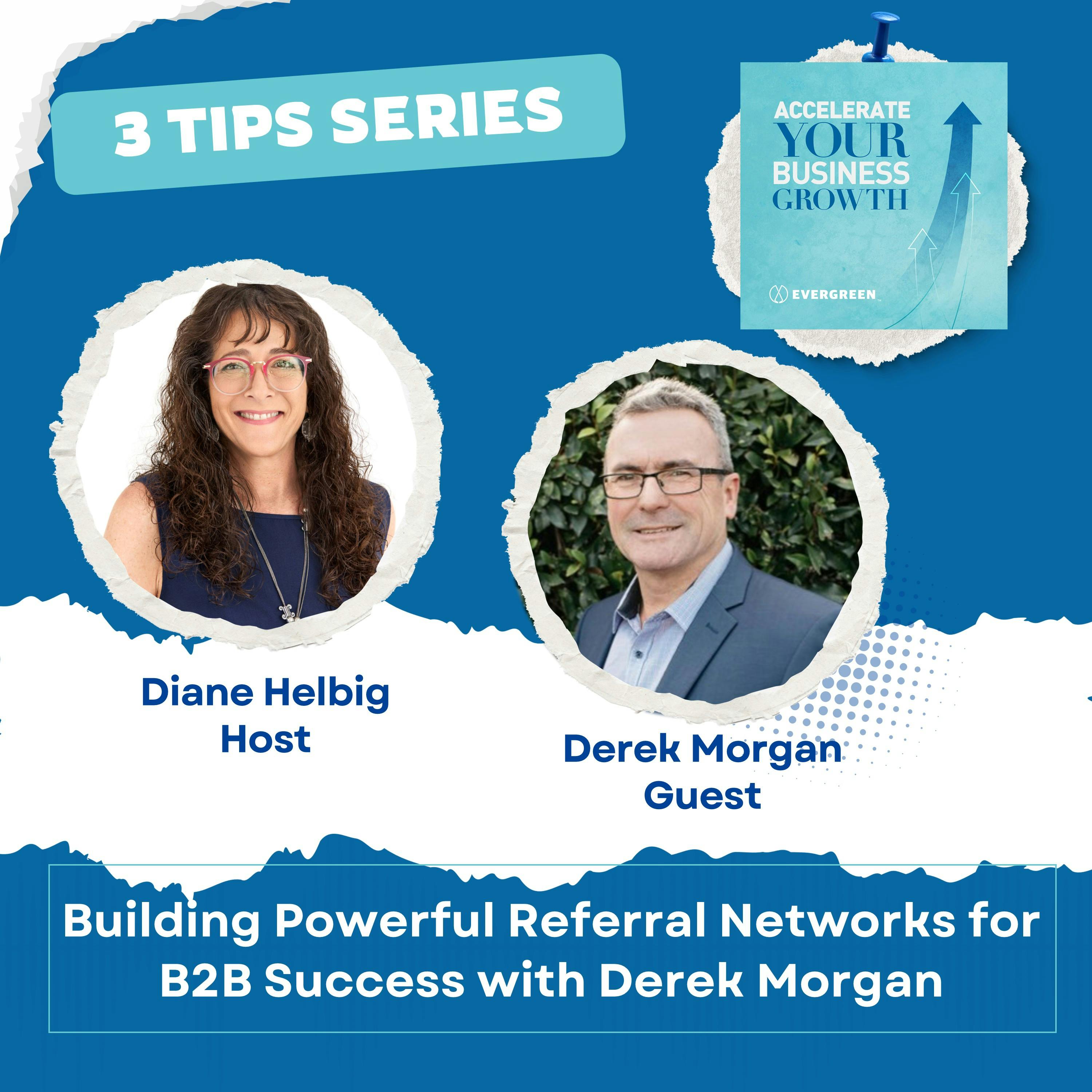
The goal of networking shouldn't be to find your next customer. Instead, strategically identify and connect with potential referral partners. One such partner can become a center of influence, introducing you to hundreds of ideal customers, far outweighing the value of a single transaction.
Many professionals delay networking, viewing it as a final step after establishing their platform. This is backward. Relationships are the foundation upon which a successful career or business is built, not the decorative spice added at the end. An entire business cannot be built on an unstable foundation.

Contrary to the 'bigger is better' networking mindset, salespeople should strategically reduce their circle to focus on high-quality, mutually beneficial relationships. The goal is not to accumulate a high quantity of connections, but to cultivate a smaller, more valuable network where both parties can serve and help each other.

Don't leave networking to chance. Proactively identify and maintain a written list of at least 20 people in your network who naturally enjoy introducing others. Pairing this list with your target prospect list creates a repeatable, machine-like process for generating warm introductions.

Instead of attending networking events to socialize, create a plan by identifying two or three specific individuals you need to connect with beforehand. Make meeting them your sole focus and measure the event's success by whether you made those connections, not by how much fun you had.

Use Sales Navigator for contextual insights (the 'what' and 'why' a prospect might buy) and your CRM for identity (the 'who'). This clarifies the role of each tool in your tech stack, making outreach more relevant and effective.

Build deep personal and professional relationships by creating scheduled, recurring social events. Rather than relying on sporadic outreach, establish a cadence like a weekly founder hike or a bi-weekly couples' dinner. This systematized approach guarantees you consistently connect with dozens of new people on a deeper level each year.

High performers don't network passively; they treat it as a core operational discipline with measurable goals. By setting a simple metric, such as making one valuable introduction for others per week, they proactively nurture their network with a giving-first mentality. This systematic approach builds immense social capital and karmic returns over time.

A systematic approach to networking involves reaching out to five people every day with the primary goal of providing five times more value than you ask for in return. This proactive, value-first strategy transforms relationship-building from a transactional process into a genuine, long-term asset that compounds over time.
Don't treat all professional relationships the same. Differentiate between a community for support, a network for tactical needs (like finding an agency), and a personal board of directors for strategic guidance on major career moments. Each serves a distinct purpose in your journey.
![Why you need a personal board of directors [Uncensored Renegades] thumbnail](https://img.transistorcdn.com/VIH3Rn5ET8-eHQxgBGNydnhXL95pc10_Kq7qTpjezuc/rs:fill:0:0:1/w:1400/h:1400/q:60/mb:500000/aHR0cHM6Ly9pbWct/dXBsb2FkLXByb2R1/Y3Rpb24udHJhbnNp/c3Rvci5mbS9zaG93/LzQ3MzEvMTU3MDAz/MjQ3NC1hcnR3b3Jr/LmpwZw.jpg)