Marshall Wace doesn't formally debrief individual stock trades that go wrong. Instead, they focus learning and risk management at the portfolio level. For a diversified fund, the critical skill is overall construction and risk allocation, not the outcome of any single position among hundreds.
To find alpha, firms need people who challenge groupthink. Marshall Wace actively screens for "disagreeableness"—the intellectual courage to contest consensus views, not a difficult personality. This trait is deemed more valuable than traditional credentials in a world where information is commoditized by AI.
Unlike competitors who gated funds during the 2008 crisis, Marshall Wace honored all redemption requests. This made them the "cash point" for the industry, causing their AUM to plummet from $14B to $3.5B. This painful decision cemented their long-term reputation and institutional trust.
Success in investing isn't about constant wins. Sir Paul Marshall notes that a top-tier manager may only have a 54% success rate. This means being wrong almost every other day, which serves as a powerful, daily antidote to the hubris that can destroy investment careers.
While AI seems a natural fit for systematic strategies, its most immediate impact at Marshall Wace has been on the discretionary side. AI tools for distilling vast amounts of information give fundamental managers a speed and depth of analysis that was previously impossible, transforming their workflow.
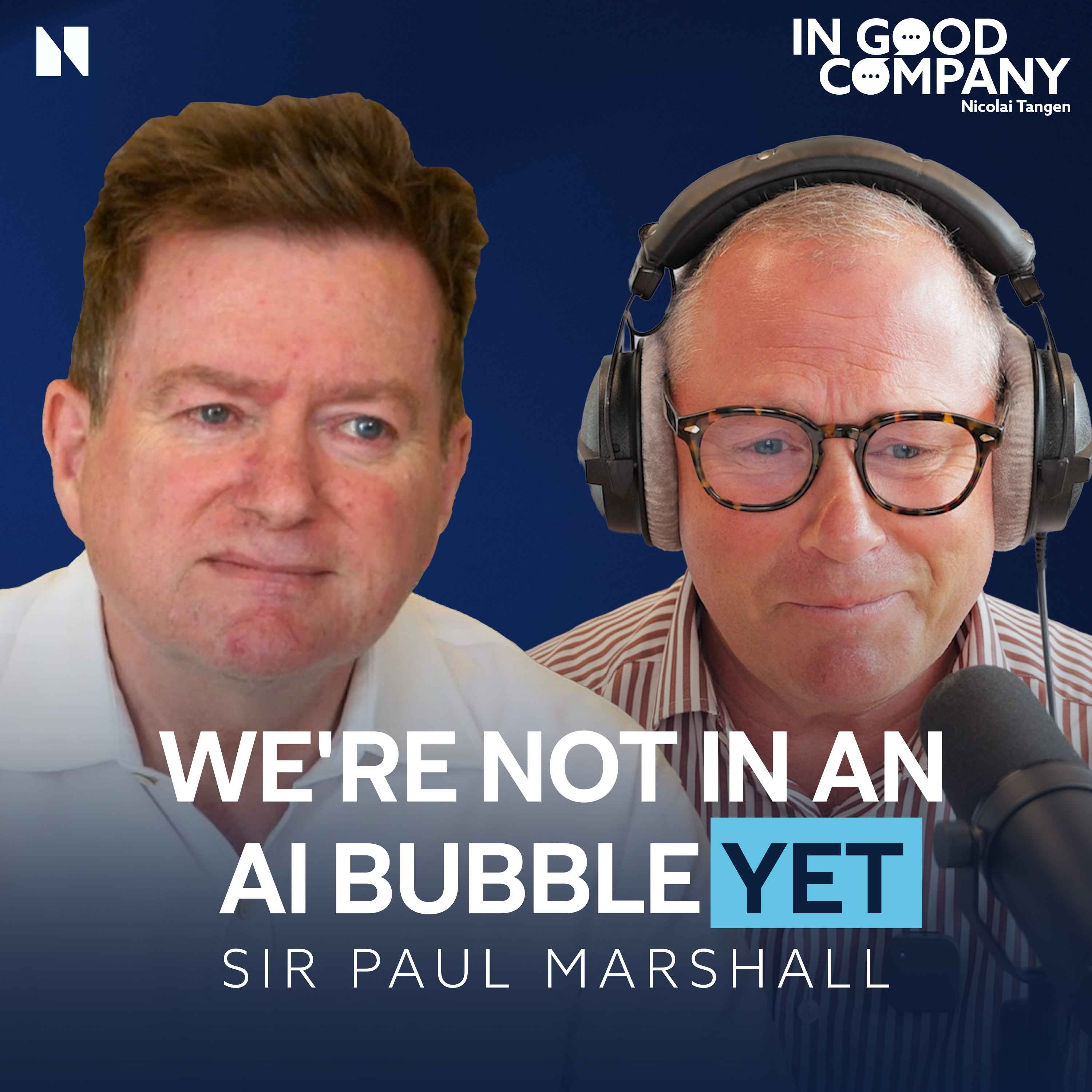
Paul Marshall suggests a proprietary, real-time indicator for market sentiment: his own firm's internal AI token consumption. A *deceleration* in the growth of this usage—not an outright decline—could signal that the excitement phase is peaking, providing an early warning to reduce risk before a market top.
Beyond win-loss rates, Marshall Wace uses the "slugging ratio" to evaluate fundamental managers. This metric measures the proportion of gains concentrated in a small number of high-conviction bets. It identifies managers who can not only pick winners but also size positions effectively for maximum impact.
Paul Marshall posits that AI won't perfect market efficiency. By empowering retail investors with better information, it will increase their trading volume. This influx of less-skilled capital creates more behavioral-driven inefficiencies for professional funds to exploit, making markets more competitive but not necessarily more efficient.
Paul Marshall argues that university credentials often fail to identify "high agency"—the critical trait of being self-driven. To find these individuals, he looks for deep commitment and achievement in hobbies or entrepreneurial side projects, as these demonstrate genuine curiosity and initiative outside a structured curriculum.