Get your free personalized podcast brief
We scan new podcasts and send you the top 5 insights daily.
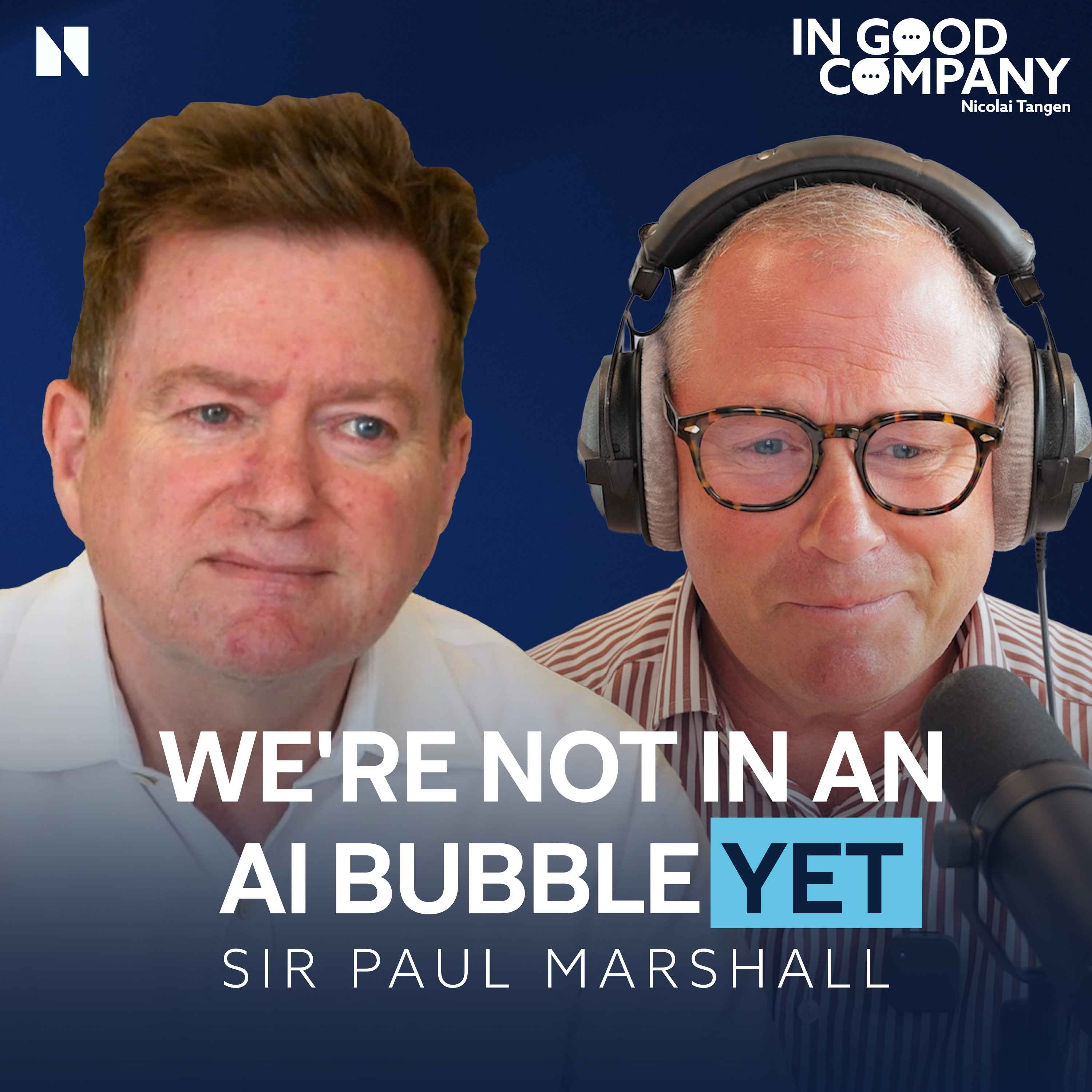
To find alpha, firms need people who challenge groupthink. Marshall Wace actively screens for "disagreeableness"—the intellectual courage to contest consensus views, not a difficult personality. This trait is deemed more valuable than traditional credentials in a world where information is commoditized by AI.
Related Insights
To find true contrarian talent, ask university audiences who feels 'weird' or thinks differently. Typically, less than 10% will raise their hands. These are the individuals to hire, as the other 90% are conditioned to conform and are less likely to generate outlier ideas or returns.

As AI handles technical tasks, uniquely human skills like curiosity, empathy, and judgment become paramount. Leaders must adapt their hiring processes to screen for these non-replicable soft skills, which are becoming more valuable than traditional marketing competencies.

As AI handles technical tasks, the value of hard skills diminishes. The most crucial employee traits become "human" qualities: buying into the company vision, emotional intelligence, and self-awareness. These are the new competitive advantages in talent acquisition.
A top VC's most important interview question is now "How have you used AI in your daily life this week?" The key is identifying individuals who are running towards the new technology and embracing change. This mindset is uncorrelated with age or seniority, making it the most critical hiring signal.

To combat groupthink, investment firm GQG hires former investigative journalists whose primary role is to argue against investment ideas. Their compensation is tied to making correct contrarian calls, not to agreeing with the portfolio managers, ensuring a culture of rigorous debate and uncovering blind spots.

In a world where AI can efficiently predict outcomes based on past data, predictable behavior becomes less valuable. Sam Altman suggests that the ability to generate ideas that are both contrarian—even to one's own patterns—and correct will see its value increase significantly.

With AI models capably handling implementation, Hudson River Trading is shifting its hiring focus. The firm can now hire "theorists" or "dreamers" who excel at ideation but may lack coding skills. The ability to clearly articulate ideas and prompts to an AI has become a highly valued skill in itself.

Palantir CEO Alex Karp argues that as AI commoditizes rote knowledge, the most valuable human assets become vocational training and "neurodivergence"—the ability to think differently, be an artist, and generate unique insights. Standardized, regurgitative skills that defined past success are rapidly losing their value.

As generative AI raises the technical floor for skills like coding, the crucial differentiator for talent becomes "taste." Priyanka Vergadia defines this as a candidate's unique perspective, style, and lived experiences, which are necessary to create exceptional, non-generic work.
Neurodiverse individuals in the investment industry are often just called idiosyncratic or brilliant. Research frames neurodiversity as a superpower, enabling teams to analyze the same data from different perspectives. This cognitive friction is a pathway to generating alpha by seeing what homogenous teams miss.