Get your free personalized podcast brief
We scan new podcasts and send you the top 5 insights daily.
The famed 7-year rerelease cycle wasn't a grand strategy. It began in 1944 when a cash-strapped Disney rereleased "Snow White" out of necessity. They accidentally discovered they could capture a new generation of children with each cycle, creating a powerful, evergreen revenue stream from their existing library.
Related Insights
Disney atomized its 20-year-old movie "High School Musical" into 52 free clips for TikTok. This zero-cost content marketing strategy revives nostalgic IP, trains the algorithm to favor Disney content, and acts as a funnel to drive viewers to its paid Disney+ platform. It's a case study in repurposing your greatest hits for modern platforms.

Animated characters offer superior long-term value. They are timeless, ageless, and always available to work. This avoids the problems of aging actors, scheduling conflicts, and massive profit-sharing deals, making the underlying IP a more robust and controllable asset for a flywheel business model.
Disney uses ancillary products like daily comic strips and merchandise to maintain constant fan engagement and market presence. This keeps the brand top-of-mind without devaluing the scarce, high-quality core film releases, which are reserved for major cultural moments.
Disney's creative success was fundamentally a technology story. Innovations like synchronized sound in "Steamboat Willie" were risky, company-betting endeavors. This technology transformed cartoons from a novelty into a medium capable of creating characters with personality, enabling deeper audience connection.
The company's relentless focus on owning and controlling its intellectual property stems directly from Walt Disney's early failure. He lost the rights to his first hit character, Oswald, in a contract dispute, a formative trauma that shaped Disney's business strategy for the next century.
Disney's appointment of an 'experiences' executive as CEO signals a strategic shift away from its traditional content stronghold. This is a defensive move acknowledging that generative AI will devalue high-budget content by making it cheap and ubiquitous. The focus on parks and cruises leverages physical, inimitable experiences as a new defensible moat.

In the decades after the deaths of Walt and Roy Disney, the company's creative core rotted. By 1984, the once-dominant film and TV division was barely breaking even, while parks and consumer products generated a quarter-billion in profit. Disney had become a company that simply harvested its past successes.
Before home video existed, Disney created the first-ever commercial movie soundtrack for "Snow White." This innovation wasn't just a new revenue stream; it was a revolutionary way for audiences to relive the film's magic at home, creating a tangible connection to the IP and deepening the flywheel.
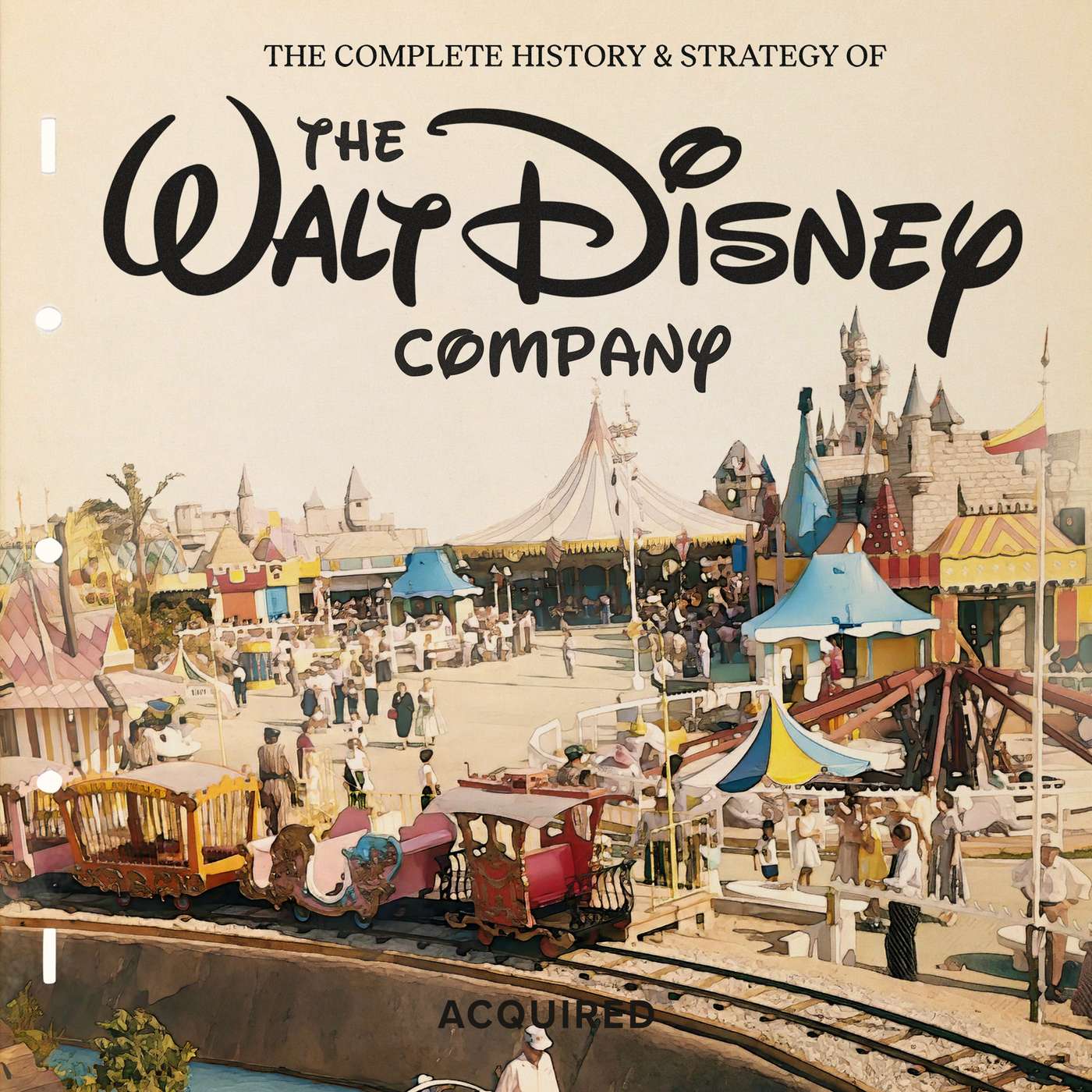
While other studios feared TV as a threat to theaters, Walt Disney embraced it as a strategic tool. He leveraged a partnership with the struggling ABC network, trading a weekly TV show for the crucial financing and nationwide marketing needed to launch the ambitious Disneyland park.
The longevity of an intellectual property hinges on its ability to transcend its original format. Mickey Mouse became an icon by expanding into film, TV, and theme parks, becoming a multi-dimensional character. In contrast, Beanie Babies remained shelf-bound toys, becoming a fad. Lasting value requires taking risks to expand IP across media.