Get your free personalized podcast brief
We scan new podcasts and send you the top 5 insights daily.
The TerraFab chip project blurs the lines between Tesla and SpaceX with a unique employment model. Key personnel are designated as 'SpaceX partners' who work at both companies simultaneously. This highly integrated approach reflects Musk's strategy of leveraging talent and resources across his entire corporate ecosystem.

Related Insights
The sequential mergers of X with xAI, then with SpaceX, and potentially Tesla, signal the formation of a single entity. This "Musk Industries" would leverage shared manufacturing learnings and AI development across cars, rockets, robots, and social networks, creating powerful synergies.
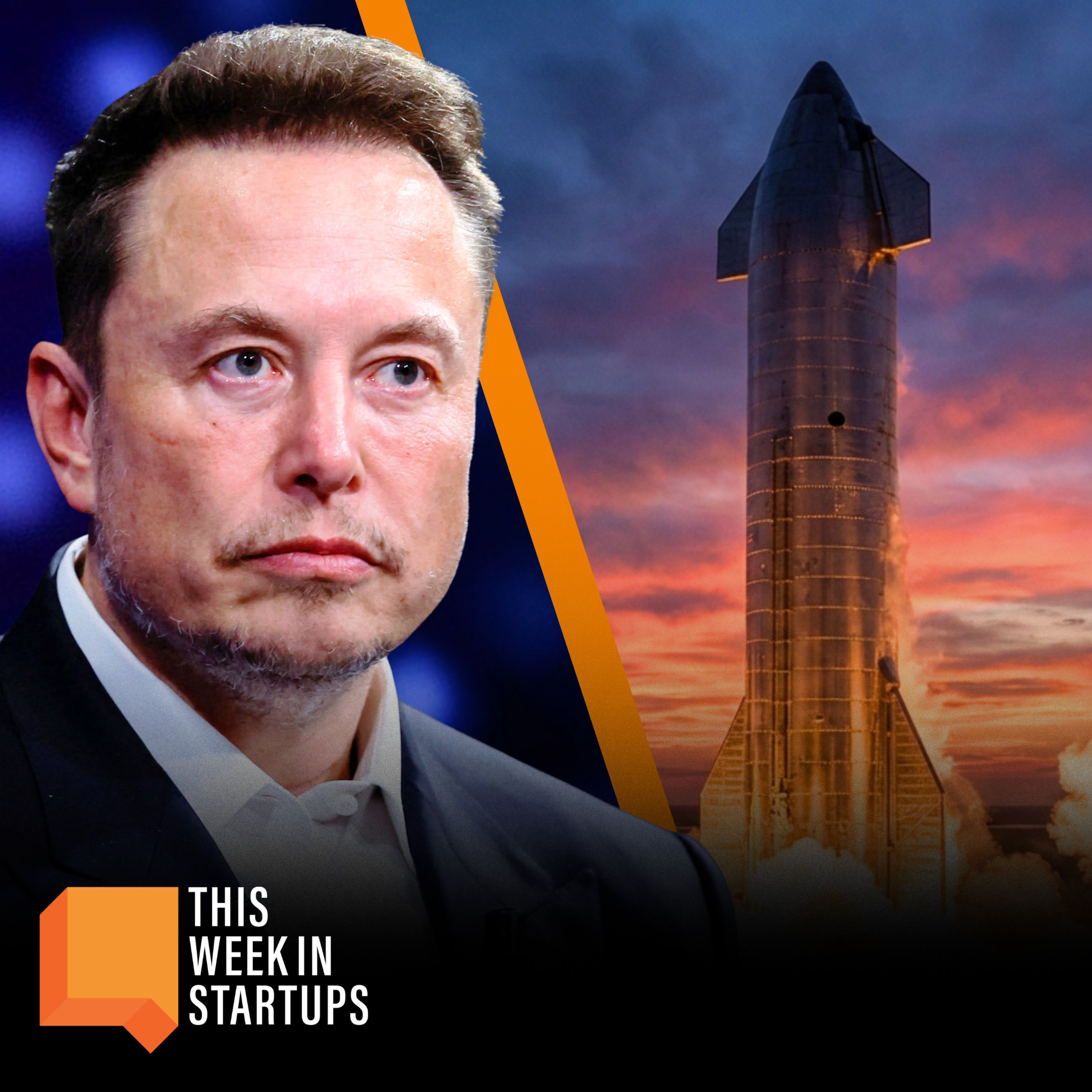
The idea of a single, vertically integrated "Elon Inc." combining SpaceX, X, Tesla, and xAI provides a strategic framework for understanding Musk's moves. This makes seemingly disparate actions, like a potential SpaceX acquisition of XAI, appear as logical steps toward a larger, unified entity.

Intel has struggled to secure demand-side commitments for its US-based fabs. Elon Musk's partnership for his TeraFab project, encompassing SpaceX, xAI, and Tesla, provides a massive, consistent customer. This anchor demand is the critical missing piece for Intel to de-risk its expansion and compete with TSMC.

Contrary to the wisdom of singular focus, Musk pursued Tesla and SpaceX simultaneously. This parallel processing of large projects with incompressible timelines dramatically shortens the overall time to success, despite increasing immediate risk and chaos.

The consolidation of SpaceX and xAI is creating a private entity with a valuation rivaling Tesla's public one. This could be a strategic maneuver to accumulate enough private capital and leverage to eventually take Tesla private, unifying Musk's core ventures under a single, privately controlled empire.

Beyond its massive output, TerraFab embodies Musk's strategy to combat the inefficiencies that plague large-scale operations. By vertically integrating and designing for recursive improvement, he is creating a model for how to overcome the "disease of scale" that stifles innovation in most hyperscaled companies.

Intel has struggled because major chip designers are locked into TSMC. The partnership with Musk's SpaceX, XAI, and Tesla provides a massive, committed buyer. This solves Intel's "demand-side" problem, de-risking its investment in leading-edge domestic manufacturing and creating a credible alternative to TSMC.

A potential merger between Tesla and SpaceX is likely driven by Elon Musk's personal organizing principle of "simplicity." The goal would be to reduce the overhead of running two separate public companies, allowing him to more efficiently invest his time, rather than seeking traditional financial or operational synergies.
The ambitious "TerraFab" project, a joint SpaceX-Tesla chip fab, is seen by analysts as more of a strategic narrative for the IPO than a realistic short-term business plan. Citing the $70B+ cost and immense execution risk, they frame it as an aspirational goal to signal vertical integration to investors.
Beyond technology, Elon Musk's strategy for the TeraFab chip plant involves a deep cultural and talent play. He plans to build a "Taiwan town" and similar communities in Texas to recruit the world's best semiconductor engineers by recreating their home environments, a unique advantage over incumbents.
![Gavin Baker - Watts and Wafers - [Invest Like the Best, EP.473] thumbnail](https://megaphone.imgix.net/podcasts/3bc7d580-53ec-11f1-99c0-3bd245449e4f/image/31563a7dd10ea92493c934f0c1e723fe.jpg?ixlib=rails-4.3.1&max-w=3000&max-h=3000&fit=crop&auto=format,compress)