Get your free personalized podcast brief
We scan new podcasts and send you the top 5 insights daily.
CEO Nikesh Arora is pursuing mega-deals for companies like Datadog and Okta to transform Palo Alto Networks from a cybersecurity vendor into a broad enterprise software platform. This strategy aims to expand its sales from the CISO to the CIO and CFO, becoming a "one-stop shop" for IT needs.

Related Insights
Palo Alto Networks' M&A playbook mandates that acquired founders, who out-innovated internal teams, take charge. This empowers the founders and leverages their proven expertise, even if it unnerves existing employees. The people who were winning in the market should be put in charge.

Instead of an imperialistic 'I bought you' attitude, Palo Alto Networks' M&A approach is rooted in humility. The mindset is 'you kicked our ass, come tell us what we did wrong.' They empower the acquired team to lead their category, absorbing their unique insights rather than imposing their own culture.
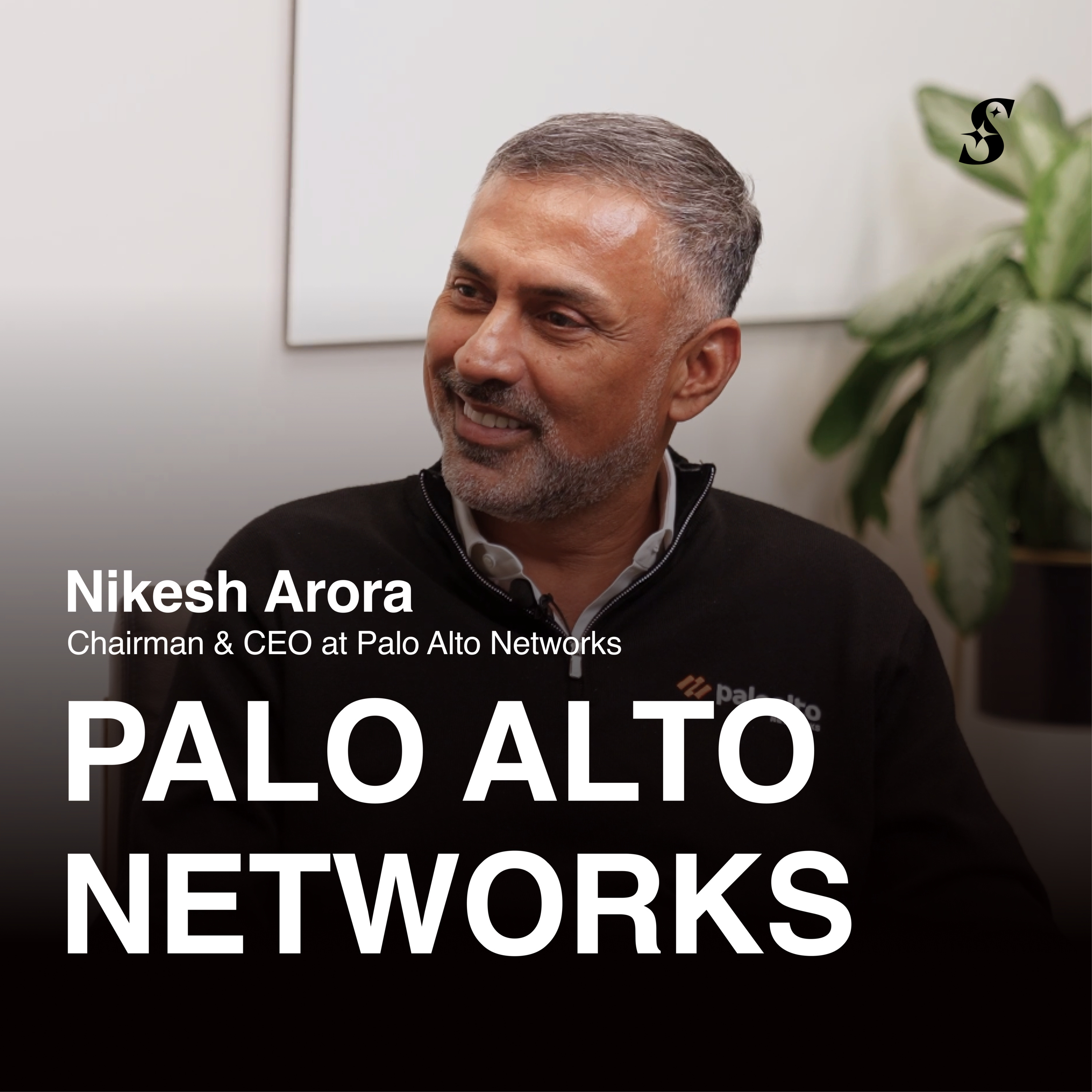
Contrary to standard practice, Palo Alto Networks' CEO Nikesh Arora has his teams report to the founders of companies he acquires. His rationale: the startup "kicked your ass" with fewer resources, proving their superior approach. This structure empowers the innovators and forces the acquirer to learn from them.

Palo Alto Networks' M&A playbook defies convention. Instead of integrating an acquisition under existing managers, they often replace their own internal team with the acquired leaders. The logic is that the acquired team won in the market with fewer resources, making them better equipped to lead that strategy forward.

Palo Alto Networks evolved from a firewall company into a platform by systematically identifying adjacent, niche markets ("sliver feature industries"). They then built or acquired solutions for these niches and offered them as new subscriptions on their core hardware, consolidating billion-dollar lateral markets.
In the AI era, organic growth is too slow and risky. The best CPOs have shifted from roadmap managers to portfolio managers, treating product strategy like an investment portfolio. They now actively drive M&A to acquire disruptive tech, with 30% of CPOs now owning the M&A agenda.

To ensure M&A success, Palo Alto Networks has founders of target companies sit with its team and redesign the product roadmap *before* a term sheet is signed. If they can't agree on a bold, shared vision, the deal is abandoned. This pre-validates execution alignment and de-risks post-merger integration.
Palo Alto Networks dedicates the majority of its M&A diligence to co-developing a multi-year product roadmap with the target's team. This ensures full strategic alignment before the deal is signed, avoiding the common failure mode where product visions clash after the acquisition is complete.
To fund its pivot to the cloud via acquisitions, Palo Alto Networks did not lower financial guidance. They absorbed the OPEX and dilution into their existing plan. This risky move forced go-to-market excellence and signaled immense confidence and discipline to the public markets.
In a fast-moving field like cybersecurity, it's impossible to build everything in-house. By treating M&A as an extension of the R&D department, a large company can leverage the venture-backed ecosystem to acquire innovative teams and products that are already validated.
