Get your free personalized podcast brief
We scan new podcasts and send you the top 5 insights daily.
While largely overlooked in Britain and the U.S., the War of 1812 is central to Canadian identity. The successful defense against American invasions, which U.S. leaders like Thomas Jefferson wrongly predicted would be a "mere matter of marching," marks a key distinctive moment in the nation's history.

Related Insights
A country's identity is built on a "founding myth" that provides social cohesion, like the idealized story of Thanksgiving. This narrative is often a deliberate simplification to mask a brutal reality. The conflict between the useful myth and historical truth is where a nation's soul is contested.

In a diverse, multi-ethnic country, national identity cannot be based on ancestry or "bloodline." Instead, it can be rooted in a shared abstract value. Canada's unifying identity is positioned as "freedom"—the common reason people have historically immigrated, providing a non-ethnic foundation for unity.

The Gallipoli campaign, a catastrophic failure for the Allies, paradoxically became a cornerstone of national identity for Australia and New Zealand (the ANZAC legend) and for the emerging Republic of Turkey, where Mustafa Kemal Atatürk made his name.

After the War of 1812, Britain refused to return thousands of escaped slaves. Many from the "Corps of Colonial Marines" were resettled in special villages in Trinidad. To this day, their descendants are known as "the Americans," a living legacy of this little-known historical chapter.
A war film often functions as a cultural artifact of its own time. The sensibilities, anxieties, and political climate of the generation producing the film heavily influence its narrative and tone, telling us as much about the present as it does about the historical conflict being portrayed.

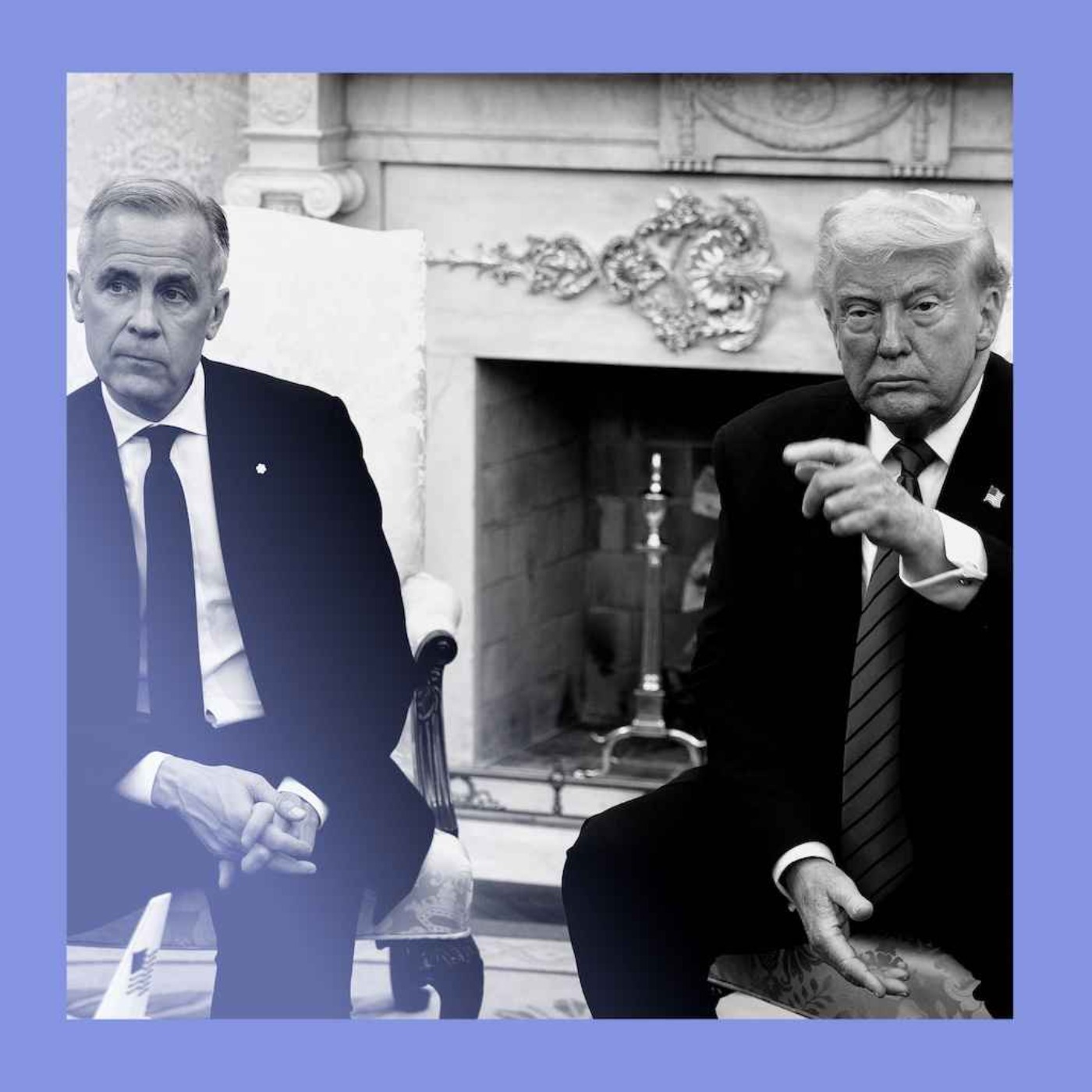
Canada's long-term economic strategy is built on the belief that the era of increasing integration with the US is permanently over. The leadership anticipates that future American politicians will find it difficult to remove trade barriers, necessitating a fundamental, long-term pivot for Canada's economy away from US dependency.
Leaders create simplified, emotionally resonant narratives for public consumption that mask the messy, complex, and often ugly truths behind their actions. The real "why" is rarely present in the official story.

Hemp was a critical strategic material for the British Royal Navy, which sourced most of it from the Ukraine/Russia region. Napoleon's 1812 invasion was partially motivated by a desire to disrupt this supply chain, cripple the British navy, and clear the way for an invasion of Britain.

Coming just after Australia's 1901 federation, the Gallipoli story provided a powerful narrative for a new nation. The legend of brave Anzacs let down by inept British leaders became a cornerstone of Australia's cultural and political separation from Britain.
The American Revolution was itself an act of treason against Britain. Benedict Arnold's defection created a singular, despised traitor, allowing the American people to unite against an internal enemy and solidifying their identity beyond simply being rebels against the crown.