Get your free personalized podcast brief
We scan new podcasts and send you the top 5 insights daily.
Organizations like the Tarbell Center, funded by tech figures like Dustin Moskowitz, provide grants to journalists at major outlets like Time and Bloomberg. This creates a potential conflict of interest, as newsrooms cover the AI safety debate while being financially supported by an organization with a strong pro-safety stance.

Related Insights
Medium's CEO revealed the company providing data for a critical Wired article about "AI slop" was simultaneously trying to sell its AI detection services to Medium. This highlights a potential conflict of interest where a data source may benefit directly from negative press about a target company.
The negative public discourse around AI may be heavily influenced by a few tech billionaires funding a "Doomer Industrial Complex." Through organizations like the Future of Life Institute, they finance journalism fellowships and academic grants that consistently produce critical AI coverage, distorting the public debate.
The media "benefactor" model, where a billionaire owns a news outlet, carries inherent risks. A benefactor's personal or business interests can eventually clash with the need for genuine editorial independence, turning a perceived safety net into a source of pressure and conflict.

A strange dynamic exists in AI, where both the labs building the technology and the safety advocates warning against it amplify the narrative of its world-changing potential. This alignment, regardless of sincerity, contributes to the industry's hype and perceived importance.

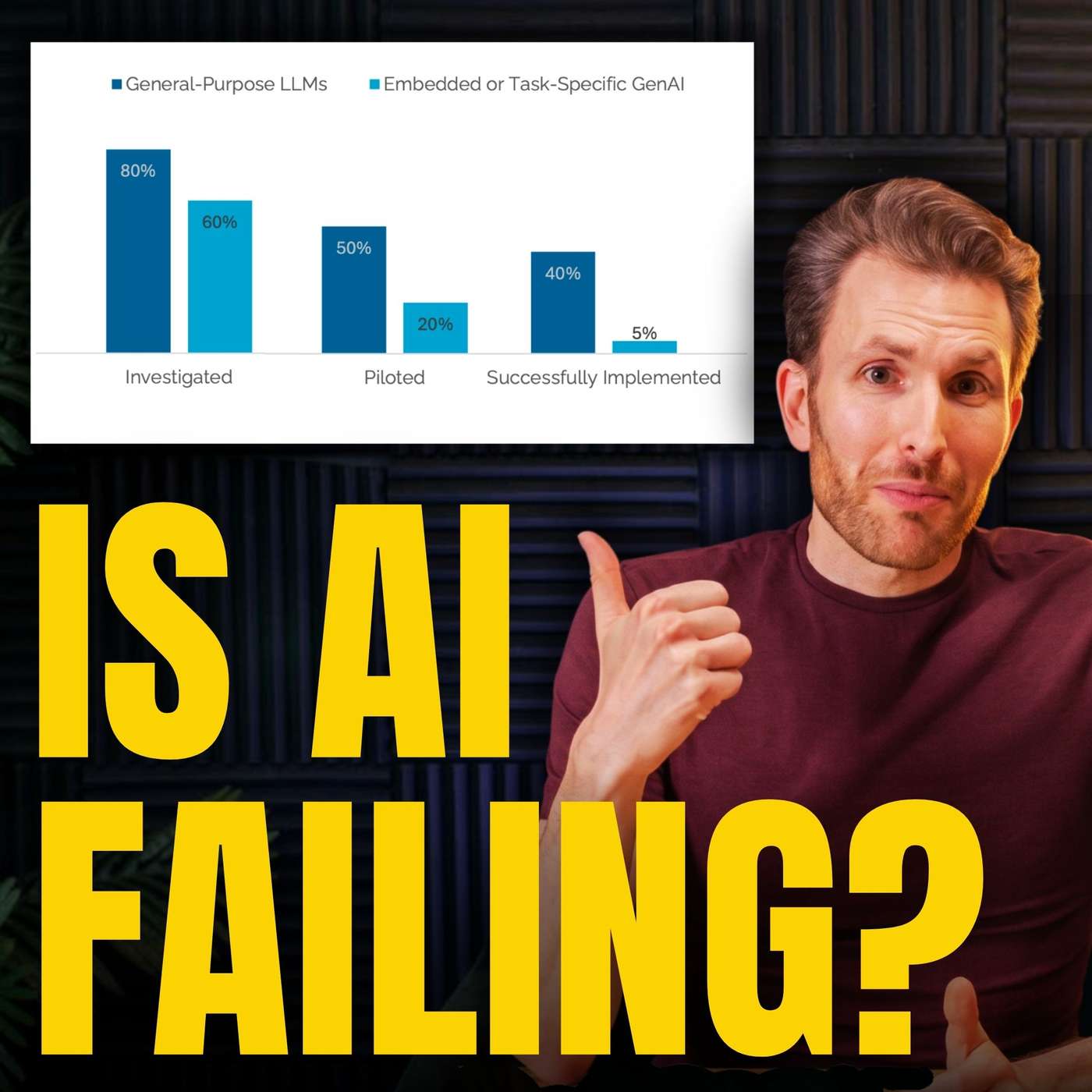
An "MIT study" on AI failures concluded the solution was "agentic AI frameworks," precisely the technology the authors were building and selling. This demonstrates how research, especially when not peer-reviewed, can function as sophisticated content marketing with an undisclosed conflict of interest, using institutional credibility to generate commercial leads.
AI companies manage media coverage by offering or withholding access to top executives. By dangling this 'carrot,' they implicitly pressure journalists and podcasters to provide favorable coverage and avoid platforming critics, thus controlling the public narrative.

The Tarbell Center, funded by billionaire Dustin Moskovitz, provides grants to journalists at prominent outlets like Time, Bloomberg, and The Guardian. The explicit goal is to insert 'AI Doomer' narratives into mainstream media, raising conflict-of-interest questions as recipient newsrooms may be hesitant to critically cover their funder's influence.
The AI safety movement is heavily influenced and funded by the Effective Altruism (EA) community, which has deep financial and personal ties to frontier labs like Anthropic. Their push for regulation, framed as a response to existential risk, often masks a commercial incentive to create a protected duopoly.

Critics argue that proposed third-party evaluators, such as Meter, lack true independence. Their staff often includes former employees from the very AI labs they would audit (OpenAI, Anthropic), creating a "revolving door" that raises questions about conflicts of interest.
By employing or bankrolling a majority of AI researchers, large tech firms dictate the research agenda. They also censor or fire researchers, like Dr. Timnit Gebru at Google, whose work exposes the harms and limitations of their commercial models.