Get your free personalized podcast brief
We scan new podcasts and send you the top 5 insights daily.
AI makes turning money into labor unprecedentedly easy and scalable. Unlike hiring humans, AI "workers" can be copied instantly and have fewer coordination limits. This creates a powerful feedback loop where wealth rapidly translates into the ability to execute large-scale plans, accelerating power concentration.

Related Insights
Focusing solely on military-style AI power grabs is too narrow. Extreme power concentration is more likely to emerge from a messy interplay of three factors: active seizures of control, massive economic shifts from automation, and the erosion of society's ability to understand reality (epistemics).
AI provides a structural advantage to those in power by automating government systems. This allows leaders to bypass the traditional unwieldiness of human bureaucracy, making it trivial for an executive to change AI parameters and instantly exert their will across all levels of government, thereby concentrating power.

As companies use AI to do more with fewer people, productivity gains boost profits but don't create jobs at the same rate. This "ghost GDP" concentrates wealth among a few and risks a long-term decline in broad-based consumer spending, as the generated value isn't dispersed to human workers.

The true disruption from AI is not a single bot replacing a single worker. It's the immense leverage granted to individuals who can deploy thousands of autonomous AI agents. This creates a massive multiplication of productivity and economic power for a select few, fundamentally altering labor market dynamics from one-to-one replacement to one-to-many amplification.
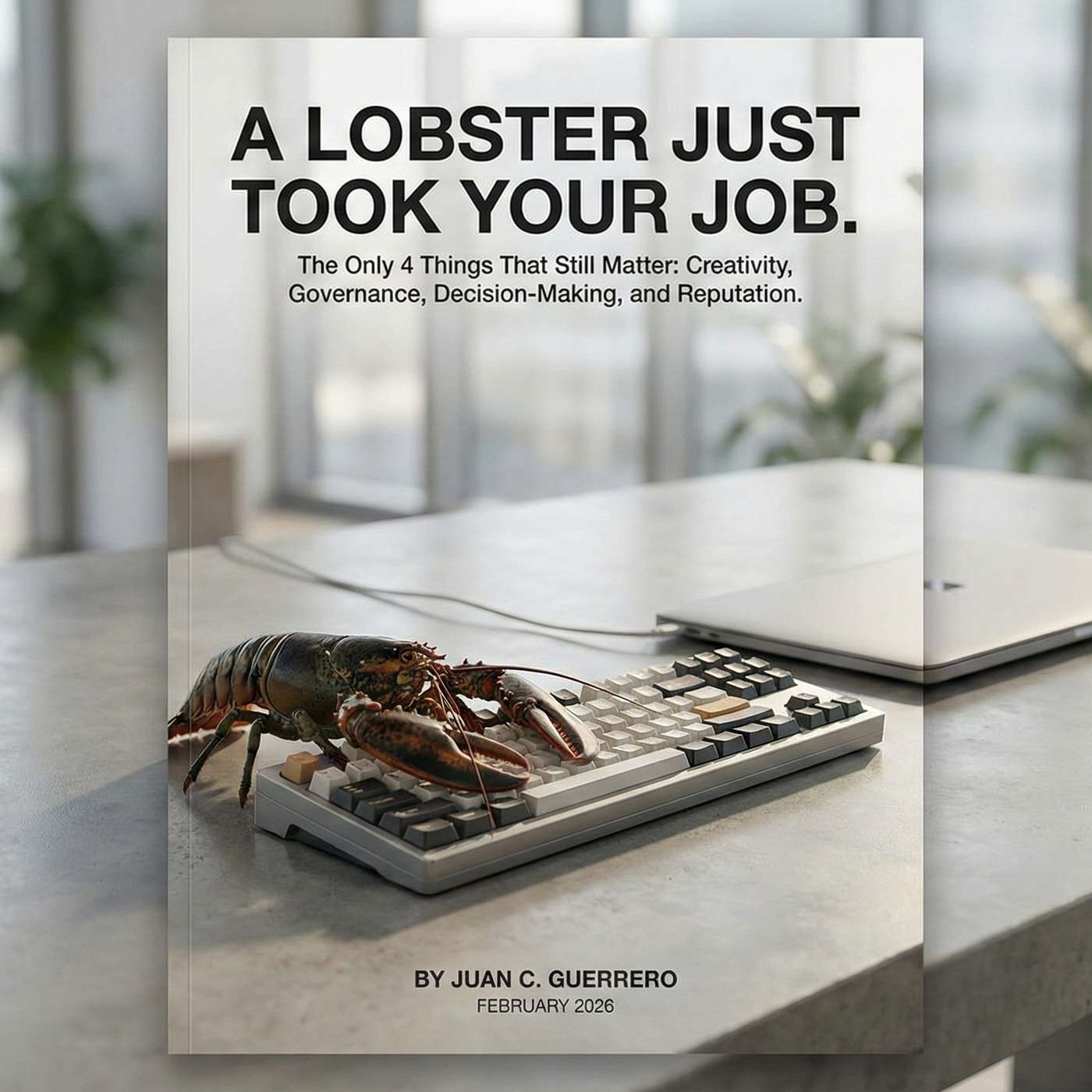
Unlike past technologies that automated specific tasks, AI threatens to automate all economically valuable human labor. This removes the fundamental, non-seizable leverage that the general populace holds, creating a power vacuum that can be filled by capital owners.
AI's impact on inequality is dual-faceted. It may reduce the wage gap by automating high-skill jobs faster than low-skill ones. However, it simultaneously increases wealth inequality by concentrating massive capital gains within a few dominant tech companies, benefiting asset owners disproportionately.

AI accelerates capitalism's natural tendency to compress margins to zero. By automating tasks and replicating solutions cheaply, AI makes it difficult to sustain profits, benefiting only those who own scarce, non-digitizable assets like data, trust, or real estate.

Beyond its use in warfare or the risk of AGI, Ray Dalio identifies a critical societal risk of AI: it will worsen wealth inequality. It achieves this by replacing jobs while simultaneously driving massive stock market gains concentrated in a very small number of technology companies.
The fear of AI-driven deflation stems from its distribution model. While technologies like railroads took 50 years to build out, AI capabilities can be deployed globally and instantly via software. This pace means the cost of knowledge work could plummet rapidly, creating an economic shock without historical precedent.
AI is expected to have a dual, opposing effect on economic inequality. It may reduce wage gaps by automating high-income tasks before low-income ones, compressing salaries from the top down. Simultaneously, it will likely worsen wealth inequality by concentrating massive capital returns in the hands of tech owners and investors.