Get your free personalized podcast brief
We scan new podcasts and send you the top 5 insights daily.
Instead of waiting for formal bodies, Google DeepMind is developing and open-sourcing its own technical standards for AI agents. This strategy aims to solve immediate interoperability problems and establish a market-wide de facto standard through rapid, widespread adoption, bypassing slower, formal channels.

Related Insights
In the emerging AI agent space, open-source projects like 'Claude Bot' are perceived by technical users as more powerful and flexible than their commercial, venture-backed counterparts like Anthropic's 'Cowork'. The open-source community is currently outpacing corporate product development in raw capability.

Instead of building a walled-garden AI, the Zed IDE created the Agent Client Protocol (ACP), allowing any coding agent to integrate. This 'Switzerland' strategy, modeled after the Language Server Protocol, lets Zed benefit from all AI innovation rather than competing against it, even attracting competitors like JetBrains to adopt the standard.

The collective innovation pace of the VLLM open-source community is so rapid that even well-resourced internal corporate teams cannot keep up. Companies find that maintaining an internal fork or proprietary engine is unsustainable, making adoption of the open standard the only viable long-term strategy to stay on the cutting edge.

OpenAI has quietly launched "skills" for its models, following the same open standard as Anthropic's Claude. This suggests a future where AI agent capabilities are reusable and interoperable across different platforms, making them significantly more powerful and easier to develop for.

OpenAI integrated the Model-Centric Protocol (MCP) into its agentic APIs instead of building its own. The decision was driven by Anthropic treating MCP as a truly open standard, complete with a cross-company steering committee, which fostered trust and made adoption easy and pragmatic.

Formal standards development organizations (SDOs) like the ISO operate on a 12-24 month timeline. This deliberate, consensus-based process is too slow to keep pace with the rapid evolution of AI technology, creating a governance gap that requires more agile, iterative approaches.
By creating an open standard for AI shopping agents with major retailers, Google is making a classic platform play. Rather than building a walled garden, it's defining the rules of the road. This ensures its own AI agents (and accompanying ad products) will be central to the future of e-commerce, regardless of which companies build on the protocol.

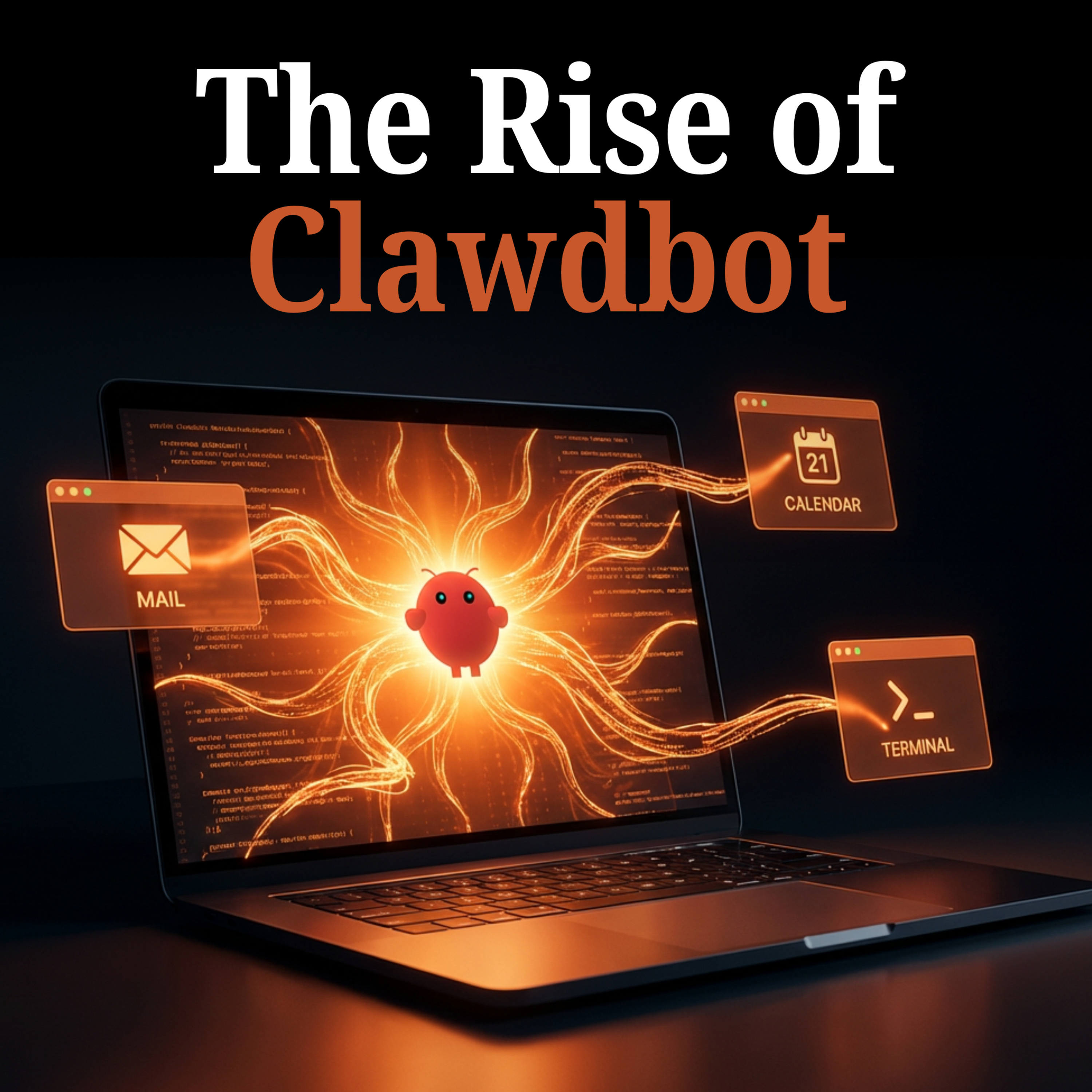
Clawdbot, an open-source project, has rapidly achieved broad, agentic capabilities that large AI labs (like Anthropic with its 'Cowork' feature) are slower to release due to safety, liability, and bureaucratic constraints.
Unlike traditional internet protocols that matured slowly, AI technologies are advancing at an exponential rate. An AI standards body must operate at a much higher velocity. The Agentic AI Foundation is structured to facilitate this rapid, "dog years" pace of development, which is essential to remain relevant.
The AI space moves too quickly for slow, consensus-driven standards bodies like the IETF. MCP opted for a traditional open-source model with a small core maintainer group that makes final decisions. This hybrid of consensus and dictatorship enables the rapid iteration necessary to keep pace with AI advancements.