Get your free personalized podcast brief
We scan new podcasts and send you the top 5 insights daily.
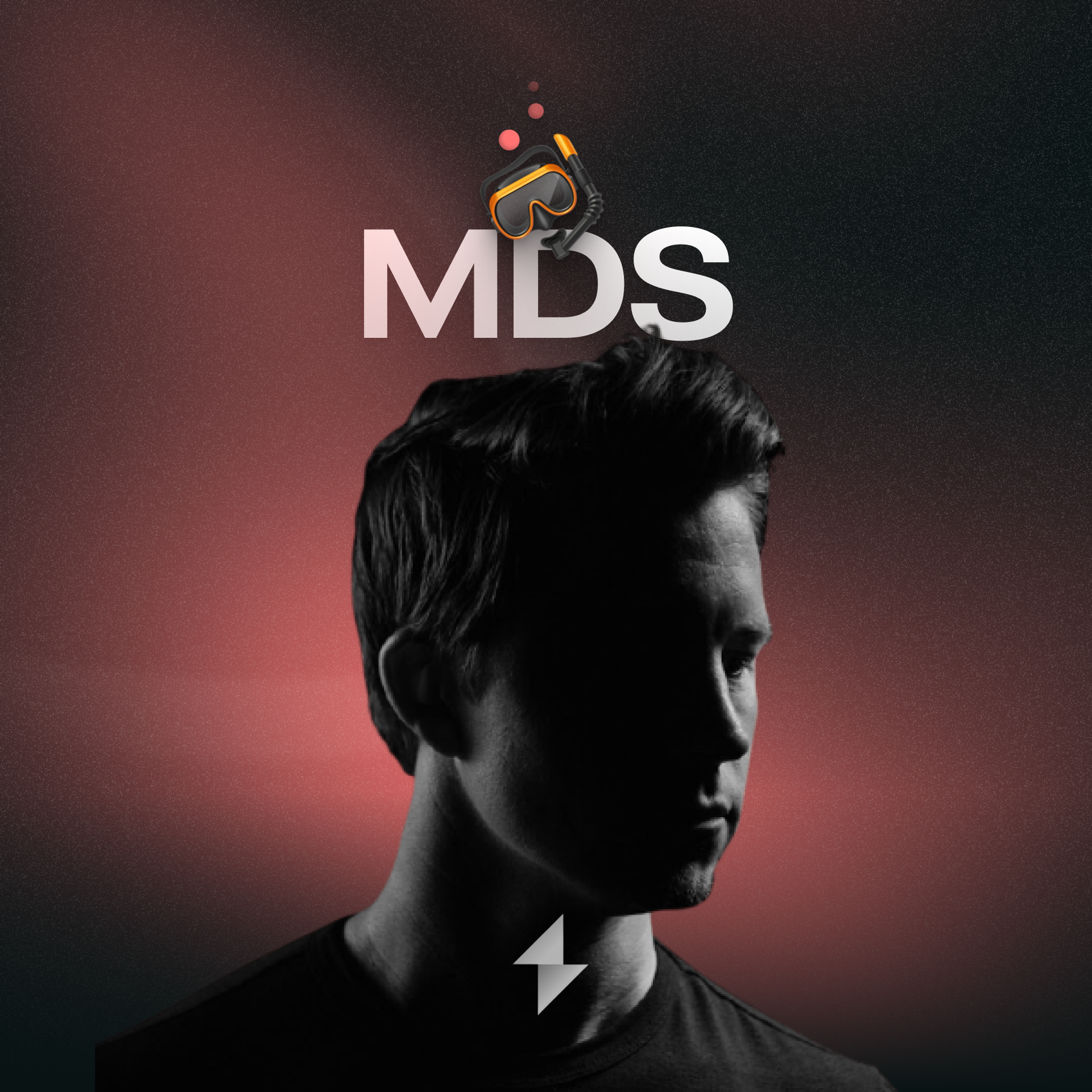
When exploring an interactive effect, designer MDS built a custom tool to generate bitmap icons and test hover animations. This "tool-making" mindset—creating sliders and controls for variables—accelerates creative exploration far more effectively than manually tweaking code for each iteration.
Related Insights
Instead of being limited by off-the-shelf software, designers can dramatically accelerate their process by building bespoke tools. MDS used the AI tool V0 to create a custom bitmap icon builder, enabling rapid prototyping of a unique interactive element.
Vercel's Pranati Perry shows how she used V0 to build a personal tool for generating SVG components for her portfolio. This highlights a trend where designers build small, single-purpose tools to automate and enhance their own creative processes, not just for team deliverables.

At OpenAI, the development cycle is accelerated by a practice called "vibe coding." Designers and PMs build functional prototypes directly with AI tools like Codex. This visual, interactive method is often faster and more effective for communicating ideas than writing traditional product specifications.

To rapidly iterate on interactive ideas in code, create your own version of "Command D." Instead of hard-coding values, build a simple control panel with variables for parameters like speed or distance, allowing for easy adjustment and testing of multiple variations.
Instead of asking AI to perfect one animation, MDS prompted it to "create five vastly different hover effects." This divergent approach uses AI as a creative partner to explore the possibility space, revealing unexpected directions you might not have conceived of on your own.
A practical AI workflow for product teams is to screenshot their current application and prompt an AI to clone it with modifications. This allows for rapid visualization of new features and UI changes, creating an efficient feedback loop for product development.

Leverage AI as an idea generator rather than a final execution tool. By prompting for multiple "vastly different" options—like hover effects—you can review a range of possibilities, select a promising direction, and then iterate, effectively using AI to explore your own taste.
A project's most defining element can grow from a seemingly small, playful exploration. The complex mosaic interaction on the Shift Nudge site began with MDS simply designing pixel icons for fun, demonstrating how following small sparks of curiosity can lead to major innovations.
AI tools can drastically increase the volume of initial creative explorations, moving from 3 directions to 10 or more. The designer's role then shifts from pure creation to expert curation, using their taste to edit AI outputs into winning concepts.
When exploring UI solutions, use a tool like Magic Patterns and its "Inspiration Mode" to generate multiple, distinct design approaches from a single prompt. By asking the AI to "think expansively and make each option differentiated," product managers can quickly explore a wide solution space and avoid getting stuck on a single initial idea.