Get your free personalized podcast brief
We scan new podcasts and send you the top 5 insights daily.
Vercel's Pranati Perry shows how she used V0 to build a personal tool for generating SVG components for her portfolio. This highlights a trend where designers build small, single-purpose tools to automate and enhance their own creative processes, not just for team deliverables.

Related Insights
Instead of being limited by off-the-shelf software, designers can dramatically accelerate their process by building bespoke tools. MDS used the AI tool V0 to create a custom bitmap icon builder, enabling rapid prototyping of a unique interactive element.
Vercel's Pranati Perry explains that tools like V0 occupy a new space between static design (Figma) and development. They enable designers and PMs to create interactive prototypes that better communicate intent, supplement PRDs, and explore dynamic states without requiring full engineering resources.
AI-powered "vibe coding" is reversing the design workflow. Instead of starting in Figma, designers now build functional prototypes directly with code-generating tools. Figma has shifted from being the first step (exploration) to the last step (fine-tuning the final 20% of pixel-perfect details).

Vercel's Pranati Perry argues that even with no-code AI tools, having some coding knowledge is a superpower. It provides the vocabulary to guide the LLM, give constructive criticism during debugging, and avoid building on a 'house of cards,' leading to better, more stable results.
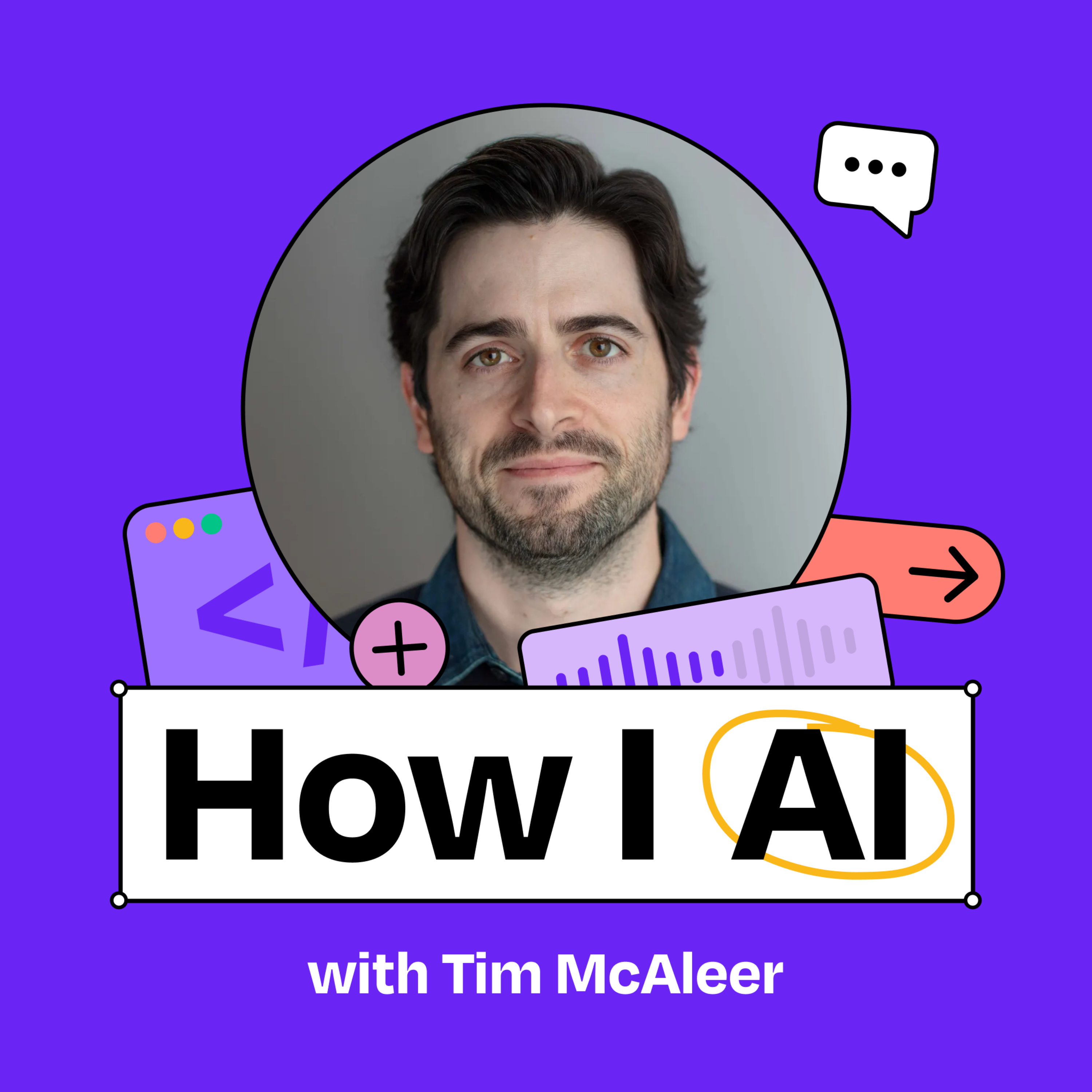
Tim McLear used AI coding assistants to build custom apps for niche workflows, like partial document transcription and field research photo logging. He emphasizes that "no one was going to make me this app." The ability for non-specialists to quickly create such hyper-specific internal tools is a key, empowering benefit of AI-assisted development.
V0's success stemmed from its deliberate constraint to building Next.js apps with a specific UI library. This laser focus was 'liberating' for the team, allowing them to perfect the user experience and ship faster. It serves as a model for AI products competing against broad, general-purpose solutions.

The surprising success of Dia's custom "Skills" feature revealed a huge user demand for personalized tools. This suggests a key value of AI is enabling non-technical users to build "handmade software" for their specific, just-in-time needs, moving beyond one-size-fits-all applications.

As AI models become proficient at generating high-quality UI from prompts, the value of manual design execution will diminish. A professional designer's key differentiator will become their ability to build the underlying, unique component libraries and design systems that AI will use to create those UIs.

By handling repetitive production work, AI gives designers bandwidth to focus on high-impact, creative problems. This includes innovating on previously overlooked details like loading states, which have new importance in AI-driven products for building user trust.
AI tools can drastically increase the volume of initial creative explorations, moving from 3 directions to 10 or more. The designer's role then shifts from pure creation to expert curation, using their taste to edit AI outputs into winning concepts.