Get your free personalized podcast brief
We scan new podcasts and send you the top 5 insights daily.
The political opposition expected Trump to have a major gaffe or appear incoherent. By merely delivering a standard, albeit rambling, speech and appearing robust for his age, he surpassed the low bar set for him, resulting in a net neutral or even positive outcome relative to expectations.

Related Insights
Hope is framed not as a sentiment, but as a core political strategy. If voters believe improvement is possible, they will vote for change. Conversely, if convinced that things are hopeless and will never improve, they are more likely to stick with the status quo, benefiting the incumbent party by default.

Trump's comedic style is a direct imitation of Johnny Carson's deadpan delivery. This allows him to effectively land jokes and control narratives, even when punching down. The political opposition often disarms itself by failing to recognize or counter his humor, which contrasts sharply with the scripted jokes of other recent leaders.

Morgan Stanley's analysts suggest the Trump administration intentionally enacted initially growth-negative policies, a strategy akin to a new CEO deliberately reporting poor results to lower expectations and clear the way for future positive growth.

President Trump repeatedly takes actions that foreign policy experts predict will be catastrophic. When these gambles do not result in the worst-case scenario, it reinforces his unconventional approach in the public eye and erodes the credibility of traditional institutions and their warnings.
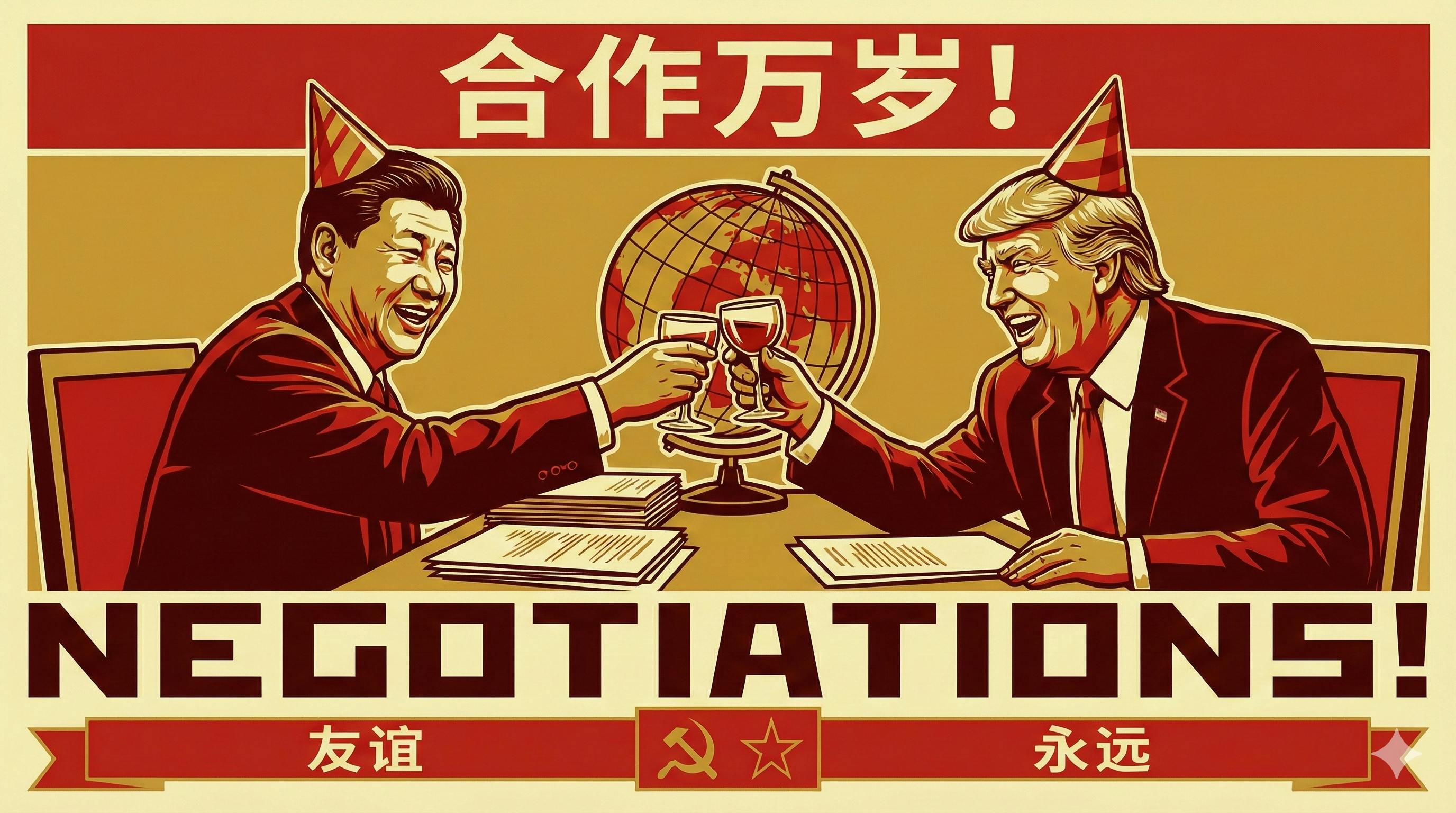
People lack the attention for complex solutions. A simple, memorable soundbite, like Donald Trump's "Build a wall," will often defeat a comprehensive, nuanced plan, like Jeb Bush's book on immigration. The message with the lowest cognitive load wins, regardless of its substance.
Trump's seemingly chaotic approach is best understood as a CEO's leadership style. He tells his staff what to do rather than asking for opinions, uses disruption as a negotiation tactic, and prioritizes long-term outcomes over short-term public opinion or procedural harmony.

Contrary to the belief among D.C. elites that Trump was an 'accident of history,' voter focus groups revealed a genuine, bottom-up appetite for him. Many voters were tired of political dynasties like the Clintons and Bushes and actively wanted a disruptive outsider, a reality insiders failed to grasp.

A former National Security Council staffer observed that President Trump's decisions often seemed counterintuitive in the moment but were later revealed as brilliant strategic "chess moves." This pattern built a high degree of trust among staff, enabling them to execute his vision without always understanding the immediate rationale.

The traditional, subdued Democratic response to the State of the Union consistently fails to match the presidential address's spectacle. A better strategy would be to invest in a high-production, entertaining event with star power to capture public attention and create a powerful counter-narrative.
President Trump's proposed $2,000 "tariff dividend" checks had only a 12% chance of passing but still caused the stock market to rebound. This demonstrates that the mere announcement of a pro-market policy can be a powerful tool to influence investor sentiment, achieving an intended effect without ever being enacted into law.
