Get your free personalized podcast brief
We scan new podcasts and send you the top 5 insights daily.
Rocket launch alone delivers thin profit margins and constrained demand. Long-term commercial dominance requires vertical integration across four rungs: rocket launch, satellite telecommunications to manufacture captive launch demand, orbital data centers, and proprietary AI models fueled by unthrottled space compute.

Related Insights
The entire strategy of building data centers in space is only economically feasible because SpaceX's Starship is projected to increase launch capacity by 20 times and drastically lower costs. This specific technological leap turns a sci-fi concept into a viable business model.
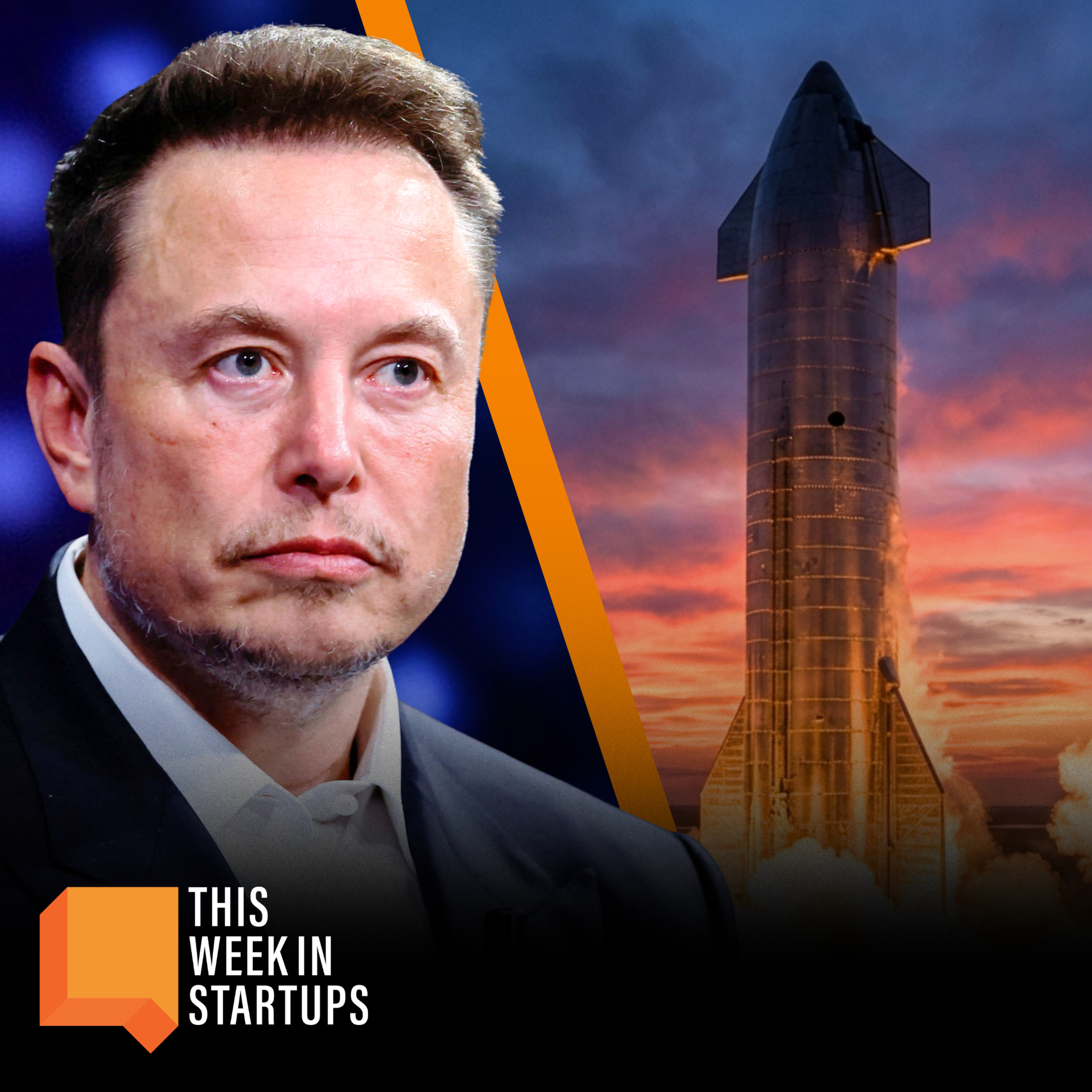
SpaceX's investment case rests on three pillars, any one of which could justify its valuation. It's becoming an AI hyperscaler (renting compute), a global ISP (Starlink), and a dominant launch provider with a huge cost advantage from reusable rockets.

Peter Beck's thesis is that dominant space companies will be vertically integrated across three layers. They will control their own access to space (launch vehicles), their manufacturing capability (satellites), and their service delivery (applications like communications), creating a full-stack business model.

As terrestrial data centers encounter energy bottlenecks and local permitting friction, building compute infrastructure in space emerges as a long-term alternative. However, tech hyperscalers without internal rocket capabilities cannot deploy orbital infrastructure economically, leaving them dependent on monopolistic launch providers who control the supply chain.

The merger combines SpaceX's rocketry with XAI's AI development. The official rationale is to build cost-effective, environmentally friendly data centers in space to meet the massive compute demands of future AI, a vision that leverages SpaceX's continually falling launch costs to make space-based supercomputing feasible.

By acquiring Iridium, Rocket Lab gains a mature satellite network, valuable spectrum, and a customer base. This shift from a niche launch provider to an integrated space powerhouse is a direct challenge to SpaceX's dominance in the space applications market, proving vertical integration is the core strategy.

The merger leverages SpaceX's heavy launch capabilities to deploy space-based data centers for xAI, capitalizing on abundant solar power and the vacuum of space for cooling. This creates a massive competitive advantage by eliminating terrestrial energy and real estate costs.
A key rationale for merging SpaceX and Elon Musk's XAI is to fund the development of data centers in orbit. The logic is that space provides free, extreme cooling and unlimited solar energy, solving two of the biggest cost and physical constraints of terrestrial AI infrastructure.

SpaceX’s mastery of rocket launches, which reduced costs by over 50x, is not just a service they sell. It's a strategic advantage that enables their highly profitable, high-margin Starlink satellite internet business, creating a powerful, self-reinforcing flywheel where they are their own biggest customer.

The world's economy will increasingly run on AI compute, similar to how it ran on oil. By pursuing data centers in space, SpaceX is positioning itself to become the lowest-cost producer of AI tokens, aiming for a strategic dominance analogous to Saudi Arabia's control over global energy markets.