Get your free personalized podcast brief
We scan new podcasts and send you the top 5 insights daily.
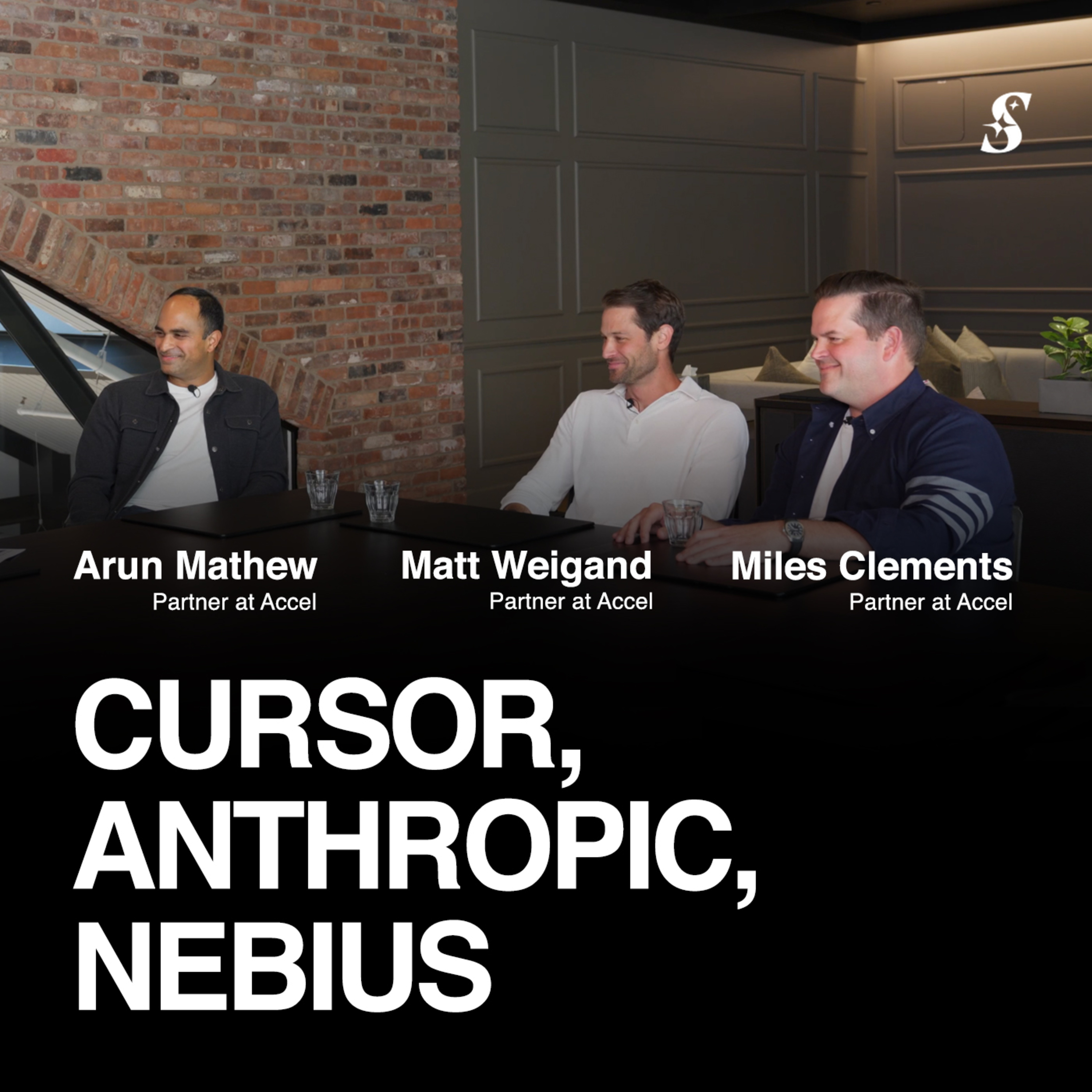
Accel's bet on Nebius, which owns its full stack from data centers to software, reveals a key insight: the AI era demands vertical integration for infrastructure. This was a non-obvious public market investment 16 months ago that yielded a 13x return, proving the market is capacity-constrained and control of the stack is paramount.
Related Insights
Nebius's talks to acquire AI21 reflect a broader trend where NeoClouds (e.g., CoreWeave) are buying software companies. This strategy aims to create a full-stack platform, offering more than just compute power, thereby increasing customer stickiness and diversifying revenue streams beyond commoditized hardware rentals.

Beyond acquiring massive compute, Elon Musk's xAI is building its own natural gas power plant. This represents a deep vertical integration strategy to control the power supply—the ultimate bottleneck for AI infrastructure—gaining a significant operational advantage over competitors reliant on public grids.

With AI infrastructure spend topping $100B annually, hyperscalers like Amazon and Google are vertically integrating. They now manage everything from data center construction and micro-nuclear power to designing their own custom chips. For them, custom silicon has become a 'rounding error' in their budget and a key strategy to optimize costs.
Nebius's competitive edge is full vertical integration. By controlling the stack "down" to building its own data centers, it gains cost and speed advantages. By building "up" with software platforms, it accesses enterprise markets that competitors focused on raw compute cannot.

Nebius conceptualizes its growth in four layers: 1) Bare metal (megawatts) for hyperscalers, 2) Managed cloud (GPU hours) for researchers, 3) Managed inference (tokens) for AI companies, and 4) Agentic platforms (tasks) for developers. This strategy moves them up the value stack, away from pure commodity infrastructure.
NVIDIA's strategy extends beyond selling GPUs. By packaging compute, software, and industrial partnerships, its 'AI Factory' model provides a full-stack blueprint for national and corporate AI infrastructure, effectively defining the entire ecosystem from silicon to robotics.

The biggest investment opportunity lies in the beneficiaries of big tech's massive AI capital expenditures. This "food chain" includes data centers, power grid upgrades, and industrial suppliers who are seeing unprecedented demand for the foundational infrastructure AI requires.

The enormous scale of Meta's deal with specialized data center operator Nebius proves that "NeoClouds" are now critical infrastructure players. They are successfully competing with hyperscalers by offering specialized services and, crucially, available capacity, making them essential partners for AI giants.
In an unusual move for a software investor, Vista launched its own cloud provider, VC2, focused on AI inference. This strategy provides a full-stack, high-performance solution for its portfolio and the broader market, addressing the unique cost and speed requirements of enterprise-grade AI agents.
Roman Chernin argues that if the AI market consolidates into a few dominant players, infrastructure companies like Nebius lose their value-add software stack and become simple commodity providers. A diverse ecosystem of builders is essential for their long-term viability.