Get your free personalized podcast brief
We scan new podcasts and send you the top 5 insights daily.
The Bank of Canada has identified the USMCA trade renegotiation as a significant Canada-specific downside risk. With reports of slow progress, this uncertainty creates a bearish skew for the Canadian dollar, as it could force the central bank to adopt a more dovish stance or even ease policy in the future, contrary to current market pricing.

Related Insights
The market's hawkish repricing for the Bank of Canada is likely temporary due to underlying economic slack and trade risks. In contrast, Australia's RBA is a more credible potential hiker, supported by resilient growth and higher inflation, making it a "true soft landing candidate" and a better bet for policy tightening.
Canada's long-term economic strategy is built on the belief that the era of increasing integration with the US is permanently over. The leadership anticipates that future American politicians will find it difficult to remove trade barriers, necessitating a fundamental, long-term pivot for Canada's economy away from US dependency.
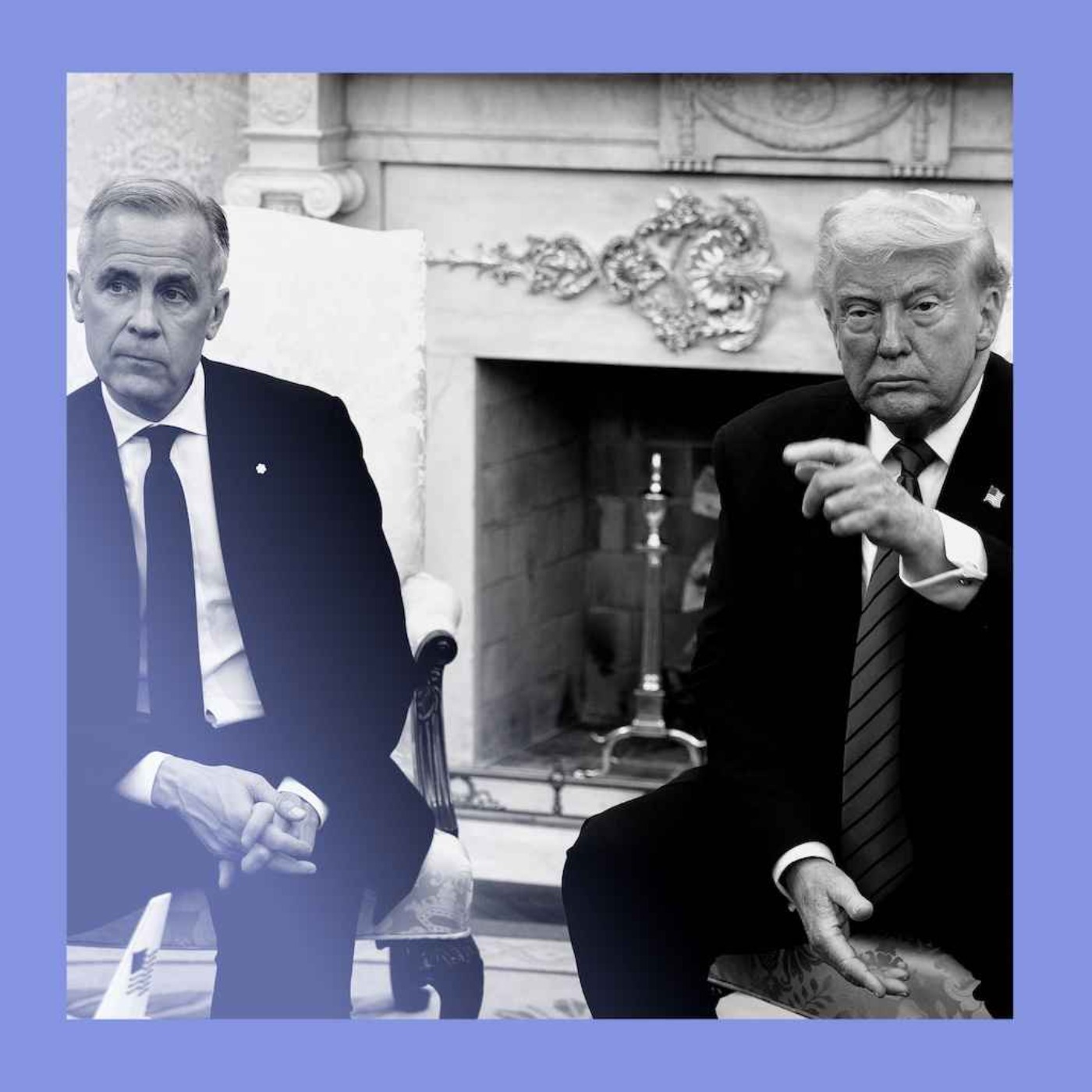
A series of upcoming US policy events, including Fed appointments and defense spending debates, are collectively skewed towards dovish monetary policy implications and a weaker fiscal picture. This creates a coordinated downside risk profile for the US dollar, suggesting potential for weakness is greater than for strength.
Key US policy risks, particularly the AIPA tariff ruling and the Lisa Cook confirmation hearing, present multiple channels for potential dollar downside but very few for upside. This creates an asymmetric risk profile where the dollar has significantly more room to fall than to rise from these specific events.
To counteract US trade barriers, Canada's long-term strategy involves removing its own internal trade barriers between provinces. This move is projected to boost GDP by a quarter of a trillion dollars, enough to offset even a complete breakdown of the US trade deal.
Officials at IMF meetings expressed surprise at how little the Trump administration has focused on foreign exchange rates. There is a growing expectation that this could change next year, with a renewed focus on the dollar if the US trade deficit fails to normalize, creating a latent political risk.
Instead of directly shorting the US dollar, which can be costly, traders can use the Canadian dollar (CAD) as a more profitable proxy. This approach offers a better "carry" advantage due to interest rate differentials, while still capturing the downside of a weakening USD, especially as the Bank of Canada's policy mirrors the Fed's dovishness.
A bearish Canadian dollar (CAD) position can act as a superior proxy for a bearish US dollar (USD) view. It provides insulation against temporary USD rallies (as USD/CAD rises) and offers better carry efficiency due to the Bank of Canada's dovish stance, making it a lower-beta, potentially higher-return strategy.
The U.S. Dollar's value has been driven less by conventional factors like growth expectations and more by an unconventional "risk premium." This premium reflects market reactions to policy uncertainty, such as talk of FX intervention or tariffs. This has caused the dollar to weaken far more than interest rate differentials alone would suggest, creating a significant valuation gap.

The Canadian dollar (CAD) is positioned as an attractive funding currency for other pro-cyclical trades. Domestically, data points to persistent economic slack, preventing central bank hikes. Externally, geopolitical shifts impacting oil markets create a negative terms-of-trade shock, reinforcing the case for CAD bearishness.