Get your free personalized podcast brief
We scan new podcasts and send you the top 5 insights daily.
Design systems that can be operated by humans, AI agents, or a combination. This prevents projects from failing due to over-automation or requiring a complete refactor when human intervention is needed, ensuring flexibility and saving future development costs.

Related Insights
As AI agents become the primary 'users' of software, design priorities must change. Optimization will move away from visual hierarchy for human eyes and toward structured, machine-legible systems that agents can reliably interpret and operate, making function more important than form.

Instead of waiting for AI models to be perfect, design your application from the start to allow for human correction. This pragmatic approach acknowledges AI's inherent uncertainty and allows you to deliver value sooner by leveraging human oversight to handle edge cases.

When building for AI-powered environments, design tools to be equally usable by humans and the AI model. An elegant, simple design for humans often translates directly into an effective tool for AI agents, simplifying development and promoting shared logic.

For tools designed for AI interaction, the ease with which an agent can use the product (AX) is as critical as the user experience (UX) for humans. This can be improved by directly asking the agent for feedback on how to make the product more ergonomic for it.
Notion's AI strategy extends beyond the AI team. Every product engineering team is tasked with ensuring their features are usable by both humans and AI agents. This anticipates a future where the majority of traffic will come from agents interfacing with Notion's tools, making agent-compatibility a core requirement.

The number of AI agents will soon vastly exceed human employees. This requires a fundamental shift in software development, prioritizing API-first design, reliability, and machine-to-machine interaction over traditional human-centric user interfaces.
The rise of autonomous agents like OpenClaw dictates that the future of software is API-first. This architecture is necessary for agents to perform tasks programmatically. Crucially, it must also support human interaction for verification, collaboration, and oversight, creating a hybrid workflow between people and AI agents.

Descript's design principle for its AI agent, Underlord, is that it can't do anything a human user can't, and vice versa. This frames the AI as a true collaborator within the existing product interface, not a separate entity with special powers.
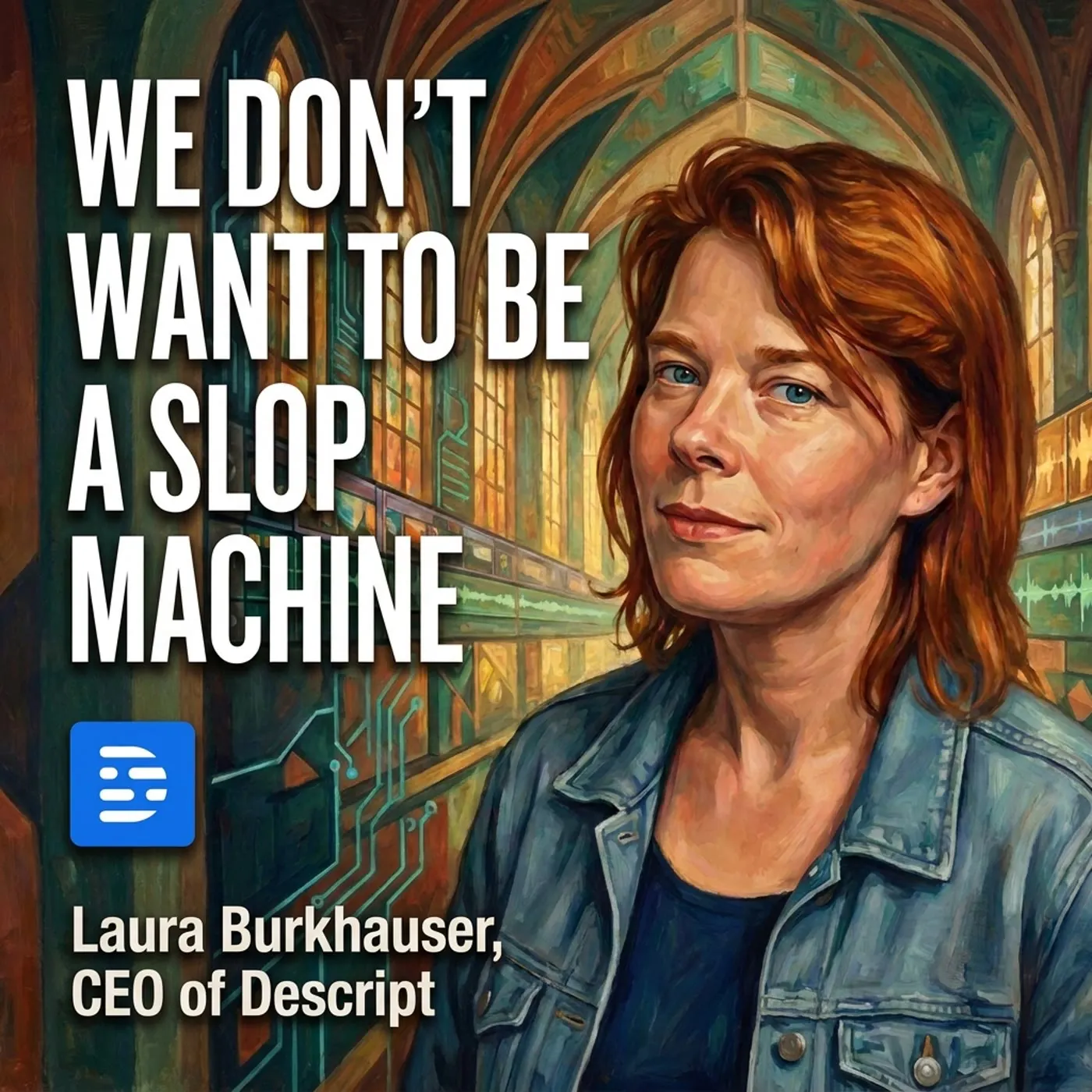
Designing for AI is less about crafting pixel-perfect UIs in Figma and more about creating the underlying system or "harness." This involves enabling the agent to perform long-running tasks, verify its own work, and operate effectively within technical constraints, which is where the real design work lies.
A major architectural shift is underway: instead of embedding AI features into a product, companies should treat AI as an external agent that uses the product via a CLI or API. This simplifies integration and better aligns with AI's capabilities.