Get your free personalized podcast brief
We scan new podcasts and send you the top 5 insights daily.
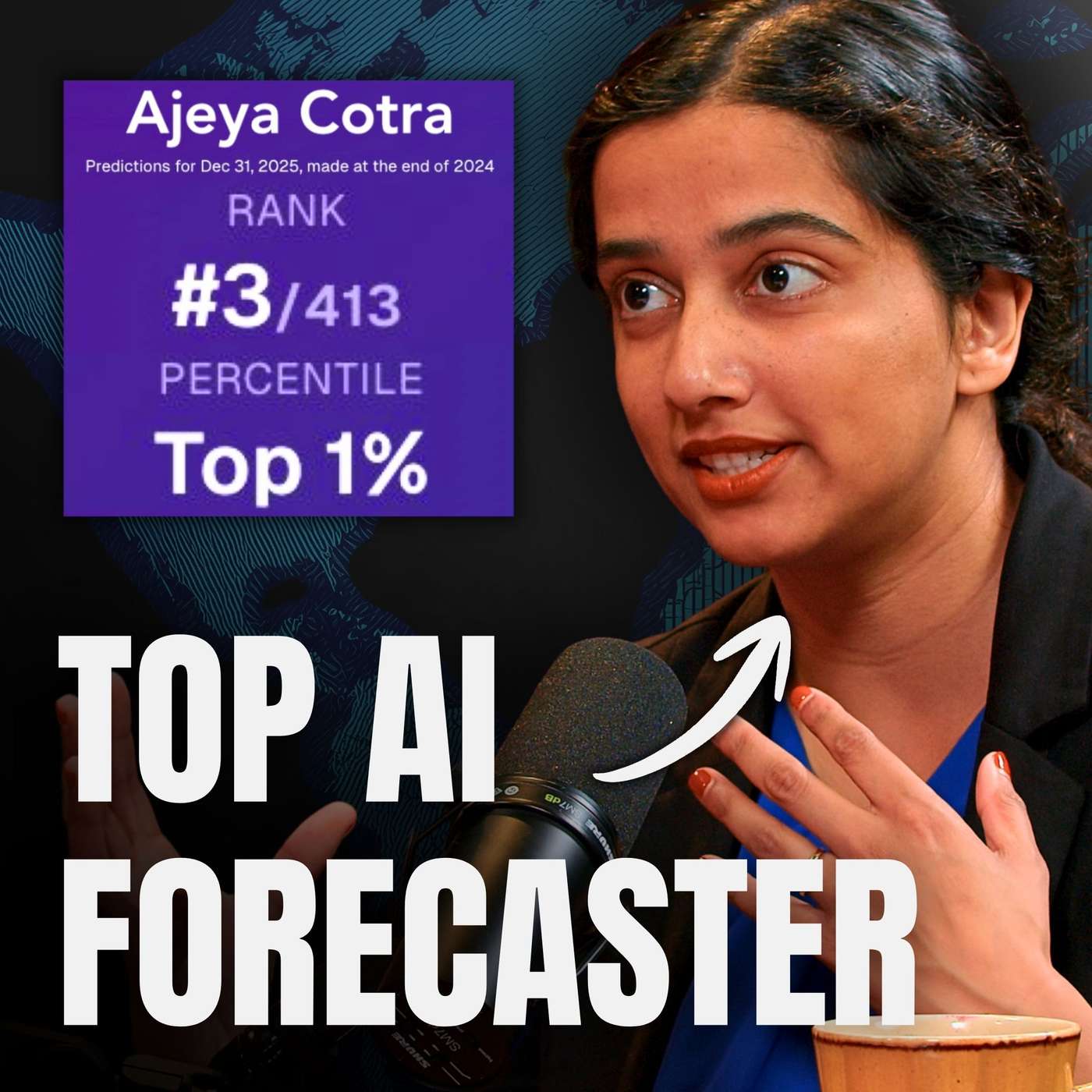
Ajeya Cotra suggests a radical shift for philanthropies like Open Philanthropy. Their best strategic play during the critical AI 'crunch time' may be to deploy billions of dollars not on human salaries, but on buying massive amounts of compute to direct AI labor towards solving safety and defense challenges.

Related Insights
Non-profit or government groups aiming to use AI for safety face the risk of being priced out of compute during an intelligence explosion. A financial hedge against this is to invest a portion of their portfolio in compute-exposed stocks like NVIDIA. If compute prices skyrocket, the investment gains would help offset the increased cost of accessing AI labor.
The competition for AI dominance has moved beyond chips to securing massive energy and infrastructure. Anthropic's new deal with Google for 3.5 gigawatts of power capacity highlights this shift. This single deal effectively created a multi-billion dollar business for Google, reframing the AI race as a battle for power plants.

During a rapid AI takeoff, the cost of compute could become prohibitively expensive, blocking safety efforts. Ajeya Cotra advises organizations to hedge this risk by investing in companies like Nvidia or even owning physical GPUs, ensuring they can afford the necessary AI 'labor' when it matters most.
While model performance gains headlines, the true strategic priority and bottleneck for AI leaders is the 'main quest' of securing compute. This involves raising massive capital and striking huge deals for chips and infrastructure. The primary competitive vector has shifted to a capital war for capacity.

A VC from Emergence Capital argues the industry is in a "massive compute shortage" driven by compute-intensive reasoning models. This hardware constraint is forcing a strategic shift in investment theses, with VCs now actively seeking companies that make intelligence more efficient at every level, from chips to algorithms.

Advanced AI models, like Anthropic's, that can identify deep cybersecurity risks and zero-day exploits transform the need for computing power from a commercial want to a national security imperative. This ensures that demand for compute will be funded regardless of economic conditions.

Instead of viewing compute as a cost center, OpenAI treats it as a revenue generator, analogous to hiring salespeople. The core belief is that demand for AI capabilities is so vast that they can never build compute fast enough to satisfy it, justifying massive, forward-looking infrastructure investments.

A theory suggests Sam Altman's massive, multi-trillion dollar spending commitments are a strategic play to incentivize a massive overbuild of AI infrastructure. By driving supply far beyond current demand, OpenAI could create a 'glut,' crashing the price of compute and securing a long-term strategic advantage as the primary consumer.

A theory suggests Sam Altman's $1.4T in spending commitments may be a strategic move to trigger a massive overbuild of AI infrastructure. This would create a future "compute glut," driving down prices and ultimately benefiting OpenAI as a primary consumer of that capacity.

Ajeya Cotra reframes the concept of an AI pause. Instead of a binary 'stop' (0% of labor on R&D), she suggests thinking of it as a spectrum. The goal should be to redirect the vast majority of AI labor from accelerating capabilities to solving safety, biodefense, and other critical societal challenges.