Get your free personalized podcast brief
We scan new podcasts and send you the top 5 insights daily.
The widespread public opposition to data centers creates a vulnerability. Foreign actors could amplify negative sentiment through misinformation campaigns. This would not only sow social division but also strategically hinder the construction of critical AI infrastructure, thereby slowing U.S. technological advancement.

Related Insights
A significant, emerging bottleneck for data center expansion is negative public perception. Consumers, blaming data centers for rising electricity bills, are driving local political pushback that cancels or delays projects, creating a socio-political risk for AI infrastructure development.

Local opposition to data center construction, often driven by a small number of activists, is directly costing the AI industry tens of billions in potential revenue by canceling gigawatts of necessary power capacity. This local friction represents a major bottleneck to AI's growth.

The narrative of local communities protesting data centers is misleading. These efforts are often spearheaded by organized activists moving across the country, using misinformation about water and power usage, mirroring the successful tactics used to stop nuclear energy development years ago.

Unlike social media, which scaled without physical impediments, AI's progress depends on massive, resource-intensive data centers. This physical footprint makes the industry vulnerable to local political opposition, regulations, and even violence, creating a new bottleneck for growth that pure software companies never faced.

Despite being a leader in AI development, the US has significant negative public sentiment. This skepticism contrasts with more positive views in China and Europe and could hinder AI adoption, funding, and favorable regulation, creating a unique challenge for the industry's leaders.
Public opinion polls show strong opposition to data centers based on environmental and cost concerns. Senator Warner suggests these local fights are a tangible outlet for the public's more abstract fears about AI's societal impact, making data centers a key political battleground for the entire industry.
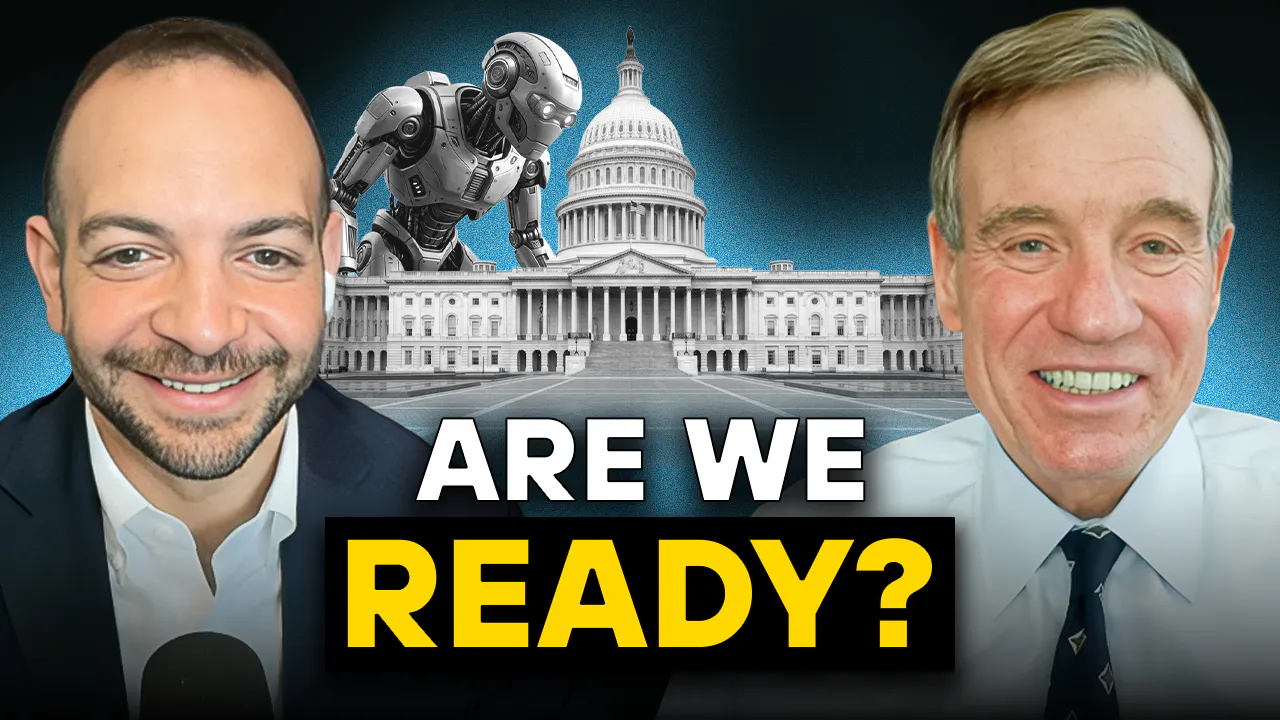
The backlash against AI is moving from digital discourse to the physical world. Politicians opposing data centers are winning elections, while supporters have faced violent attacks. This indicates the tech industry has failed to earn the 'social permission' for its massive infrastructure and resource consumption.
The chaotic and fearful messaging around AI is fueling successful local protests against data center construction. In 2025 and early 2026 alone, these cancellations represent a loss of over $120 billion in potential annual revenue, halting critical infrastructure development.

A Gallup poll found that 71% of Americans oppose having a data center built in their area, making it significantly more unpopular than a local nuclear power plant (53% opposition). This widespread public resistance over environmental and resource concerns poses a major hurdle to expanding AI compute infrastructure.
As public sentiment turns against AI, physical data centers will be the primary target for grassroots opposition. Communities will view them as tangible symbols of rising energy costs and environmental strain, with benefits accruing only to distant corporations.
