Get your free personalized podcast brief
We scan new podcasts and send you the top 5 insights daily.
After Opthea's ophthalmology drug failed in trials, the company re-examined the underlying science of its VEGF-C/D mechanism instead of liquidating. This led to discovering a new application in a rare lung disease, proving that scientific assets can have value far beyond their initial intended use.

Related Insights
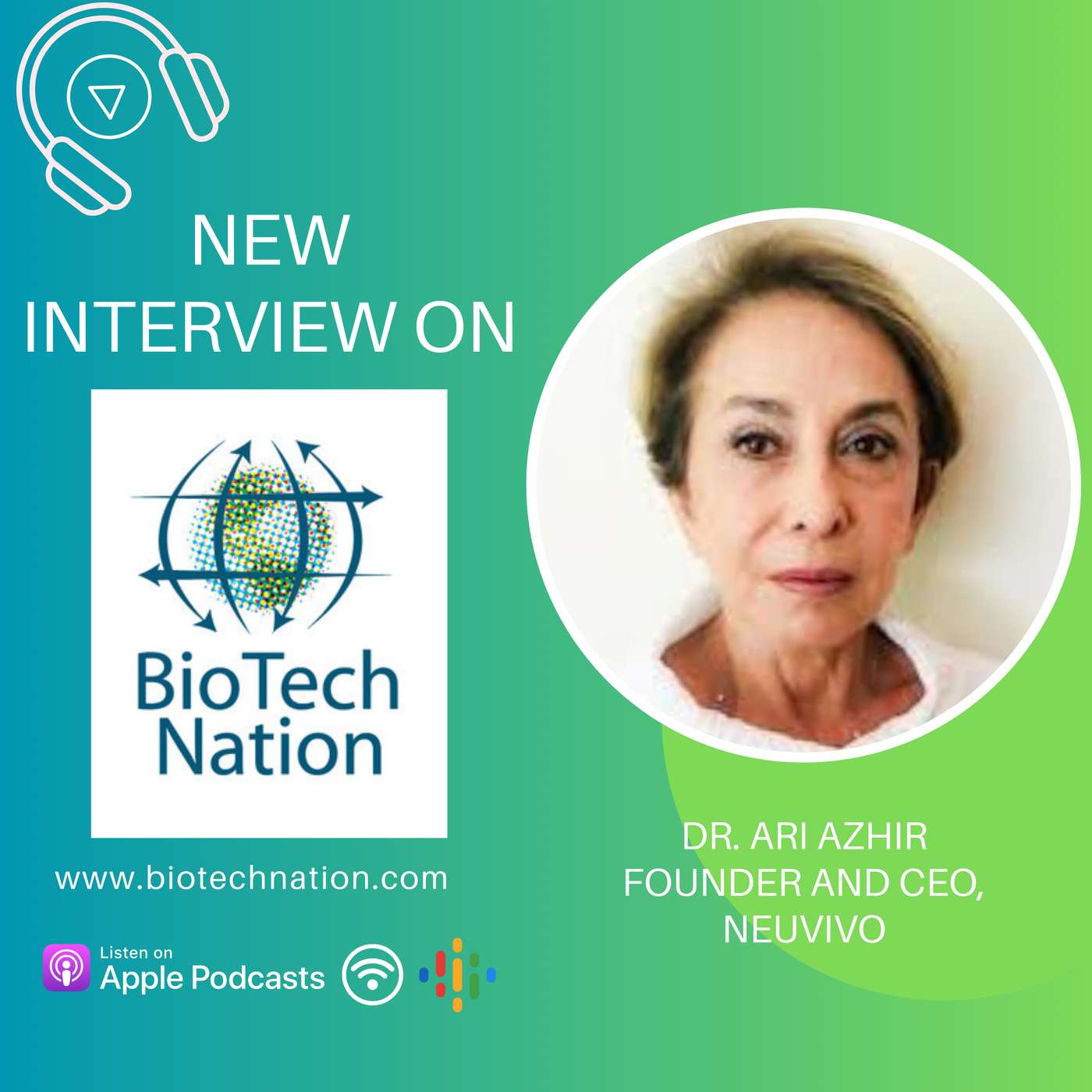
When a promising ALS drug failed Phase 2 trials, the company shut down. The drug's original founder, Dr. Ari Azhir, still believed in the science, repurchased the asset and all its data, and ultimately uncovered its true potential, leading to a new FDA application.
The CEO believes the most profound lessons in biotech come from speaking with founders of companies that did not succeed. In an industry defined by high clinical trial risk, understanding the missteps and navigating the challenges of unsuccessful ventures provides more practical wisdom than studying success stories alone.

Progress in drug development often hides inside failures. A therapy that fails in one clinical trial can provide critical scientific learnings. One company leveraged insights from a failed study to redesign a subsequent trial, which was successful and led to the drug's approval.

After joining Amarin, Doogan immediately faced a failed Phase 3 program. Instead of closing down, the team re-evaluated their existing science and successfully repurposed a product originally for Huntington's disease to treat hypertriglyceridemia, ultimately leading to FDA approval and commercial success.

When a biotech company shutters, it's not a total loss. The scientific dead ends it uncovers prevent others from wasting resources on the same path. These "failures" enrich the ecosystem with crucial knowledge and release experienced talent back into the market.
After reacquiring a "failed" ALS drug, Neuvivo's team re-analyzed the 200,000 pages of trial data. They discovered a programming error in the original analysis. Correcting this single mistake was a key step in reversing the trial's outcome from failure to success.
The fundamental purpose of any biotech company is to leverage a novel technology or insight that increases the probability of clinical trial success. This reframes the mission away from just "cool science" to having a core thesis for beating the industry's dismal odds of getting a drug to market.

Negative clinical trial results should not be seen as complete failures. Dr. Adam Arthur explains that even when an intervention fails its primary goal, the data provides crucial learnings that redirect research toward more promising pathways for patient care.

While acknowledging that repurposing a failed drug feels like a "leap of faith," Declan Doogan stresses it's not a blind gamble. The successful pivot at Amarin was based on a "thorough and rigorous assessment of the science evidence based thinking," highlighting that radical strategic shifts must be built on a strong scientific foundation.
Repro Novo licensed a drug that did not meet its primary endpoint in a prior Phase 2b trial. They identified a positive signal in an exploratory endpoint—improved semen quality—and built their new clinical strategy around making that the primary endpoint, salvaging a potentially valuable asset.