Get your free personalized podcast brief
We scan new podcasts and send you the top 5 insights daily.
With Tarlatumab becoming a standard in the relapsed setting, the question of what comes next is critical. Experts envision sequencing ADCs like ifanatamab deruxtecan or sacituzumab govitecan immediately after progression on the T-cell engager, highlighting the need for effective therapies in the post-BiTE landscape.

Related Insights
As multiple new drugs like antibody-drug conjugates (ADCs) become available for SCLC, the critical research question will shift from *if* they work to *when* they should be used. Future biomarker strategies must focus on optimizing treatment sequences, considering factors like the drug's target and payload.

Unlike novel challenges from bispecifics, upcoming SCLC therapies like antibody-drug conjugates (ADCs) and radiopharmaceuticals will benefit from existing familiarity. Community practices are already comfortable with these drug classes from their use in breast cancer (ADCs) and prostate cancer (radioligands), which should streamline their integration.
The TROPION-PanTumor01 study showed that patients who progressed on the TROP2-ADC sacituzumab govitecan still achieved responses to a second TROP2-ADC, Dato-DXD. This suggests that targeting the same antigen with a different payload can overcome initial resistance, informing future treatment sequencing.
With 18 of 19 ADCs in development for SCLC using a topoisomerase-1 inhibitor payload, there's a significant risk that patients may not respond to a second ADC after progressing on a first. This highlights a critical need to develop ADCs with alternative payloads to provide more therapeutic options and overcome resistance.
The arrival of multiple effective ADCs and targeted therapies means clinicians can no longer just focus on the next best treatment. They must think "five plays ahead," strategically sequencing therapies to maximize longevity. Today's treatment choice is now heavily influenced by the need to preserve future options.

While immunotherapy was a massive leap forward, Dr. Saav Solanki states the next innovation frontier is combining it with newer modalities. Antibody-drug conjugates (ADCs) and T-cell engagers are being used to recruit the immune system into the tumor microenvironment, helping patients who don't respond to current immunotherapies.

The long-standing platinum doublet backbone for frontline SCLC may soon be challenged. The high efficacy of novel agents like antibody-drug conjugates and bispecific antibodies in later lines is prompting trials that consider moving them into the first-line setting, a strategy previously considered "unthinkable."
As multiple effective Antibody-Drug Conjugates (ADCs) become available, the primary clinical challenge is no longer *if* they work, but *how* to use them best. Key unanswered questions involve optimal sequencing, dosing for treatment versus maintenance, and overall length of therapy, mirroring issues already seen in breast cancer.
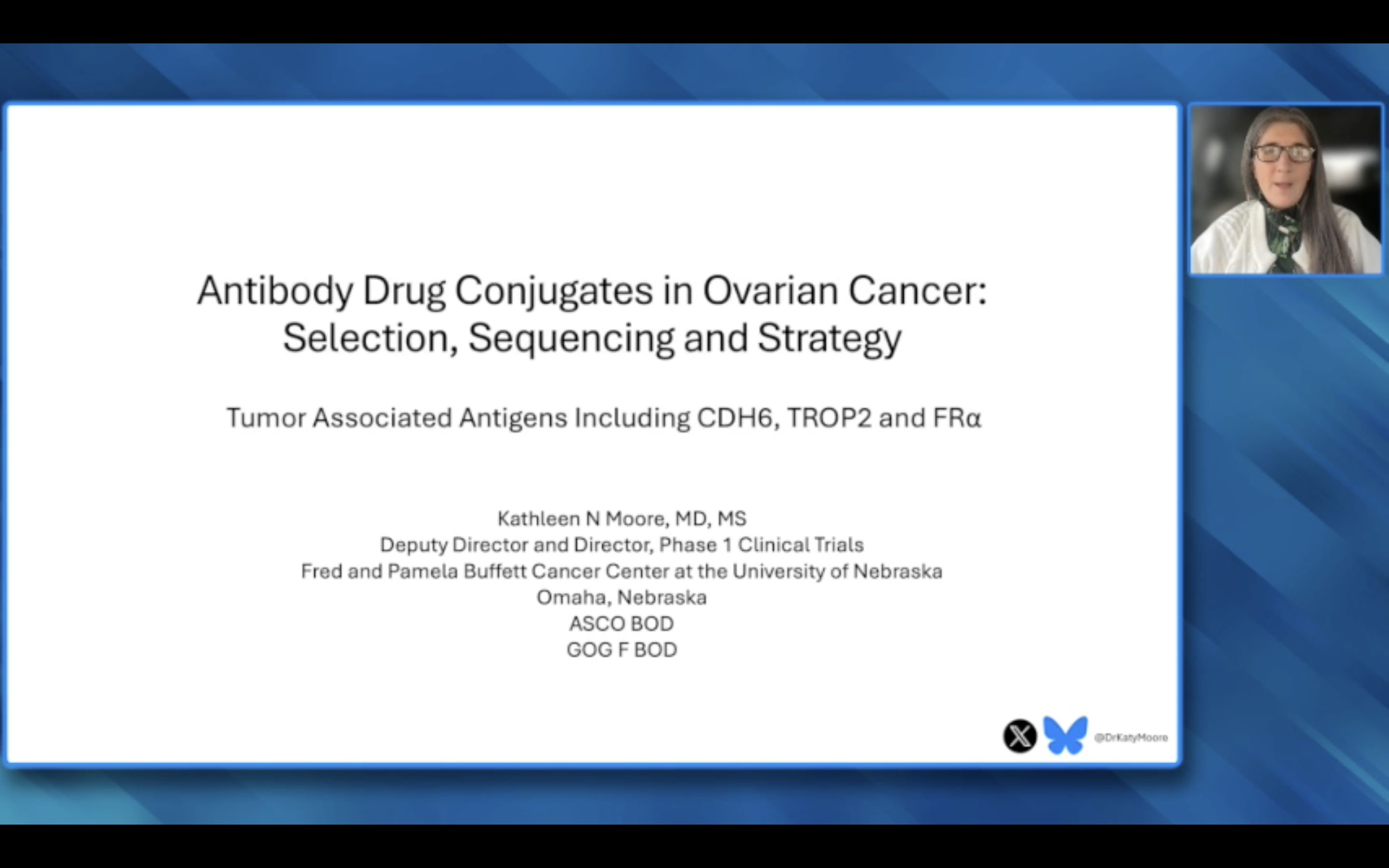
In notoriously hard-to-treat small cell lung cancer (SCLC), ADCs are emerging as a crucial next step. They hold promise for patients who progress after chemoimmunotherapy and newer targeted agents like tarlatamab, a setting where treatment options are currently scarce. ADCs could provide meaningful responses in this significant unmet need.
Nearly all promising antibody-drug conjugates (ADCs) in late-stage development for small cell lung cancer utilize a topoisomerase-1 (Topo-1) inhibitor payload. This overlap raises a critical clinical question: if a patient develops resistance to one ADC, will they respond to another? This creates a significant challenge for treatment sequencing and patient selection.
