Get your free personalized podcast brief
We scan new podcasts and send you the top 5 insights daily.
The arrival of multiple effective ADCs and targeted therapies means clinicians can no longer just focus on the next best treatment. They must think "five plays ahead," strategically sequencing therapies to maximize longevity. Today's treatment choice is now heavily influenced by the need to preserve future options.

Related Insights
Instead of a single cure, the goal is to create a "cancer treatment framework." This involves sequencing different ADCs with varied mechanisms of action to overcome resistance as it develops. This approach aims to transform cancer from a terminal diagnosis into a manageable, long-term condition.

The sequence of therapies like bispecifics and CAR-T critically impacts future options and outcomes. This necessitates early, strategic collaboration between community oncologists and academic centers to plan a patient's entire treatment journey, not just the next immediate step.

The field of multiple myeloma has transformed from having few treatments to an abundance of effective drugs. The primary clinical challenge is no longer finding a therapy that works, but rather determining the optimal sequence and combination of available options, highlighting a unique form of market maturity.

As multiple new drugs like antibody-drug conjugates (ADCs) become available for SCLC, the critical research question will shift from *if* they work to *when* they should be used. Future biomarker strategies must focus on optimizing treatment sequences, considering factors like the drug's target and payload.
With multiple ADCs available, an emerging sequencing strategy is to alternate between different mechanisms of action, such as following a microtubule toxin-based ADC with a topoisomerase-1 inhibitor payload. This approach aims to avoid compounding specific toxicities, like neuropathy, and potentially circumvent resistance, though it is a strategy born from logic rather than clinical trial data.

The arrival of multiple effective, biomarker-linked therapies for diseases like ovarian cancer creates a new, complex challenge for oncologists. No longer a matter of choosing the single best next option, treatment has become a strategic game of sequencing, requiring physicians to think "five plays ahead" to maximize the benefit of all available drugs over the patient's lifetime.
Rather than moving through distinct lines of therapy, a future strategy could involve an "ADC switch." When a patient progresses on an ADC-IO combination, the IO backbone would remain while the ADC is swapped for one with a different, non-cross-resistant mechanism, adapting the treatment in real-time.

As multiple effective Antibody-Drug Conjugates (ADCs) become available, the primary clinical challenge is no longer *if* they work, but *how* to use them best. Key unanswered questions involve optimal sequencing, dosing for treatment versus maintenance, and overall length of therapy, mirroring issues already seen in breast cancer.
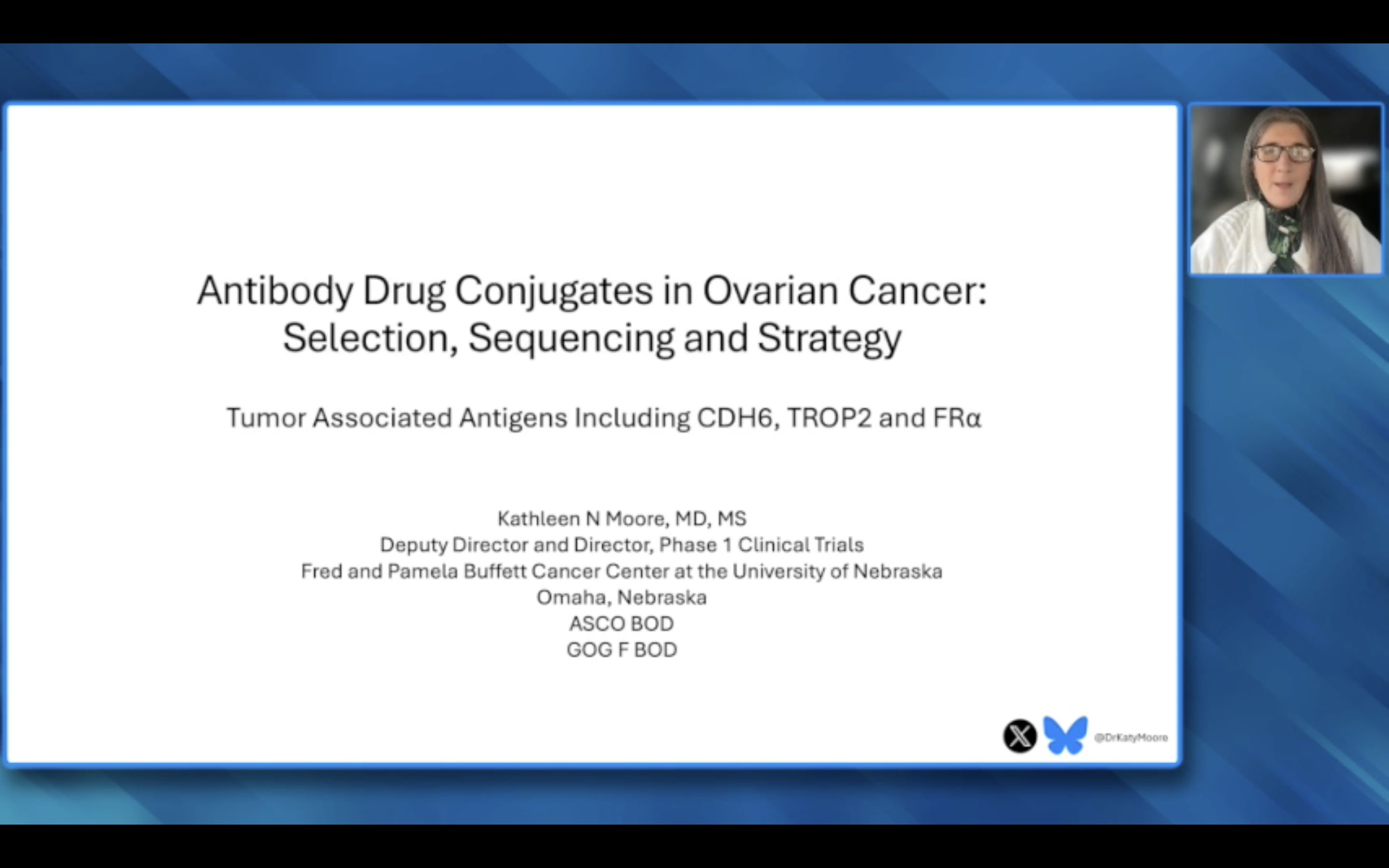
Historically, therapies for platinum-resistant ovarian cancer were so ineffective that the order of administration was irrelevant. With the advent of multiple active ADCs, the concept of treatment sequencing and potential cross-resistance based on payloads or targets has become a critical, and entirely new, clinical consideration for this disease.
The emergence of multiple effective but distinct therapies (systemic, liver-directed, immunotherapy) has created a new clinical challenge. Without head-to-head trials, oncologists must now strategize the optimal sequence and combination for each patient, moving beyond a one-size-fits-all approach.