Get your free personalized podcast brief
We scan new podcasts and send you the top 5 insights daily.
While competitors sought government protection from imports, Honda refused. He believed the only path to victory was through superior technology, arguing that high-quality products know no national boundaries and forcing his company to compete at a global standard.

Related Insights
To ensure continuous innovation, Honda structured his R&D division so any individual, particularly young engineers, could propose and take responsibility for any research project they wanted to pursue. He believed giving youth opportunity and freedom was essential to progress.
China's harsh, deflationary economic environment and intense domestic competition, while causing many companies to fail, effectively hones a select few into highly resilient and efficient champions. These survivors are now prepared for successful global expansion.
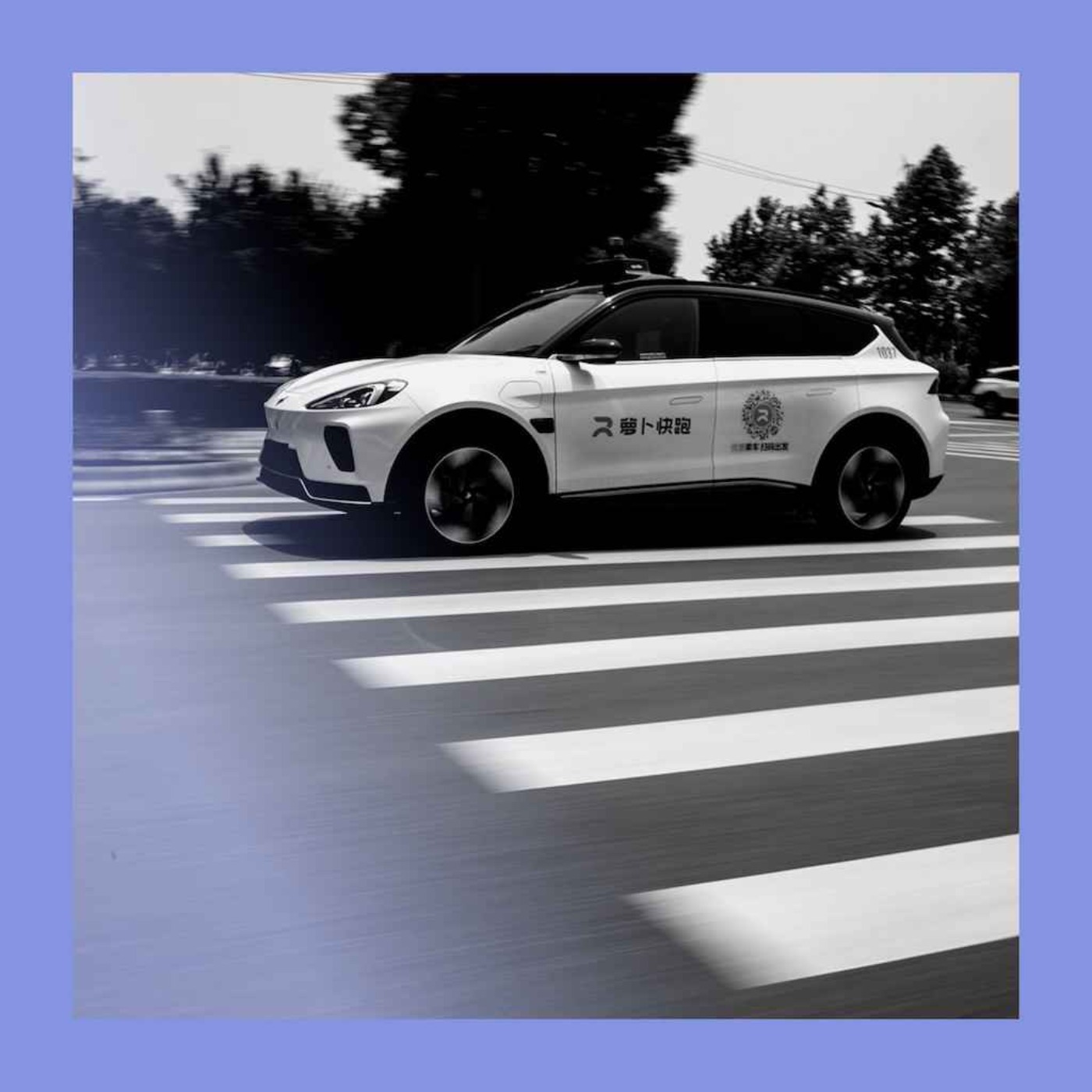
To thrive economically, a nation should pursue two seemingly contradictory paths simultaneously. Domestically, it should deregulate to foster innovation and become an attractive place to build. Internationally, it must use interventionist policies like tariffs to protect its industries from countries that do not operate on free-market principles.

After visiting an automated Chinese car parts supplier, Honda's CEO Toshihiro Mibei bluntly stated, "we have no chance against this." This admission signals a critical turning point where a legacy Japanese automaker acknowledges being outmatched by the cost, speed, and quality of China's EV ecosystem.
Koenigsegg viewed his lack of automotive heritage not as a weakness but as his greatest competitive advantage. Without legacy constraints, he could start from a "blank sheet of paper," enabling radical innovation and differentiation that incumbents, tied to their history and processes, could not easily replicate.
As a young repairman, Soichiro Honda built his reputation by successfully fixing vehicles that older, more established shops had given up on. This strategy of starting with the hardest problems became a core principle of his company.
Honda created a separate company for R&D, funded by a portion of the parent company's sales. This structure insulated the inherently failure-prone process of research from the profit-and-loss demands of the manufacturing business, fostering true, long-term innovation.
Soichiro Honda, an engineering visionary, paid little attention to profits and nearly bankrupted his company. His success was only possible after partnering with Takyo Fujisawa, who handled finance and distribution, providing stability for Honda's genius to flourish.
In a politically chaotic Korea where new regimes purged allies of the old, Chung Ju Young made Hyundai "regime-proof." Instead of relying on patronage, he focused relentlessly on delivering projects cheaper and faster than anyone else. This made Hyundai's value proposition so compelling that no government could afford to stop working with them.
![[Outliers] The Hyundai Founder Who Put a Country on His Back thumbnail](https://megaphone.imgix.net/podcasts/9c0d00ea-df1d-11ef-9477-2b8336fcd8e9/image/113a058265322df92ae562c548d1dc8f.jpg?ixlib=rails-4.3.1&max-w=3000&max-h=3000&fit=crop&auto=format,compress)
Unlike successful East Asian models, India's post-WWII industrial policy failed because it misunderstood a key ingredient: competition. Policymakers picked winners but failed to subject them to competitive pressures, either domestic or international. They viewed industrial policy as a purely organizational task, which ultimately proved ineffective for driving innovation and efficiency.