Get your free personalized podcast brief
We scan new podcasts and send you the top 5 insights daily.
Évariste Galois's development of group theory provides a historical precedent for revolutionary concepts that are not immediately recognized or useful. It took over a century for the full value of his ideas to be appreciated in fields like physics and cryptography, showing that the most profound insights may fail immediate 'verification' by peers or practical application.
Related Insights
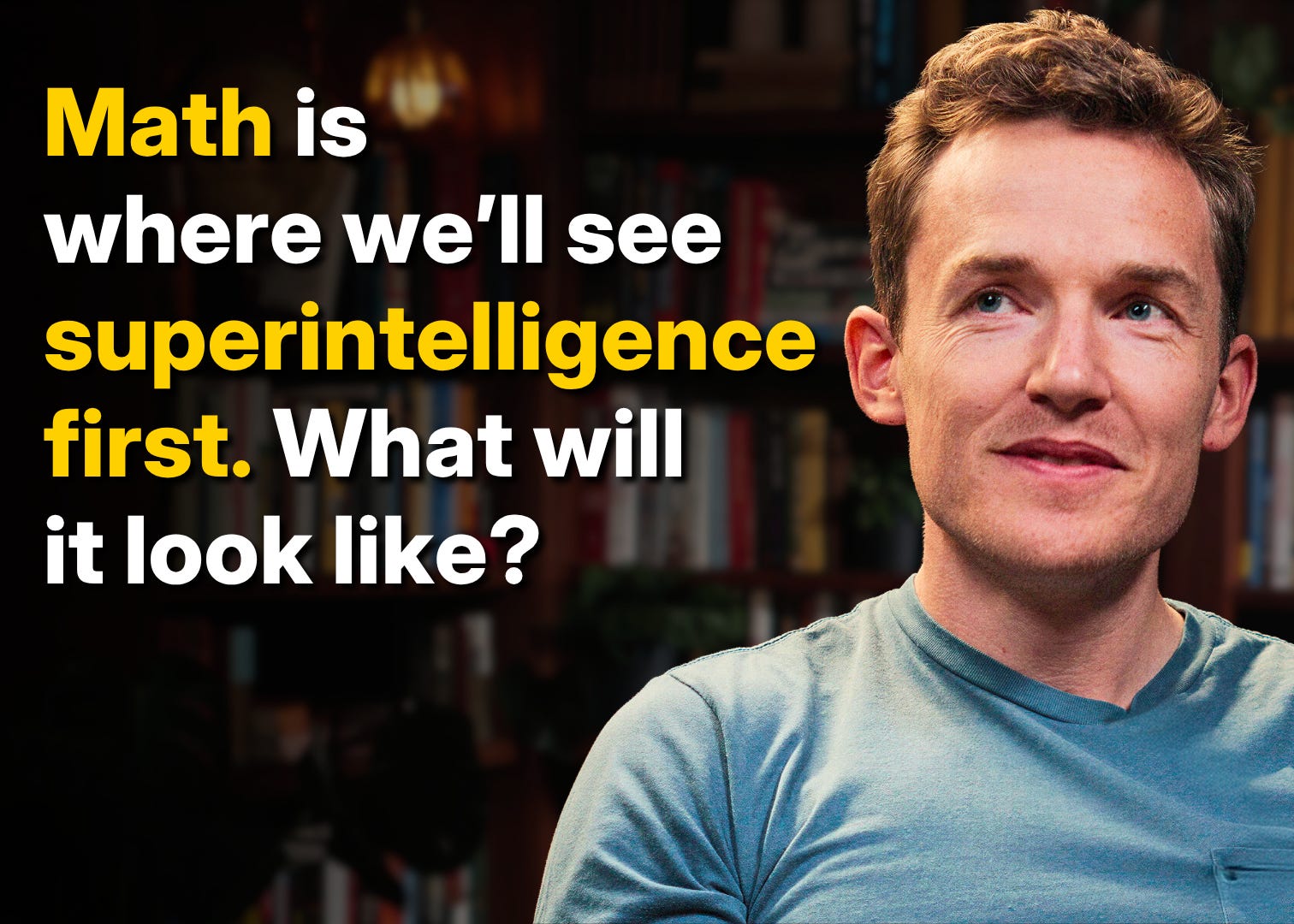
Generative AI can produce the "miraculous" insights needed for formal proofs, like finding an inductive invariant, which traditionally required a PhD. It achieves this by training on vast libraries of existing mathematical proofs and generalizing their underlying patterns, effectively automating the creative leap needed for verification.

Even Donald Hoffman, proponent of the consciousness-first model, admits his emotions and intuition resist his theory. He relies solely on the logical force of mathematics to advance, demonstrating that groundbreaking ideas often feel profoundly wrong before they can be proven.

Lorentz developed the math for special relativity first but interpreted it as a physical effect of moving through the ether. The scientific community adopted Einstein's more fundamental rethinking of space and time long before 1940s experiments could empirically distinguish the two, showing progress isn't solely data-driven.

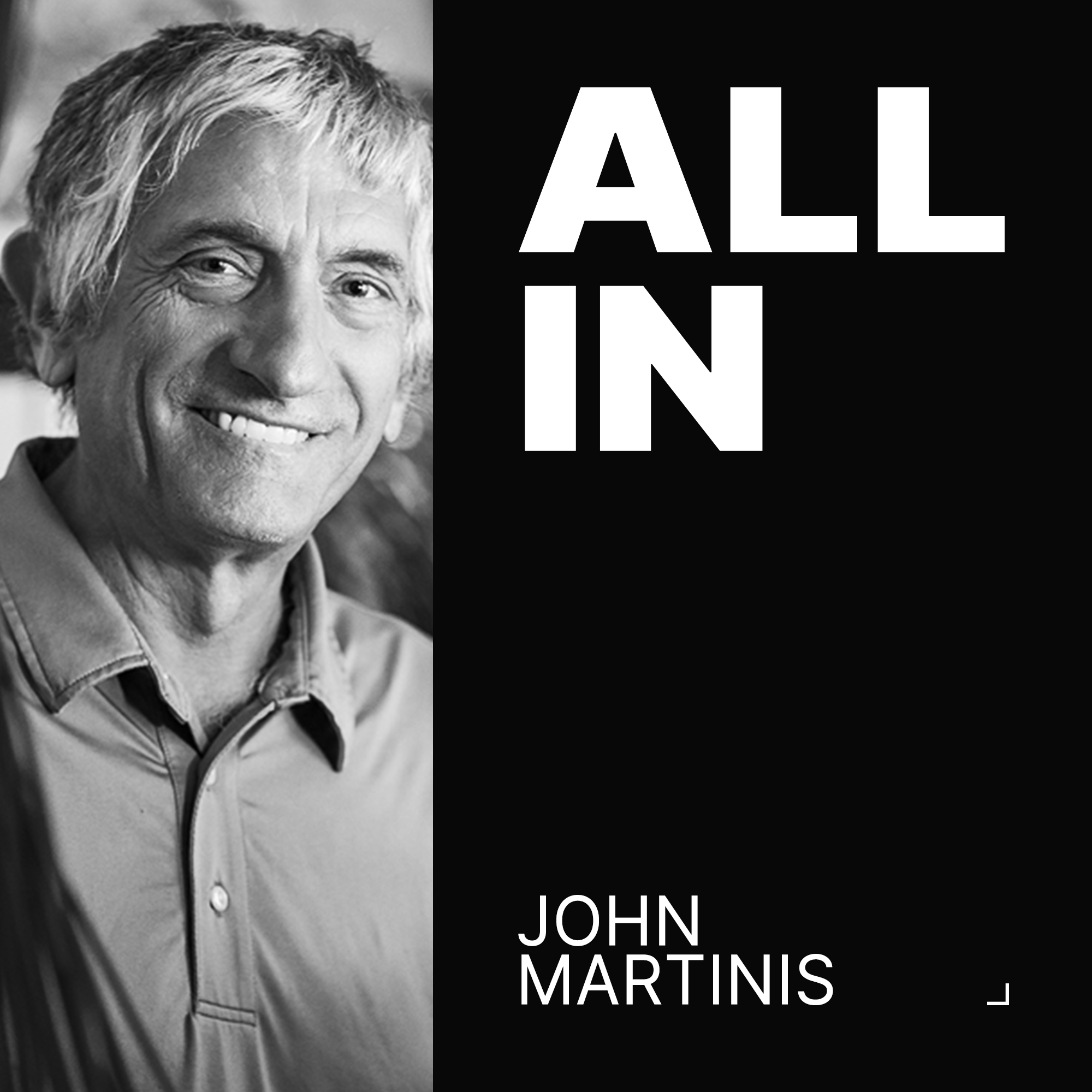
John Martinis's 1985 experiment demonstrating quantum mechanics at a macro scale was noteworthy but not seen as a Nobel-worthy breakthrough at the time. Its significance grew over decades as it became the foundation for the burgeoning field of quantum computing, showing the long-tail impact of foundational research.
The history of mathematics is filled with examples, like Newton and Leibniz independently discovering calculus, where different people in isolation uncover the exact same mathematical systems. This suggests they are not inventing a language but discovering a pre-existing computational structure inherent to the universe itself.

Purely abstract mathematical concepts, developed with no real-world application, are later found to be the precise language needed to describe physical reality. For example, Riemann's geometry for curved space sat unused for 60 years until Einstein required it for general relativity, proving the universe's 'code' was discoverable before its function was known.
Great ideas like deep learning were not immediately recognized. Their value emerged over time as others built upon them. This suggests an idea's fruitfulness is a product of its context and cultural adoption, not just its isolated brilliance, making it difficult for an AI to evaluate its ultimate impact.
Moving beyond solving existing problems like the Millennium Prize problems, the true test of advanced AI in mathematics will be its ability to generate novel, interesting conjectures and create new, unifying definitions. This represents a higher tier of mathematical creativity, akin to the work of the greatest mathematicians who frame the questions for others to solve.
Simply generating a mathematical proof in natural language is useless because it could be thousands of pages long and contain subtle errors. The pivotal innovation was combining AI reasoning with formal verification. This ensures the output is provably correct and usable, solving the critical problems of trust and utility for complex, AI-generated work.

Turning intuition into precise mathematics is vital because the math can reveal consequences the theory's creator never anticipated. Einstein himself didn't foresee and initially rejected the existence of black holes, a direct prediction from his own equations.