Get your free personalized podcast brief
We scan new podcasts and send you the top 5 insights daily.
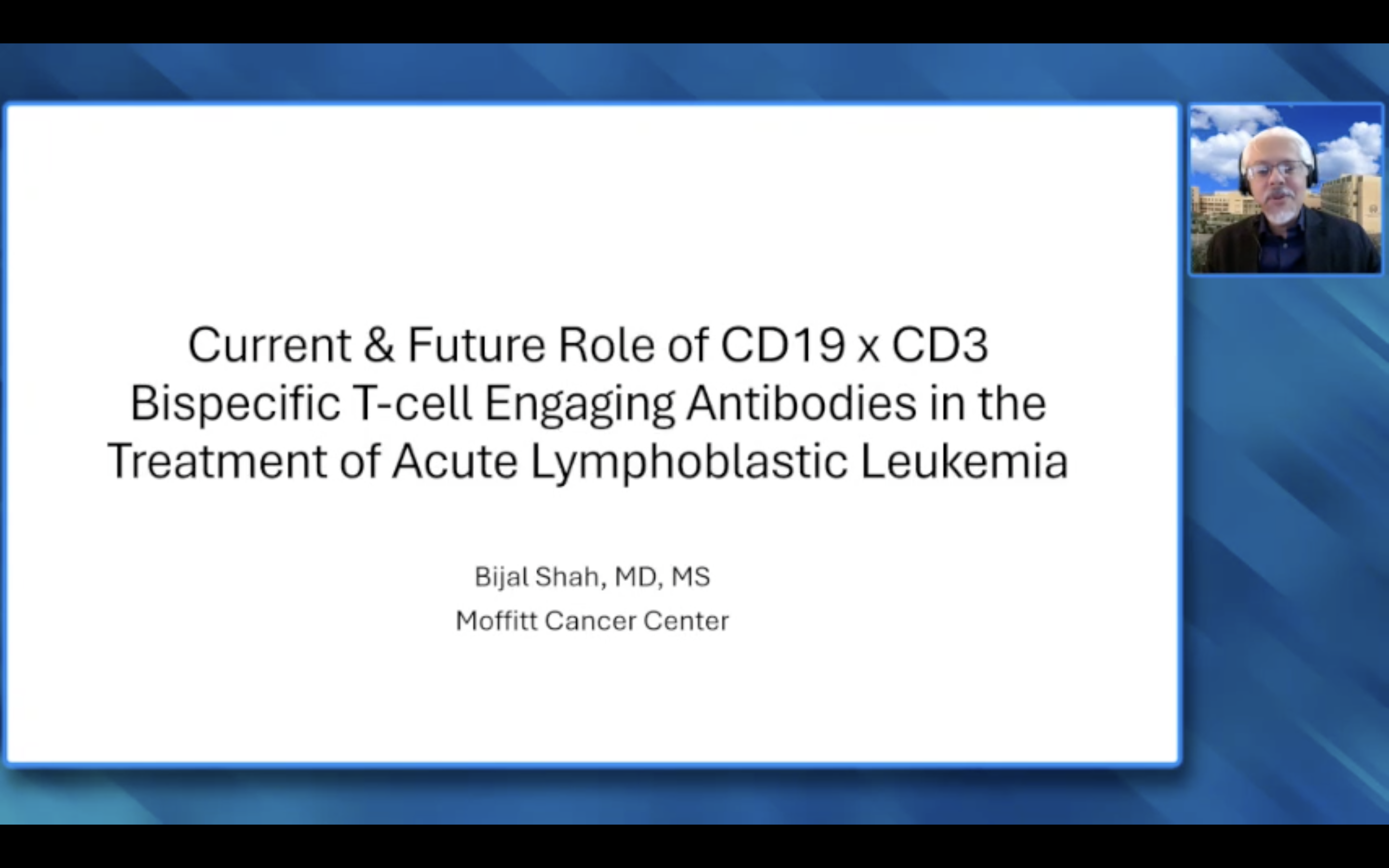
A key failure pattern for blinatumomab is relapse in extramedullary sites (outside the bone marrow). An analysis found that 43% of relapses involved these sites, suggesting the therapy may not effectively reach or clear disease in areas like the CNS or lymph nodes, allowing blasts to hide and re-emerge.
Related Insights
Beyond overall response rates, a critical area of excitement for new ADCs in lung cancer is their potential to treat brain metastases. Early data showing hints of intracranial efficacy is a significant point of interest, as this addresses a common and difficult-to-treat site of disease progression, offering a potential advantage over other therapies.

The traditional "germinal center" (GC) classification for DLBCL is overly simplistic. Molecular analysis reveals distinct subtypes within GC, such as "dark zone" and "light zone" signatures, which have different prognoses and responses to targeted therapies like polatuzumab.
The B7H3-targeted antibody-drug conjugate (ADC) ifanatumab deruxtecan shows a high intracranial response rate in SCLC, numerically even better than its systemic response rate. This suggests excellent CNS penetration, offering a promising strategy for managing brain metastases, a common and difficult challenge in SCLC.

New BiTEs like Survatamig are achieving high response rates (73-78%) in heavily pre-treated ALL patients, including those who have already relapsed after receiving blinatumomab or CAR-T cell therapy. This indicates that resistance to one CD19-targeting agent does not preclude a deep response to another with a different molecular design.
Glioblastoma isn't a single mass but has finger-like 'tentacles' (diffuse infiltration) extending into brain tissue. It is also genetically and cellularly diverse, meaning a single-pathway drug will inevitably miss many tumor cells, leading to rapid recurrence and treatment failure.

While blinatumomab-TKI combinations avoid systemic chemotherapy toxicity, they are associated with higher rates of central nervous system (CNS) relapses. This necessitates an increased number of intrathecal chemotherapy doses to prevent CNS disease, a critical nuance for managing this 'simpler' approach.
The subcutaneous formulation of blinatumomab is more than a convenience upgrade. It allows for safely achieving higher steady-state drug concentrations compared to the continuous IV infusion. This improved pharmacokinetic profile translates directly into superior efficacy, particularly in patients with high tumor burdens.
In the pivotal ECOG1910 trial, adding blinatumomab to frontline chemotherapy did more than just prevent relapse. It also improved non-relapse mortality, meaning it was a safer and more tolerable consolidation strategy than the chemotherapy alternative. This dual benefit drove its profound overall survival advantage.
Unlike the intact blood-brain barrier, the blood-tumor barrier within brain metastases is permeable. This "leakiness" allows large molecules like the ADC trastuzumab deruxtecan (TDXD) to enter and deliver its payload, providing a mechanism for its high CNS efficacy.

The ECHELON-3 trial showed that brentuximab vedotin plus R-squared is effective in relapsed/refractory DLBCL, even in patients with negligible CD30 expression. This suggests the drug's benefit may stem from immune synergy or other mechanisms, not just direct CD30 targeting.