/
© 2026 RiffOn. All rights reserved.
  1. OncLive® On Air
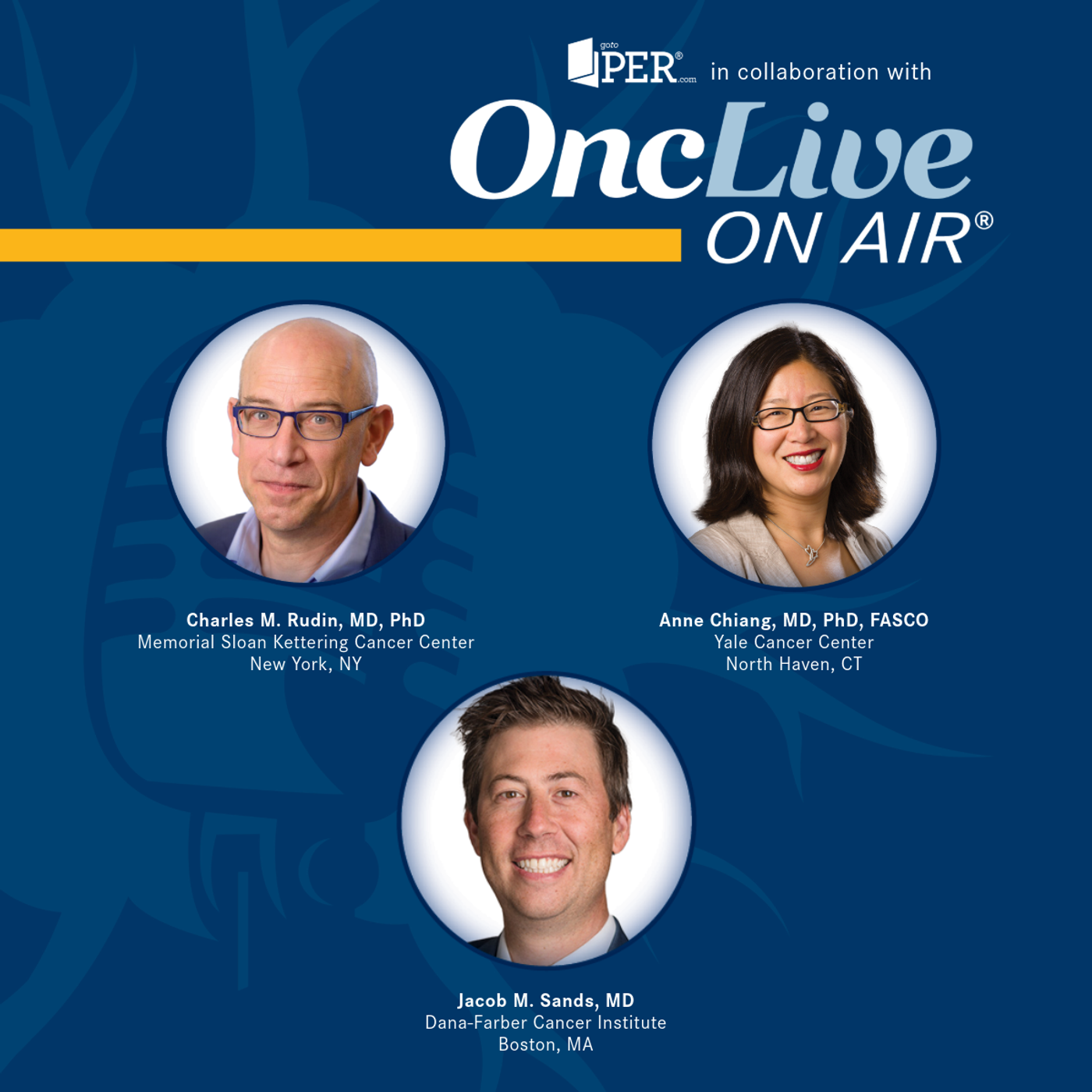
  2. S14 Ep84: Cases and Conversations™: Transforming Small Cell Lung Cancer Treatment Through Emerging Evidence and Expert Insights
S14 Ep84: Cases and Conversations™: Transforming Small Cell Lung Cancer Treatment Through Emerging Evidence and Expert Insights

S14 Ep84: Cases and Conversations™: Transforming Small Cell Lung Cancer Treatment Through Emerging Evidence and Expert Insights

OncLive® On Air · Jan 21, 2026

Experts discuss transforming SCLC care with immunotherapy (ADRIATIC trial) in limited stage & new agents like tarlatumab for extensive stage.

Chemo-Free Interval Is a Critical Predictor of Lurbinectedin Efficacy

Lurbinectedin's effectiveness in second-line SCLC is highly dependent on the chemotherapy-free interval after first-line treatment. Patients with a longer interval (>90 days) show significantly better response rates and disease control, reinforcing that "platinum sensitivity" acts as a proxy for broader cytotoxic drug sensitivity.

S14 Ep84: Cases and Conversations™: Transforming Small Cell Lung Cancer Treatment Through Emerging Evidence and Expert Insights thumbnail

S14 Ep84: Cases and Conversations™: Transforming Small Cell Lung Cancer Treatment Through Emerging Evidence and Expert Insights

OncLive® On Air·a month ago

Durvalumab Shows Enhanced Benefit with Carboplatin in Limited-Stage SCLC

Data from the ADRIATIC trial surprisingly suggests the survival benefit of consolidation Durvalumab was more pronounced in patients receiving carboplatin versus cisplatin. This finding reassures clinicians about using the better-tolerated carboplatin in combination with chemoradiation for limited-stage small cell lung cancer, challenging the traditional preference for cisplatin.

S14 Ep84: Cases and Conversations™: Transforming Small Cell Lung Cancer Treatment Through Emerging Evidence and Expert Insights thumbnail

S14 Ep84: Cases and Conversations™: Transforming Small Cell Lung Cancer Treatment Through Emerging Evidence and Expert Insights

OncLive® On Air·a month ago

B7H3-Targeted ADCs Show Potent Brain Activity in Small Cell Lung Cancer

The B7H3-targeted antibody-drug conjugate (ADC) ifanatumab deruxtecan shows a high intracranial response rate in SCLC, numerically even better than its systemic response rate. This suggests excellent CNS penetration, offering a promising strategy for managing brain metastases, a common and difficult challenge in SCLC.

S14 Ep84: Cases and Conversations™: Transforming Small Cell Lung Cancer Treatment Through Emerging Evidence and Expert Insights thumbnail

S14 Ep84: Cases and Conversations™: Transforming Small Cell Lung Cancer Treatment Through Emerging Evidence and Expert Insights

OncLive® On Air·a month ago

Surgery Offers Key Diagnostic Confirmation in Suspected Early-Stage SCLC

For very early-stage small cell lung cancer, surgical resection is an important and perhaps underutilized option. Beyond its therapeutic potential, surgery provides a definitive pathological diagnosis, which is crucial as some cases that appear to be small cell on biopsy may actually be other tumor types, like atypical carcinoid.

S14 Ep84: Cases and Conversations™: Transforming Small Cell Lung Cancer Treatment Through Emerging Evidence and Expert Insights thumbnail

S14 Ep84: Cases and Conversations™: Transforming Small Cell Lung Cancer Treatment Through Emerging Evidence and Expert Insights

OncLive® On Air·a month ago

Tarlatumab Efficacy Is Independent of Prior Chemotherapy Response Duration

Unlike traditional cytotoxic agents, the DLL3-targeting T-cell engager tarlatumab demonstrates consistent overall survival benefits in third-line SCLC regardless of the patient's chemotherapy-free interval from first-line therapy. This indicates it works via a distinct mechanism that bypasses conventional chemoresistance pathways, representing a new treatment paradigm.

S14 Ep84: Cases and Conversations™: Transforming Small Cell Lung Cancer Treatment Through Emerging Evidence and Expert Insights thumbnail

S14 Ep84: Cases and Conversations™: Transforming Small Cell Lung Cancer Treatment Through Emerging Evidence and Expert Insights

OncLive® On Air·a month ago

MRI Surveillance Replaces Prophylactic Cranial Irradiation in Extensive-Stage SCLC

Modern practice is shifting away from routine Prophylactic Cranial Irradiation (PCI) for extensive-stage small cell lung cancer. This change is driven by a key Japanese study where patients, screened with baseline MRI, showed a survival trend favoring observation with serial MRIs over PCI, challenging a long-standing treatment paradigm.

S14 Ep84: Cases and Conversations™: Transforming Small Cell Lung Cancer Treatment Through Emerging Evidence and Expert Insights thumbnail

S14 Ep84: Cases and Conversations™: Transforming Small Cell Lung Cancer Treatment Through Emerging Evidence and Expert Insights

OncLive® On Air·a month ago