Get your free personalized podcast brief
We scan new podcasts and send you the top 5 insights daily.
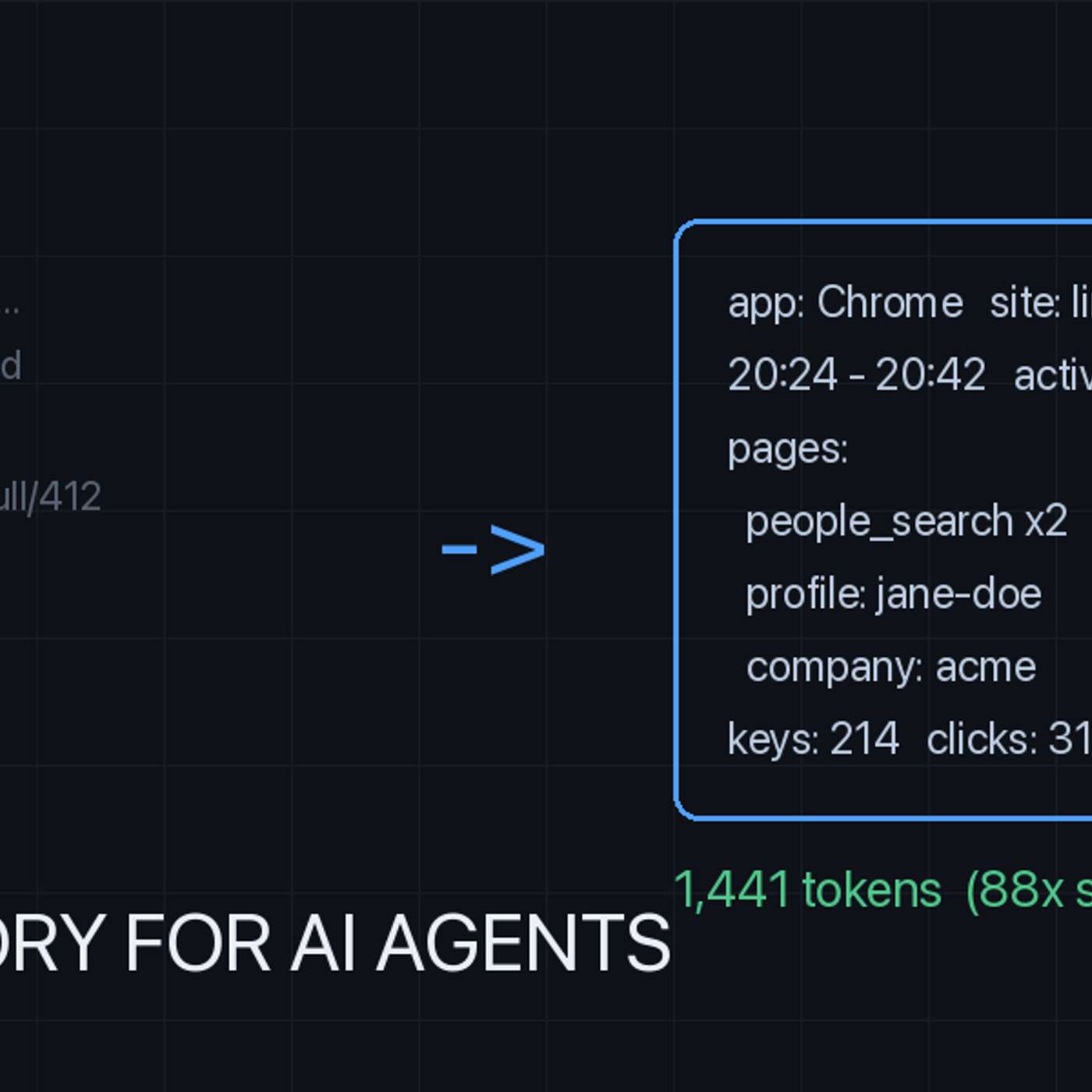
Analysis of 55 days of screen activity revealed that work is not composed of long, focused blocks. The median activity frame was just 0.3 minutes, with 74% lasting under a minute. This "confetti" pattern of rapid task-switching is a reality that AI summarizers would likely obscure, but which deterministic compilation reveals accurately.
Related Insights
Research reveals that we interrupt ourselves as frequently as we are interrupted by external alerts. When external interruptions decrease, self-interruptions tend to increase, suggesting a deeply ingrained habit for fragmented attention that comes from within, not just from our devices.

The mental load of managing and switching between a vast number of applications causes more exhaustion than the sheer volume of notifications. The daily 57 minutes spent switching apps and 30 minutes deciding which tool to use for a task creates significant decision fatigue.

Silicon Valley's work culture mistakenly models human productivity on computer processors, prioritizing speed and eliminating downtime. This is antithetical to the human brain, which operates best with deep focus and requires significant time to switch contexts, unlike a CPU executing sequential commands.

Tools like OpenAI's Codex can complete hours of coding in minutes following a design phase. This creates awkward, inefficient downtime periods for the developer, fundamentally altering the daily work rhythm from a steady flow to unproductive cycles of intense work followed by waiting.
![[State of Post-Training] From GPT-4.1 to 5.1: RLVR, Agent & Token Efficiency — Josh McGrath, OpenAI thumbnail](https://assets.flightcast.com/V2Uploads/nvaja2542wefzb8rjg5f519m/01K4D8FB4MNA071BM5ZDSMH34N/square.jpg)
Traditionally, engineers need long, uninterrupted blocks to achieve flow state. By managing context and generating code, AI helps engineers get into flow faster. This makes shorter, 45-minute work blocks viable and productive again, restructuring the ideal engineering workday.

Our brains are not evolved to switch between abstract targets quickly, requiring 10-20 minutes to fully load a new context. The constant interruptions from modern work tools prevent this, causing a "diffuse cognitive friction" that we experience as mental fatigue. This is a biological mismatch, not a personal failing.
A key driver of AI adoption in the workplace is its ability to smooth over moments of high cognitive effort, like starting a document from a blank page. For brains already exhausted by constant context switching, this is a welcome relief but ultimately creates a dependency that further weakens the ability to focus.
Longitudinal studies tracking how long people focus on a single screen show a dramatic decline. In 2004, the average was about 2.5 minutes. By the late 2010s, it had plummeted to an average of just 47 seconds, quantifying the fragmentation of modern digital focus.
Using AI tools to spin up multiple sub-agents for parallel task execution forces a shift from linear to multi-threaded thinking. This new workflow can feel like 'ADD on steroids,' rewarding rapid delegation over deep, focused work, and fundamentally changing how users manage cognitive load and projects.

The damage from frequent distractions like checking stock apps isn't the time spent on the task itself. It's the 'cognitive residue' and 'switching costs' that follow. A quick glance can disrupt deep focus for 15-17 minutes, making these seemingly minor habits incredibly costly to productivity and complex problem-solving.
