Get your free personalized podcast brief
We scan new podcasts and send you the top 5 insights daily.
Early personal AI assistants struggle with both a 'blank page problem' (users do not know what to ask open-ended LLMs) and a 'boil the ocean problem' (trying to do everything at once). Assistants like Instinct gain traction by proactively prompting users with concrete suggestions—such as offering to draft replies to unread emails or setting up recurring bill payments—guiding users past the open-ended text box hurdle into immediate utility.

Related Insights
The most valuable AI agents don't wait for user queries. The real breakthrough comes when agents shift from a reactive, pull-based model to a proactive, push-based one, like automatically delivering a daily summary. This eliminates user friction and makes the agent feel indispensable.

Instead of staring at a blank AI interface, the best way to start is to stop before your next real-world task and ask the AI to do it for you. This provides immediate, relevant context for learning and experimentation.

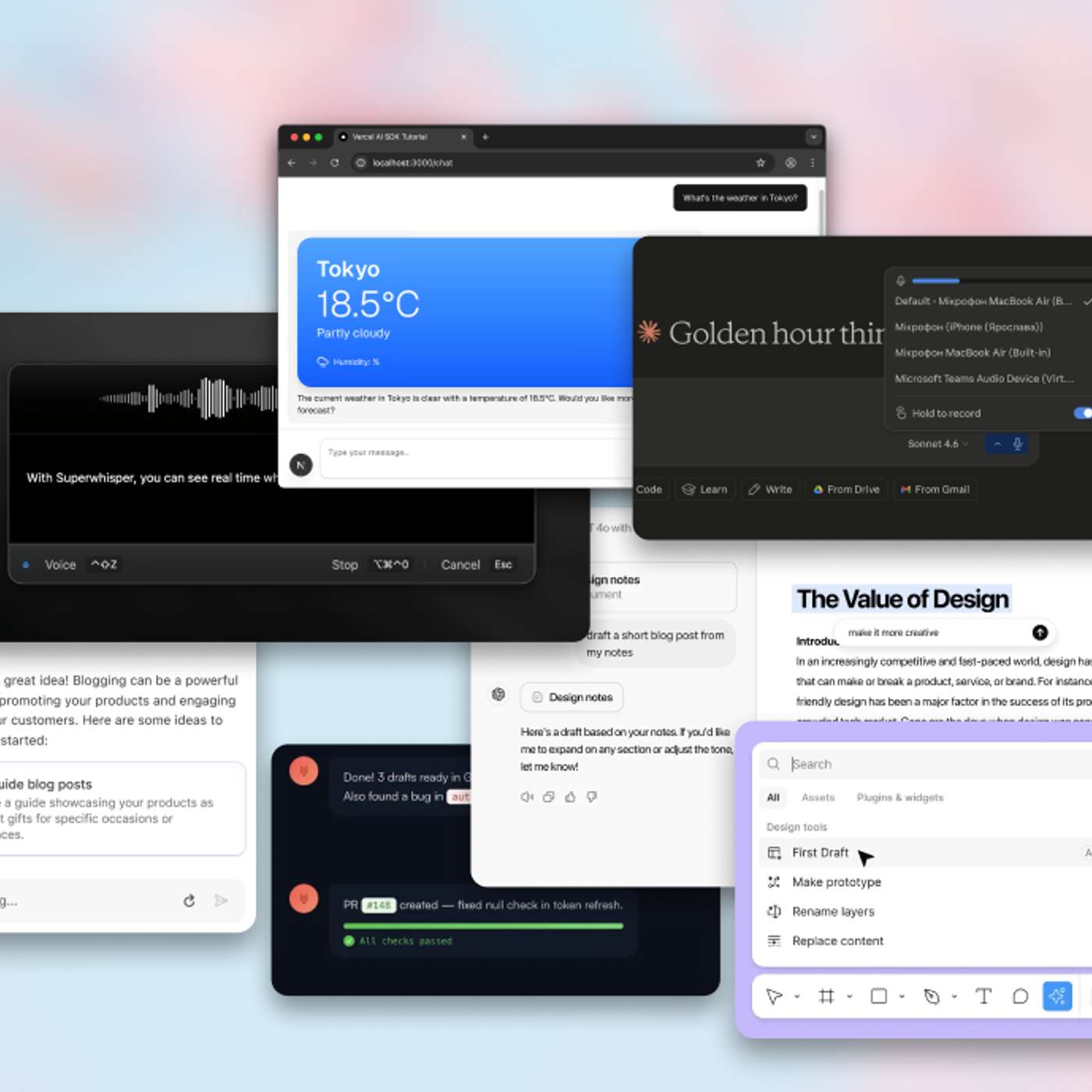
New users hesitate with open-ended AI prompts. Successful products overcome this by offering constrained, guided entry points like slash commands, templates, or contextual suggestions. This reduces user uncertainty and boosts consistent use, making adoption easier.
Current AI tools require users to define and set up workflows. The next generation of agents will observe user patterns—like handling email intros or forwarding receipts—and proactively suggest automating them. This removes the setup friction and makes AI accessible to a broader, non-technical audience.

A major hurdle in AI adoption is not the technology's capability but the user's inability to prompt effectively. When presented with a natural language interface, many users don't know how to ask for what they want, leading to poor results and abandonment, highlighting the need for prompt guidance.

The primary interface for AI is shifting from a prompt box to a proactive system. Future applications will observe user behavior, anticipate needs, and suggest actions for approval, mirroring the initiative of a high-agency employee rather than waiting for commands.
The key to mainstream adoption for personal AI agents may be the shift from a reactive to a proactive model. Early user feedback suggests the 'magic' of agents like Muse isn't in executing commands, but in autonomously handling tasks like canceling subscriptions or sending reminders without being asked, transforming them from a tool into a true assistant.

The next significant leap in user experience for AI agents isn't just executing commands, but proactively identifying opportunities—like finding a cheaper hotel booking—without being prompted. This shift from reactive to proactive assistance marks a major evolution in AI's value.
The current chatbot model of asking a question and getting an answer is a transitional phase. The next evolution is proactive AI assistants that understand your environment and goals, anticipating needs and taking action without explicit commands, like reminding you of a task at the opportune moment.

To achieve mass adoption, ChatGPT must move beyond its current 'computer terminal' interface. The next wave of users are too busy to learn prompting; the product needs clearer affordances and must proactively anticipate needs rather than waiting for commands to provide value.
