Get your free personalized podcast brief
We scan new podcasts and send you the top 5 insights daily.
TrueFoundry positions its platform as a control plane between applications and infrastructure. Its core functions are captured by the memorable "COG" framework: providing a single place to Connect to models and tools, Observe all AI interactions, and Govern access, costs, and behavior for enterprise agents.

Related Insights
Many companies initially build their own AI gateway, viewing it as a simple, thin proxy layer. However, upon moving agents to production, they quickly discover that real-world complexity around governance, observability, and security requires a far more robust, specialized control plane platform.
For regulated industries like banking, Boston Consulting Group and OpenAI advocate for a centralized middleware layer, or 'control plane.' This architectural component acts as a single gateway through which all AI systems must operate, enabling consistent oversight, standardized controls, and auditable governance across the entire organization.
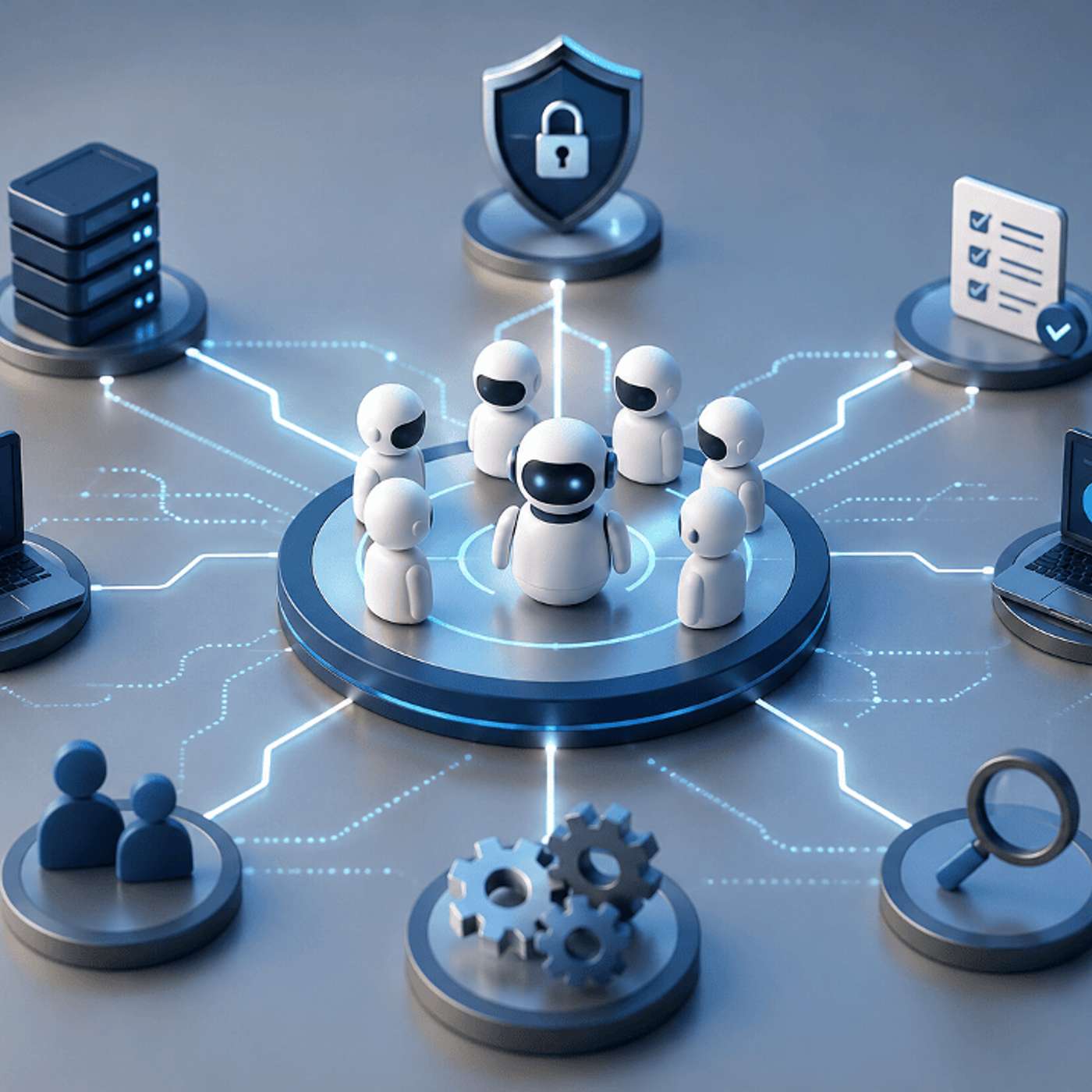
The intelligence layer of AI is advancing rapidly, but enterprise adoption lags because a crucial control layer is underdeveloped. The next wave of AI development will focus on providing observability, control, and traceability, allowing businesses to audit and course-correct an AI agent's decisions.

MLOps pipelines manage model deployment, but scaling AI requires a broader "AI Operating System." This system serves as a central governance and integration layer, ensuring every AI solution across the business inherits auditable data lineage, compliance, and standardized policies.

As AI model performance commoditizes, the strategic battleground is shifting from models to platforms. Tech giants like Google are positioning their offerings not as features, but as the fundamental 'operating system' for the agentic enterprise. The new competitive moat is the control plane that orchestrates agents.

Infrastructure built for app-to-app integration, like Salesforce's MuleSoft, is being repurposed to govern, orchestrate, and secure AI agents. This 'agent fabric' provides a foundational control plane for managing complex agentic workflows across the enterprise, extending the value of existing integration investments.

The durable investment opportunities in agentic AI tooling fall into three categories that will persist across model generations. These are: 1) connecting agents to data for better context, 2) orchestrating and coordinating parallel agents, and 3) providing observability and monitoring to debug inevitable failures.
Drawing a parallel to the microservices boom, enterprises will soon deploy thousands of AI agents, creating immense operational complexity. The most valuable future products will be those that, like Datadog for microservices, provide governance, monitoring, and orchestration for this sprawling agentic workforce.
Standalone AI tools often lack enterprise-grade compliance like HIPAA and GDPR. A central orchestration platform provides a crucial layer for access control, observability, and compliance management, protecting the business from risks associated with passing sensitive data to unvetted AI services.
Companies struggle with AI adoption not because of technology, but because of a lack of trust in probabilistic systems. Platforms like Jetstream are emerging to solve this by creating "AI blueprints"—an operational contract that defines what an AI workflow is supposed to do and flags any deviation, providing necessary control and observability.
