Get your free personalized podcast brief
We scan new podcasts and send you the top 5 insights daily.
Many companies initially build their own AI gateway, viewing it as a simple, thin proxy layer. However, upon moving agents to production, they quickly discover that real-world complexity around governance, observability, and security requires a far more robust, specialized control plane platform.

Related Insights
A comprehensive AI management system requires more than just an LLM router. It needs three distinct gateways: a Model Gateway for controlling LLM access, an MCP Gateway for secure tool and data interaction, and an Agent Gateway to govern communication between different autonomous agents and provide a "kill switch."
The intelligence layer of AI is advancing rapidly, but enterprise adoption lags because a crucial control layer is underdeveloped. The next wave of AI development will focus on providing observability, control, and traceability, allowing businesses to audit and course-correct an AI agent's decisions.

Building a functional AI agent demo is now straightforward. However, the true challenge lies in the final stage: making it secure, reliable, and scalable for enterprise use. This is the 'last mile' where the majority of projects falter due to unforeseen complexity in security, observability, and reliability.

According to IBM, the key barrier preventing agentic AI systems from moving from impressive demos to widespread production is not a lack of technical capability. The real challenge is the absence of appropriate governance structures and operating models needed to scale these systems safely and effectively.
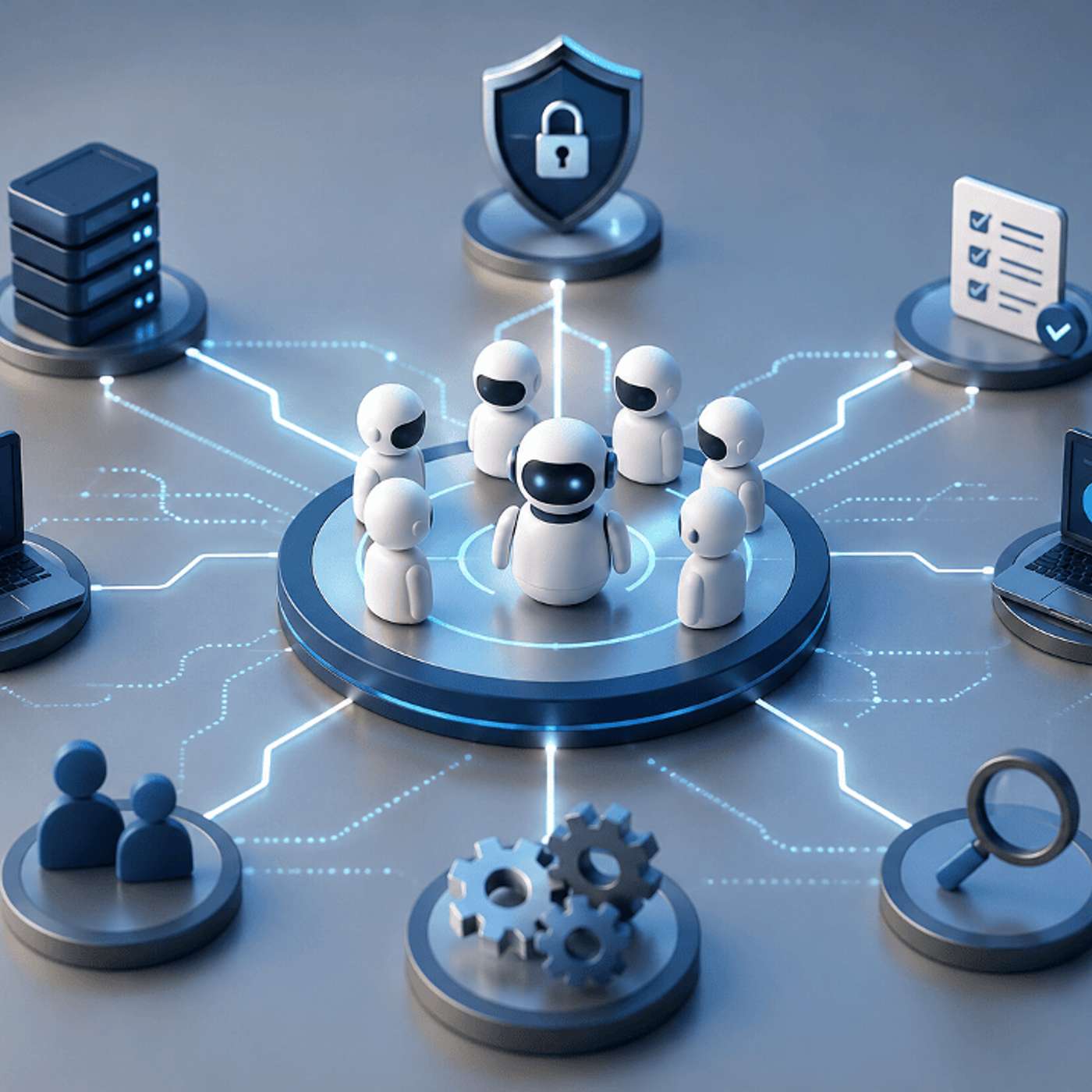
While starting with a vertically integrated system is fine, enterprises inevitably need two key components: an LLM Gateway to manage and route traffic to various models, and an MCP Gateway to securely connect those models to real-world systems.
MLOps pipelines manage model deployment, but scaling AI requires a broader "AI Operating System." This system serves as a central governance and integration layer, ensuring every AI solution across the business inherits auditable data lineage, compliance, and standardized policies.

Many organizations excel at building accurate AI models but fail to deploy them successfully. The real bottlenecks are fragile systems, poor data governance, and outdated security, not the model's predictive power. This "deployment gap" is a critical, often overlooked challenge in enterprise AI.

Many developers believe tweaking prompts and logic ('harness engineering') is the hardest part of building agents. The real bottleneck, however, is scaling, reliability, and managing production infrastructure—a common miscalculation that managed services aim to solve.

While AI agents appear incredibly capable in controlled demos, they often fail in production environments. Gartner predicts over 40% of such projects will fail by 2027. The gap exists because real-world enterprise systems are fragile, require complex customization, and have authentication hurdles that demos don't account for.
TrueFoundry positions its platform as a control plane between applications and infrastructure. Its core functions are captured by the memorable "COG" framework: providing a single place to Connect to models and tools, Observe all AI interactions, and Govern access, costs, and behavior for enterprise agents.