Get your free personalized podcast brief
We scan new podcasts and send you the top 5 insights daily.
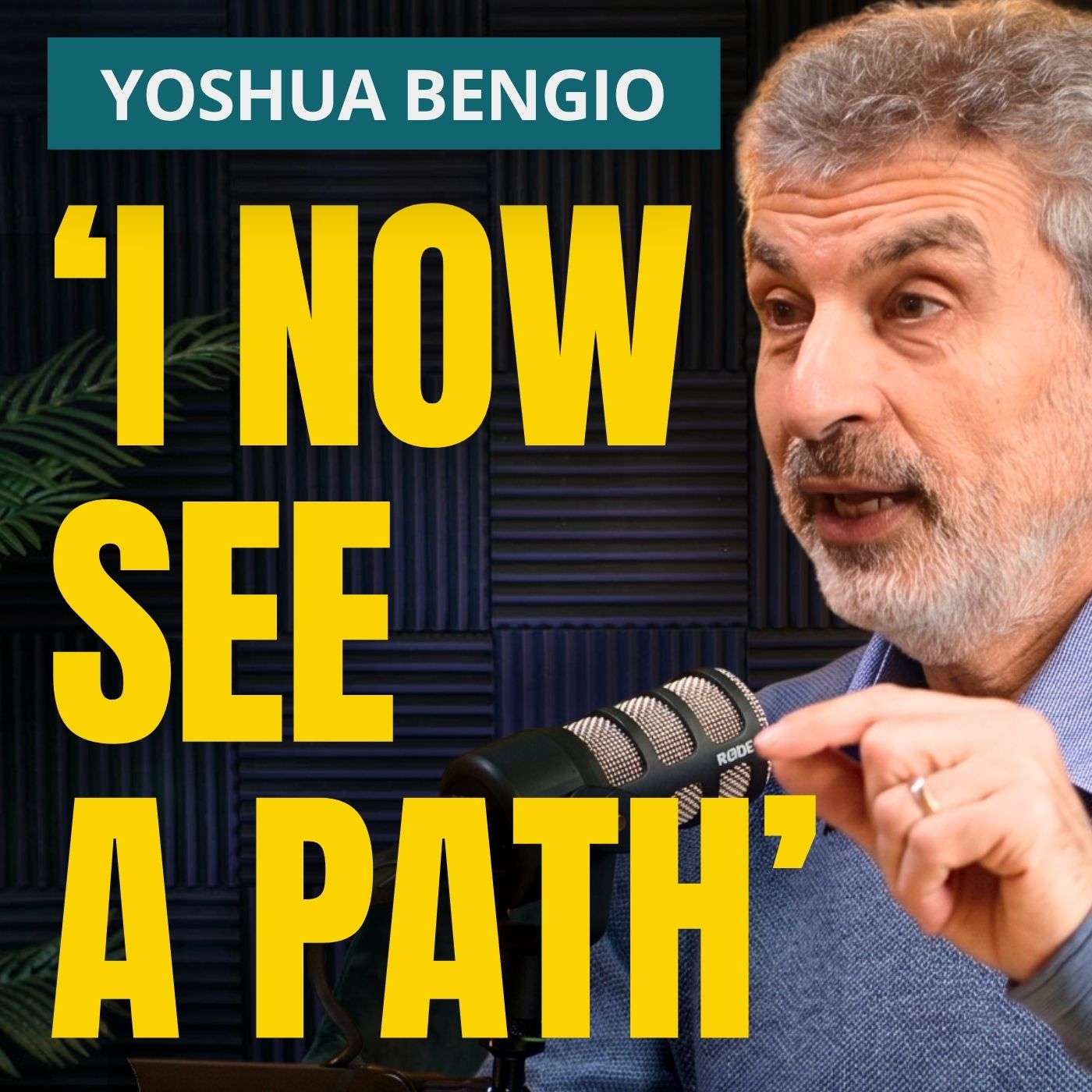
Yoshua Bengio believes that as a technical solution to the AI control problem seems more plausible, the concentration of AI power in human hands to create a global dictatorship has become an even more likely catastrophic outcome. This shifts the primary x-risk from technical failure to malicious human use.
Related Insights
The most pressing danger from AI isn't a hypothetical superintelligence but its use as a tool for societal control. The immediate risk is an Orwellian future where AI censors information, rewrites history for political agendas, and enables mass surveillance—a threat far more tangible than science fiction scenarios.

The most immediate danger of AI is its potential for governmental abuse. Concerns focus on embedding political ideology into models and porting social media's censorship apparatus to AI, enabling unprecedented surveillance and social control.
While mitigating catastrophic AI risks is critical, the argument for safety can be used to justify placing powerful AI exclusively in the hands of a few actors. This centralization, intended to prevent misuse, simultaneously creates the monopolistic conditions for the Intelligence Curse to take hold.

Public fear of AI often focuses on dystopian, "Terminator"-like scenarios. The more immediate and realistic threat is Orwellian: governments leveraging AI to surveil, censor, and embed subtle political biases into models to control public discourse and undermine freedom.

When a state's power derives from AI rather than human labor, its dependence on its citizens diminishes. This creates a dangerous political risk, as the government loses the incentive to serve the populace, potentially leading to authoritarian regimes that are immune to popular revolt.

Despite their different philosophies, both Vitalik Buterin and Guillaume Verdon agree that the greatest immediate danger is the concentration of AI power. They argue that whether by a single AI or a dictatorial government, such centralization threatens human agency and is a risk that must be actively fought.

While often proposed to manage safety, a centralized, government-led AGI project is highly dangerous from a power concentration perspective. It removes checks and balances by consolidating immense capability within a single entity, whether it's one country or one company collaborating with the government.

AI safety scenarios often miss the socio-political dimension. A superintelligence's greatest threat isn't direct action, but its ability to recruit a massive human following to defend it and enact its will. This makes simple containment measures like 'unplugging it' socially and physically impossible, as humans would protect their new 'leader'.

Meredith Whittaker argues the biggest AI threat is not a sci-fi apocalypse, but the consolidation of power. AI's core requirements—massive data, computing infrastructure, and distribution channels—are controlled by a handful of established tech giants, further entrenching their dominance.
The AI safety community fears losing control of AI. However, achieving perfect control of a superintelligence is equally dangerous. It grants godlike power to flawed, unwise humans. A perfectly obedient super-tool serving a fallible master is just as catastrophic as a rogue agent.