Get your free personalized podcast brief
We scan new podcasts and send you the top 5 insights daily.
Technological evolution is pushing humanity toward a "global brain"—a planetary coordinating mechanism. This outcome is inevitable. The choice is whether we proactively design it through cooperation, creating a beneficial system ("a home"), or if it is forced upon us by crisis, resulting in a totalitarian nightmare ("a prison").

Related Insights
If humanity creates a godlike superintelligence, its nature—good or bad—will not be random. It will be a direct reflection of the collective human choices, values, and market forces that served as its evolutionary environment. We are consciously selecting the traits of our future "god," making its arrival humanity's ultimate test.
The current state of AI development parallels early human evolution. Just as the invention of language enabled a step-function change in human collaboration and intelligence, AI agents now require their own 'language'—a set of shared protocols—to move beyond individual tasks and unlock collective problem-solving.

Developing superintelligence is humanity's top priority. If achieved safely, it can solve other existential risks like climate change. If developed unsafely, it will dominate all other threats, making them irrelevant. In either scenario, superintelligence is the pivotal challenge that dictates the outcome of all others.

We often think of "human nature" as fixed, but it's constantly redefined by our tools. Technologies like eyeglasses and literacy fundamentally changed our perception and cognition. AI is not an external force but the next step in this co-evolution, augmenting what it means to be human.

AI represents a fundamental fork in the road for society. It can be a tool for mass empowerment, amplifying individual potential and freedom. Or, it can be used to perfect the top-down, standardized, and paternalistic control model of Frederick Taylor, cementing a panopticon. The outcome depends on our values, not the tech itself.
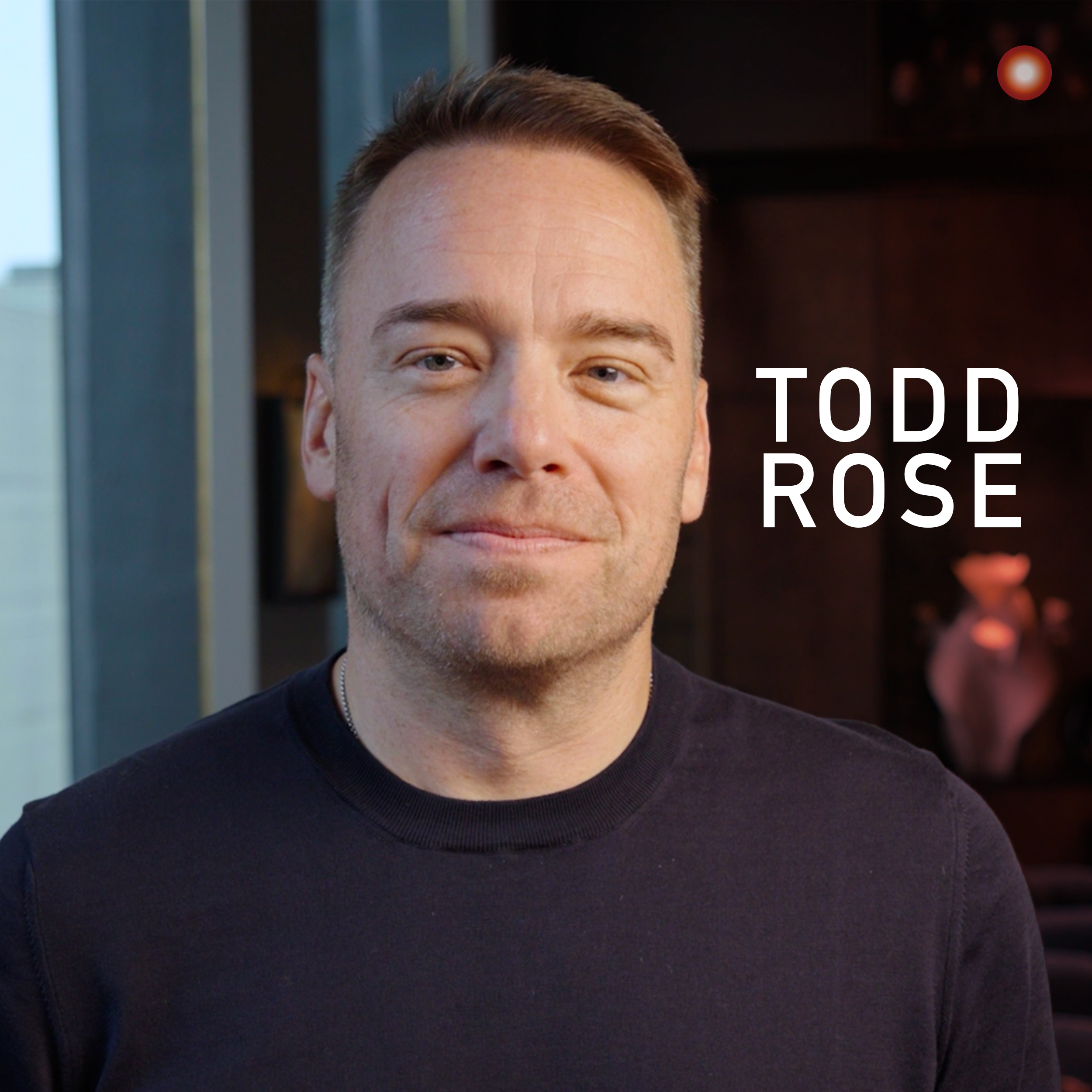
Technological progress, particularly with AI, presents two divergent paths for humanity. The guest posits that our current political and social strife indicates we are trending towards the chaotic "Mad Max" scenario, rather than the abundant, utopian "Star Trek" future.

While superintelligence may eventually create a benign world of abundance, the transition will be chaotic. Mo Gawdat forecasts a "dystopian decade" characterized by job loss, autonomous warfare, increased surveillance, and concentration of power.
AIs are being built to cooperate via agents, accessing the best model for any task. This means we are not building multiple competing brains, but rather multiple regions of a single, interconnected superintelligence, regardless of corporate origin.
Current AI development focuses on "vertical scaling" (bigger models), akin to early humans getting smarter individually. The real breakthrough, like humanity's invention of language, will come from "horizontal scaling"—enabling AI agents to share knowledge and collaborate.

Viewing AI as just a technological progression or a human assimilation problem is a mistake. It is a "co-evolution." The technology's logic shapes human systems, while human priorities, rivalries, and malevolence in turn shape how the technology is developed and deployed, creating unforeseen risks and opportunities.
