Get your free personalized podcast brief
We scan new podcasts and send you the top 5 insights daily.
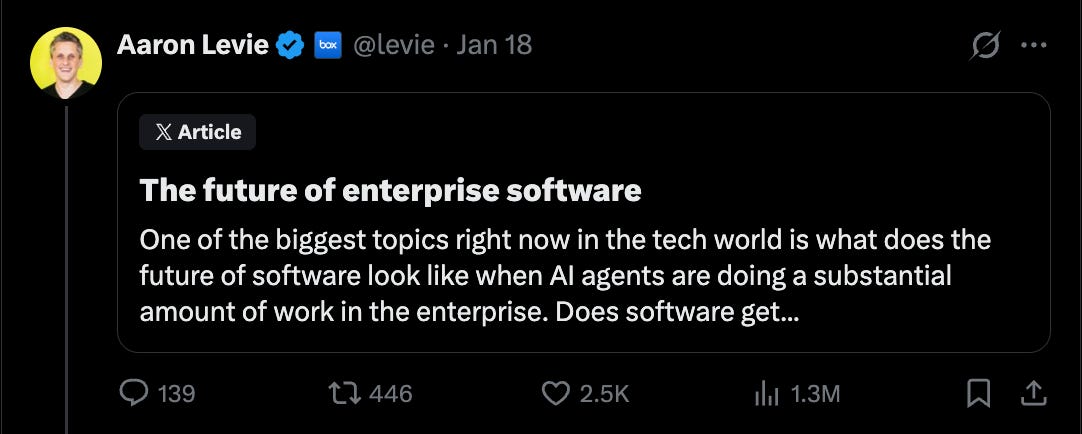
According to Box CEO Aaron Levy, the biggest barrier to deploying AI agents isn't technology but corporate structure. Agents deliver the most value on processes that cross departments, but data fragmentation and a lack of central ownership across these silos prevent effective implementation.

Related Insights
Companies struggle with AI not because of the models, but because their data is siloed. Adopting an 'integration-first' mindset is crucial for creating the unified data foundation AI requires.

At Google's cloud conference, customers revealed the primary barrier to AI adoption is implementation complexity and "agent sprawl." While AI can accelerate discrete tasks, companies struggle to overhaul entire workflows. This creates new bottlenecks, as the tools' complexity outpaces firms' ability to integrate them.

The primary barrier to AI adoption in large companies is not technological but organizational. Success depends on understanding the 'real' org chart—the informal network of influencers who control data and approve projects, which often differs from the official hierarchy.

The promise of enterprise AI agents is falling short because companies lack the required data infrastructure, security protocols, and organizational structure to implement them effectively. The failure is less about the technology itself and more about the unpreparedness of the enterprise environment.

AI coding agents thrive because developers have broad codebase access and work in a text-based medium. Enterprise knowledge work is stalled by fragmented data access, complex permissions, and multi-modal information (calls, meetings), which are significant hurdles for current AI.
Deploying AI agents in isolated business functions is a missed opportunity. True enterprise value is unlocked when agents share context (e.g., between sales and maintenance), enabling optimization across the entire organization, not just within a silo.

Companies struggle to get value from AI because their data is fragmented across different systems (ERP, CRM, finance) with poor integrity. The primary challenge isn't the AI models themselves, but integrating these disparate data sets into a unified platform that agents can act upon.

Despite mature AI technology and strong executive desire for adoption, the primary bottleneck for enterprises is internal change management. The difficulty lies in getting organizations to fundamentally alter their established business processes and workflows, creating a disconnect between stated goals and actual implementation.
Research shows employees are rapidly adopting AI agents. The primary risk isn't a lack of adoption but that these agents are handicapped by fragmented, incomplete, or siloed data. To succeed, companies must first focus on creating structured, centralized knowledge bases for AI to leverage effectively.

The primary barrier to enterprise AI agent adoption isn't the AI's intelligence, but the company's messy data infrastructure. An agent is like a new employee with no tribal knowledge; if it can't find the authoritative source of truth across siloed systems, it will be ineffective and unreliable.
